What Breed Is My Mixed-Breed Dog? How to Find Out
From PawPedia, an encyclopedia of life with animals
Fact-checked against expert sources
Contents
In short
Looks are a poor guide to a mixed-breed dog's breed, and studies show shelter staff often guess wrong. A cheek-swab DNA test can give a likely list of main breeds, but it cannot reliably predict behavior. For daily care, your dog's size, energy and health matter more than a breed label.
| Looks | Often mislead; in a 2009 study, a named breed turned up among the main ancestors in only 4 of 16 shelter dogs |
|---|---|
| Mixes | In a large 2022 study, only 17% of mixed-breed dogs were a mix of just two breeds |
| Physical clues | Adult size, coat, ears, head and muzzle shape, tail and leg length; hints, not answers |
| DNA test | A cheek swab taken at home and posted to a lab; the report lists breeds with estimated percentages |
| Test accuracy | Mostly good for purebreds; harder for mixes and limited by the company's breed database, so treat small percentages with caution |
| Behavior | Breed explained only about 9% of the differences in behavior between dogs in a 2022 study |
| Health results | About 40% of dogs carried at least one of 152 variants, usually one copy; discuss any worrying result with your vet |
| Purebred or mixed | Purebreds were more likely to have 10 of 24 inherited conditions; mixed-breed dogs were more likely to have a torn cruciate ligament |
| What matters | Size and body shape, energy and temperament, preventive care, and reward-based training |
| Rescue dogs | A breed label on an adoption profile is often a best guess; how the dog behaves is a better guide |
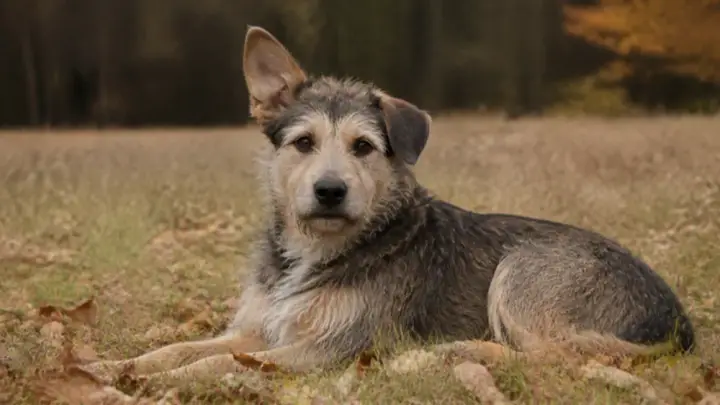
Almost everyone with a mixed-breed dog hears the same question on walks: what is he? Many owners wonder too. Your dog may have the ears of a shepherd, the coat of a terrier and a tail that matches neither. This guide explains why looks so often mislead, what a DNA test can and cannot tell you, and why the answer matters less for daily care than most people expect.
Why looks alone often mislead
Guessing a dog's breed from its appearance is much harder than it seems, even for people who work with dogs every day. In a small study published in 2009, adoption agencies had named one or two specific breeds for 16 dogs. DNA analysis found one of those breeds among the main ancestors in only 4 of them.
Larger studies tell a similar story. At a big shelter in San Diego, staff breed labels for 384 dogs were compared with DNA results. For about a third of the dogs, none of the breeds the staff had named showed up in the DNA at all. A study at four shelters in Florida found that staff called 52% of 120 dogs pit bull-type, while DNA identified only 21% as pit bull-type. Staff members often disagreed with one another as well.
Part of the reason is that a few genes control some of the most eye-catching features. Researchers found that variants in just three genes account for most coat types in purebred dogs, including coat length, curl and the moustache and eyebrows seen on wire-haired breeds. A dog can inherit a striking coat or ear shape from one small branch of its family tree, while most of its ancestry comes from breeds it does not resemble.
Most mixed-breed dogs are also not simple crosses of two breeds. In a large 2022 study, only 17% of the mixed-breed dogs were a mix of just two breeds. About two thirds carried more than a small share of ancestry from four or more breeds. With so many breeds in the background, looks become a weak guide.
Physical clues and what they can suggest
Looks are not useless. They give hints, not answers. If you want to make an informed guess, these are the features people usually consider.
- Adult size and weight, which say more than any single feature
- Coat length, texture and curl
- A moustache, eyebrows or other longer hair on the face
- Ear shape and carriage: upright, folded or hanging
- Head shape and the length of the muzzle
- Tail shape and how the tail is carried
- Leg length compared with body length
- Coat color and pattern, such as a saddle, brindle or patches
Treat any guess as a guess. Upright ears, a curled tail or a black and tan coat appear in many unrelated breeds, and puppies change a great deal as they grow. On the Paw Squadron YouTube channel, we run “Guess the breed” polls for some of the dogs we rescue, as a bit of fun rather than a verdict.
How dog DNA tests work
Consumer breed tests use a cheek swab that you collect at home and post to a laboratory. The lab reads a large number of genetic markers and compares your dog's pattern with reference dogs of known breeds. The report usually lists breeds with estimated percentages.
For purebred dogs, most tests do well. In a 2024 study, researchers sent swabs from 12 registered purebred dogs to six companies. Five of the six tests always included the dog's registered breed. One test often gave results closer to the photo submitted with the sample than to the dog's own DNA. Even with purebred dogs, the companies' predictions were not identical.
Mixed-breed dogs are harder, because there is no pedigree to check the answer against. A result also depends on which breeds are in the company's reference database. Ancestry that matches no breed in the database cannot be named, and some tests do not report very small shares at all. It is sensible to treat the main breeds in a report as likely, and small percentages with more caution.
What a test can and cannot tell you
A good test can give you a likely list of the main breeds in your dog's background. It can also report genes linked to some physical traits, such as coat type, which are well understood. Many tests also screen for known disease variants.
Behavior is a different matter. A 2022 study in the journal Science surveyed the owners of more than 18,000 dogs and analyzed the DNA of over 2,000 of them. Breed explained only about 9% of the differences in behavior between individual dogs. It was somewhat more useful for traits such as how readily a dog responds to commands, and almost useless for how easily a dog is provoked by something frightening or annoying. Breed was a far better guide to appearance than to behavior.
A 2025 study of more than 3,000 dogs tested gene variants that had been linked to behavior in earlier work. None of them predicted behavior in individual dogs, although some were linked to looks, such as height, leg length and ear shape. The authors warn that behavior depends on many genes and on a dog's life experience, so tests that look at only a few variants cannot predict it accurately.
So a herding breed in the report does not mean your dog will herd children. A guarding breed does not make a dog aggressive either. The dog in front of you, with its own history and habits, tells you far more than any percentage.
Health results need a vet's view
In a study of more than 100,000 dogs screened for 152 known disease variants, about 40% carried at least one. Most of these dogs carried a single copy, which usually causes no disease. Mixed-breed dogs were more likely than purebreds to carry one copy of a common variant. Purebred dogs were more likely to carry two copies, which is the pattern that more often leads to illness.
Some results are practical to know. A variant in the MDR1 gene, for example, can make a dog more sensitive to certain medicines, and the study's authors suggest that vets know a dog's MDR1 status before anesthesia. Other results are less clear. A variant is a risk factor, not a diagnosis, and its effect can differ between breeds and between individual dogs. Discuss any worrying result with your vet before you act on it.
Mixed breeding is not a guarantee of good health either. A study of more than 27,000 dogs at a university veterinary hospital in California compared 24 inherited conditions. Purebred dogs were more likely to have 10 of them, including elbow dysplasia, cataracts and dilated cardiomyopathy, a disease of the heart muscle. For 13 conditions, including hip dysplasia and several cancers, there was no clear difference. Mixed-breed dogs were more likely to have one: a torn cruciate ligament in the knee.
What really matters for care
Whatever your dog's ancestry, good care rests on the same few things. A breed label rarely changes them.
- Size and body shape. Expected adult size guides how much you feed, the type of exercise that suits your dog and the size of bed or crate you need. Your vet can help you judge it, and our guide on how to feed your dog covers portions.
- Energy and temperament. Watch what your dog enjoys, what worries it and how much activity it needs to settle at home.
- Preventive care. Every dog needs vaccines, parasite control, dental care and regular checkups.
- Training and support. Reward-based training works for every mix, and problems such as fear or barking are best handled for the individual dog.
If you do test your dog, enjoy the results for what they are: an interesting estimate of family history. Share any health findings with your vet, and keep your expectations for behavior based on what you see every day.
Rescue dogs and unknown ancestry
Most of the dogs Paw Squadron rescues are mixed breeds whose parents nobody knows. That is true of many dogs waiting in shelters and rescues everywhere. A breed label on an adoption profile is often a best guess, so it is worth looking past it. How a dog behaves with people, other dogs and daily routines, as described by those who have cared for it, is a much better guide to whether it will suit your home.
Adopting a mixed-breed dog is a good choice for many families. If you are thinking about it, our guide on how to adopt a rescue dog walks through the steps, and adopting vs buying a dog compares the options.
For more practical guides on life with a rescue dog, browse PawPedia. Questions about adopting from us are answered in our FAQ, or you can write to us from the Contact page.
See also
From our rescues
 12:49Abandoned Puppy was Desperately Pleading for Help Until This HappenedShania Drain · March 9, 2022
 9:33Abandoned Puppy was in Tears and Struggling to Survive Until This HappenedDustin Timberlake · March 5, 2022
 13:25Rescue of a Scared Abandoned Puppy with a Broken HeartClean Eastwood · February 26, 2022
Sources
Online sources
- Ancestry-inclusive dog genomics challenges popular breed stereotypes (Morrill et al., Science, 2022) · PubMed Central (NIH)
- Genetic testing predicts appearance but not behavior in dogs (Lord et al., PNAS, 2025) · PubMed Central (NIH)
- Comparison of adoption agency breed identification and DNA breed identification of dogs (Voith et al., 2009) · Journal of Applied Animal Welfare Science, via PubMed
- A canine identity crisis: Genetic breed heritage testing of shelter dogs (Gunter et al., 2018) · PLOS ONE, via PubMed Central
- Inconsistent identification of pit bull-type dogs by shelter staff (Olson et al., 2015) · The Veterinary Journal, via PubMed
- Many direct-to-consumer canine genetic tests can identify the breed of purebred dogs (Rando et al., 2024) · Journal of the American Veterinary Medical Association, via PubMed
- Coat variation in the domestic dog is governed by variants in three genes (Cadieu et al., Science, 2009) · PubMed Central (NIH)
- Frequency and distribution of 152 genetic disease variants in over 100,000 mixed breed and purebred dogs (Donner et al., 2018) · PLOS Genetics, via PubMed Central
- Prevalence of inherited disorders among mixed-breed and purebred dogs: 27,254 cases (Bellumori et al., 2013) · Journal of the American Veterinary Medical Association, via PubMed
Encyclopedias
- Mongrel · Wikipedia
- Dog breed · Wikipedia
- Dog · Encyclopædia Britannica
- А. Ю. Ендукин. Собака [Dog] · Большая российская энциклопедия, т. 30, Москва, 2015, с. 523–524 (archived copy)
- イヌ [Dog] · 日本大百科全書(ニッポニカ), 小学館, via Kotobank
Books
- Fogle B. The New Encyclopedia of the Dog. New York: DK Publishing, 2000. ISBN 9780789461308
- American Kennel Club. The New Complete Dog Book: Official Breed Standards and Profiles for Over 200 Breeds. 22nd ed. Mount Joy, PA: CompanionHouse Books, 2017. ISBN 9781621871736
- Serpell J (ed.). The Domestic Dog: Its Evolution, Behavior and Interactions with People. 2nd ed. Cambridge: Cambridge University Press, 2017. ISBN 9781107024144
- Блохин Г. И., Блохина Т. В., Бурова Г. А. и др. Кинология: учебник [Cynology: A Textbook]. Санкт-Петербург: Лань, 2013. ISBN 9785811414444
- 猪熊壽、遠藤秀紀. イヌの動物学 [The Zoology of the Dog]. 第2版. 東京: 東京大学出版会, 2019. ISBN 9784130740234
This article is general information, not veterinary advice. Always consult a veterinarian about your animal’s health. Some pictures in PawPedia may be AI-generated.
This page was last updated on October 30, 2026.