Как да отглеждате куче и котка заедно
От PawPedia, енциклопедията за живота с животни
Съдържание
Накратко
Отглеждайте куче и котка заедно, като ги запознавате бавно. Осигурете на котката стая без куче с високи места, първо разменете миризмите им, след това ги оставете да се видят през преградна врата, докато кучето е на повод. Награждавайте спокойното поведение и никога не позволявайте гонене. Обадете се на ветеринар, ако котката спре да яде или постоянно се крие.
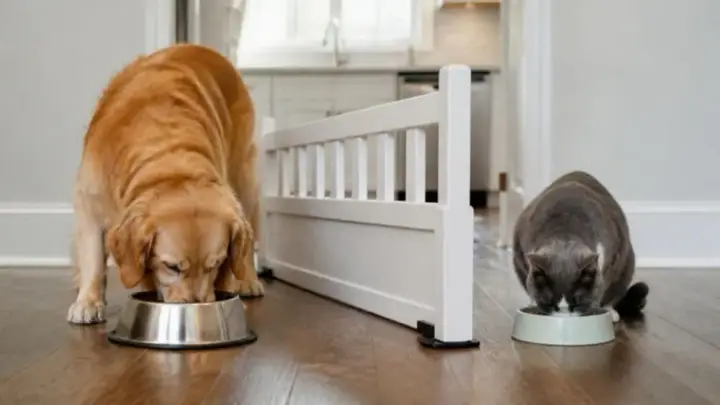
| Най-добро начало | Бавно и контролирано запознаване |
|---|---|
| По-лесни комбинации | Младо куче, израснало сред котки, или спокойно възрастно куче, за което е известно, че не им обръща внимание |
| Преди пристигането | Отделете за котката част от дома, в която кучето никога няма да влиза |
| Котешка тоалетна | Поставете я там, където кучето не може да стигне до нея |
| Първа стъпка | През първите няколко дни оставете животните да се опознаят по миризмата, без да се виждат |
| Втора стъпка | Оставете ги да се видят през преградна вратичка или врата, открехната на няколко сантиметра, като кучето е на повод |
| Приближаване | Едва когато кучето може да лежи до вратичката, а котката минава покрай него, без да бяга; при някои двойки за три дни, при други за месец или повече |
| Първа обща стая | Кучето е на повод, а котката може свободно да идва и да си отива |
| Добри признаци | Кучето поглежда към котката и извръща поглед, а двете животни като цяло не си обръщат внимание едно на друго |
| Избягвайте | Гонене, дори когато прилича на игра |
| Посетете ветеринар, ако | Котката спира да яде, почти непрекъснато се крие или уринира извън тоалетната; незабавно, ако котарак напъва, а урина почти или изобщо не излиза |
Много кучета и котки живеят под един покрив и накрая дремят заедно на едно и също слънчево петно. Двойките, които стигат дотам, обикновено са били запознавани бавно и под контрол. Двойките, които така и не свикват едно с друго, често са се срещнали набързо – кучето гони, котката бяга, а за да се заличи такова първо впечатление, може да са нужни месеци.
Преди запознанството: проверете дали си подхождат
Някои двойки се сработват по-лесно от други. Младо куче, израснало сред котки, или спокойно възрастно куче, за което е известно, че не им обръща внимание, е далеч по-сигурен избор от куче със силен стремеж да гони дребни животни. Териерите, хрътките и някои пастирски породи често имат по-силен инстинкт за преследване, макар че в рамките на всяка порода отделните кучета се различават много.
Ако осиновявате, попитайте организацията, която е спасила кучето, какво знае за поведението му към котки. Честният отговор може да е, че още никой не знае, но и това е полезно, защото ви подсказва да планирате по-бавно начало. Когато ни изпратите запитване за осиновяване, кажете ни, ако у дома имате котка, и ще можем да обсъдим всичко, преди да се запознаете с кучето.
Котката е не по-малко важна от кучето. Уверена възрастна котка, която вече е живяла с кучета, ще се справи по съвсем различен начин от нервна котка, която никога не е виждала куче отблизо. Котетата и кученцата обикновено свикват най-бързо, но котето е малко и крехко и едро кученце може неволно да го нарани по време на игра. Ако в дома ви идва коте, вижте грижи за ново коте за първите му дни у дома.
Малките животни често създават впечатлението, че е лесно. Ден след като намерихме Milky Cyrus, малко бяло кученце, тя се запозна с едно коте, което също бяхме прибрали, и двете заедно изследваха един тих двор. Когато възрастно куче се среща за първи път с възрастна котка, е нужен по-бавният план, описан по-долу.
Първо подгответе дома
Преди кучето да пристигне, отделете за котката част от дома, в която кучето никога няма да влиза. Свободна стая зад преградна вратичка върши добра работа, стига преградата да има отвор или котешка вратичка, през които котката може да минава, а кучето – не. В тази стая трябва да има всичко, от което котката има нужда: храна, вода, котешка тоалетна, легло и нещо, по което да се катери.
- Сложете котешката тоалетна там, където кучето не може да стигне до нея. Много кучета ядат котешки изпражнения, а котка, която бъде нападната изневиделица в тоалетната, може да започне да ходи по нужда другаде.
- Хранете котката на високо място или зад преградна вратичка. Кучетата обожават котешката храна, а богатата храна, предназначена за котки, може да разстрои стомаха на кучето.
- Осигурете височина във всяка обща стая: рафтове, катерушка за котки, горната част на опразнен шкаф за книги. Котка, която винаги може да се качи над кучето, рядко има нужда да се бие.
- Оставяйте свободни пътища за бягство. Котка, притисната в ъгъла зад дивана, е много по-склонна да нападне от котка, която има накъде да се оттегли.
Дръжте храните им отделно и заради самата котка. Котките се нуждаят от определени хранителни вещества, като таурин, които кучешката храна не осигурява в нужните количества, затова котка, която редовно се нахранва от купата на кучето, с времето може да се окаже непълноценно хранена.
Първо миризмата, после погледът
През първите няколко дни оставете животните да се подушват, без да се виждат. Разменете постелките им или потъркайте мека кърпа в бузите на кучето и я оставете близо до храната на котката, а после направете същото и в обратна посока. Оставете всяко животно да разгледа територията на другото, докато другото е затворено.
Наблюдавайте реакциите. Любопитството, кратко подушване и после отдалечаване са добри признаци. Котка, която съска срещу одеяло, ви казва да забавите темпото, а една допълнителна седмица на този етап не ви струва нищо.
Когато миризмата вече е станала скучна и за двете животни, оставете ги да се видят през преградна вратичка или през открехната с няколко сантиметра врата, като кучето е на повод. Правете го по време на хранене или с най-хубавите лакомства, които имате, така че гледката на другото животно да предвещава нещо хубаво. Ограничавайте срещите до няколко минути и ги прекратявайте, докато и двете животни са още спокойни.
Награждавайте кучето, когато погледне котката и после отново погледне към вас. Този малък навик е едно от най-полезните неща, на които можете да го научите, защото показва на кучето, че котката не е нещо, върху което да се фиксира. Ако кучето не може да откъсне поглед от котката, отдалечете се повече и опитайте отново на следващия ден.
Приближавайте ги само когато кучето може да лежи близо до преградата, а котката може да мине покрай него, без да бяга. При някои двойки това отнема три дни. При други – месец или повече, и в двата случая това е нормално.
Първата обща стая
Първите срещи без преграда трябва да стават с кучето на повод и с котката, свободна да идва и да си отива. Седнете с кучето, дръжте повода хлабав и награждавайте спокойното поведение. Никога не носете котката на ръце, за да я запознаете с кучето. Котка, която се чувства в капан, може да издраска вас или кучето и започва да свързва кучето с това да бъде държана против волята си.
Оставете котката сама да реши колко да се приближи. Много котки наблюдават от висок рафт с дни, преди да слязат. Когато кучето остава спокойно няколко срещи поред, можете да оставите повода да се влачи по пода, докато наблюдавате, така че все пак да можете да стъпите върху него.
Как да разчитате езика на тялото им
Повечето проблеми личат по езика на тялото много преди някой да помръдне. Научете ранните признаци и прекратявайте срещата още при първия от тях, вместо да чакате внезапен скок или удар с лапа.
- Тревожни признаци при кучето: твърд, втренчен поглед, сковано тяло, сведена глава като при дебнене, скимтене или треперене от възбуда, както и пренебрегване на храната или на гласа ви.
- Тревожни признаци при котката: уши, обърнати назад или прилепнали към главата, настръхнала опашка, съскане или ръмжене, продължително криене и ниска, приклекнала походка.
- Добри признаци: кучето поглежда котката и извръща поглед, двете животни се хранят нормално в една и съща стая и всяко от тях почти не обръща внимание на другото.
Последното изненадва мнозина. Взаимното безразличие е чудесен резултат. С времето може да се стигне и до истинско приятелство, със споделени дремки и взаимно ближене, но и спокойното примирие само по себе си е напълно добра цел.
Съвместният живот в дългосрочен план
Запазете безопасната стая на котката и високите места, по които тя се придвижва, дори след като нещата се уталожат. Разделяйте животните, когато излизате от дома, докато не сте напълно сигурни в тях, а това може да отнеме месеци. Кученце, което е кротко на четири месеца, може да играе много по-грубо на осем, затова продължавайте да наблюдавате, докато кучето расте.
Не позволявайте гонене, дори когато прилича на игра. За повечето кучета гоненето е забавно, а за повечето котки – плашещо, и куче, което го упражнява, става все по-добро в него. Научете кучето надеждно да изпълнява командата „остави“ и да ляга спокойно на постелка и използвайте тези команди, преди кучето да се е възбудило, а не след това.
Отделяйте на всяко животно време само с вас. Котките често са ощетени, когато ново куче завземе всекидневната, а котка, която се чувства изместена, може да започне да маркира с урина или да се ближе толкова, че козината ѝ да оредее на петна. И двете може да имат и медицински причини, затова кажете за тях на ветеринаря си. Ежедневна игра от няколко минути с играчка въдица помага на котката да се успокои.
Кога да потърсите помощ
Обадете се на ветеринар, ако котката спре да яде, почти непрекъснато се крие или започне да уринира извън тоалетната. Стресът може да отключи истински заболявания при котките, включително болезнено възпаление на пикочния мехур, а котка, която не яде нищо повече от ден, може бързо да се разболее сериозно. Котарак, който напъва в тоалетната, а урина почти или изобщо не излиза, трябва незабавно да бъде прегледан от ветеринар, защото това може да означава запушен пикочен мехур.
Потърсете квалифициран специалист по поведението на животните, ако кучето продължава да се фиксира върху котката след няколко седмици внимателна работа или ако вече е имало нападение. Някои кучета не бива да живеят с котки и ако това се разпознае навреме, е по-добре и за двете животни, отколкото да се надявате, че ще отмине. Ако сте осиновили от нас, пишете ни и опишете какво се случва между двете животни – ние поддържаме връзка със семействата осиновители и помагаме, с каквото можем.
Вижте също
От нашите спасявания
 26:16Изхвърлиха я… Но след като я спасихме, тя се промени напълноMilky Cyrus · 8 август 2026 г.
 12:49Изоставено кученце отчаяно молеше за помощ, докато не се случи товаShania Drain · 9 март 2022 г.
 9:33Изоставено кученце беше в сълзи и се бореше да оцелее, докато не се случи товаDustin Timberlake · 5 март 2022 г.
Тази статия съдържа обща информация и не е ветеринарен съвет. Винаги се консултирайте с ветеринарен лекар за здравето на вашето животно. Някои изображения в PawPedia може да са създадени с изкуствен интелект.
Последната промяна на страницата е извършена на 30 септември 2026 г.