Reverse Sneezing in Dogs: Is It Dangerous?
From PawPedia, an encyclopedia of life with animals
Fact-checked against veterinary sources
Contents
In short
Reverse sneezing is usually harmless: a short spasm of noisy breaths in through the nose that stops on its own within about a minute. Stay calm and gently stroke your dog's neck. Book a vet visit if it starts suddenly or becomes more frequent, and go straight away for fainting, blue or gray gums, or struggling to breathe.
| Also called | Paroxysmal respiration |
|---|---|
| Cause | A reflex set off by irritation at the back of the nose and top of the throat; triggers include excitement, pulling on the leash, eating or drinking, dust, pollen, smoke, strong smells and allergies |
| Most at risk | Any dog, but more often small and toy breeds and flat-faced breeds such as Pugs, Bulldogs, French Bulldogs, Pekingese and Shih Tzus |
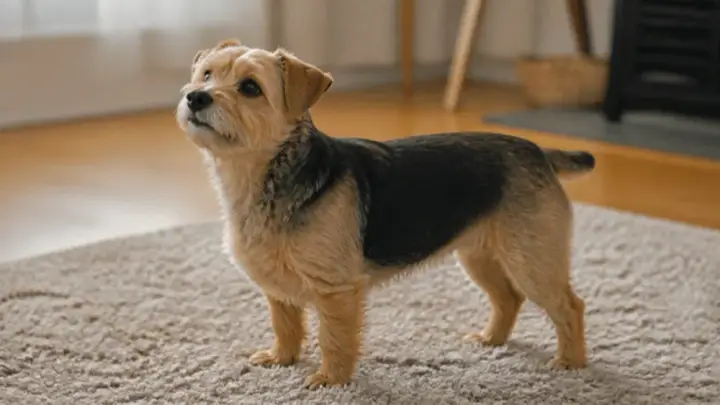
| First signs | The dog suddenly stands still, stretches its head and neck forward and takes rapid, noisy breaths in through the nose |
| Common signs | Snorting, honking or gagging for a few seconds to about a minute, with the dog normal before and afterward |
| Home care | Stay calm, gently stroke the neck, and offer a little water or something to lick so the dog swallows |
| Diagnosis | Based on your description, a video and a physical exam; sometimes blood or allergy tests, X-rays or a camera exam of the nose and throat under anesthesia |
| Treatment | Most dogs need none; if there is an underlying cause, medicine for inflammation or allergies, removing a foreign body or an antiparasitic for nasal mites |
| Outlook | In most dogs it is harmless and stops on its own within about a minute |
| Prevention | Keep a healthy weight, avoid smoking and strong sprays near the dog, and try a harness instead of a collar if leash pulling triggers it |
| Emergency if | Fainting or collapse, blue or gray gums or tongue, struggling to breathe, open-mouth breathing at rest, possible choking |
The first time you hear it, a reverse sneeze can be frightening. Your dog suddenly stands still, stretches its neck and makes loud, honking snorts, as if it cannot get enough air. A few seconds later it is over, and your dog trots off as if nothing happened. In most dogs, reverse sneezing is harmless. This guide explains what it is, what sets it off, how to help your dog through an episode, and how to tell it apart from choking or a collapsing windpipe.
What a reverse sneeze is
A normal sneeze pushes air out through the nose. In a reverse sneeze, the dog pulls air rapidly and forcefully in through the nose instead. Vets call it paroxysmal respiration, which means it comes in short spasms. It is a reflex, set off by irritation at the back of the nose and the top of the throat, the area called the nasopharynx.
During an episode, most dogs do the following.
- Stand still, often with the elbows turned outward
- Stretch the head and neck forward
- Take rapid, long, noisy breaths in through the nose
- Snort, honk or gag, as if something is stuck in the nose or throat
Episodes usually last from a few seconds to about a minute. They tend to end once the dog breathes out through its nose, and most dogs are completely normal before and afterward.
Any dog can reverse sneeze, but it is seen more often in small and toy breeds and in flat-faced breeds such as Pugs, Bulldogs, French Bulldogs, Pekingese and Shih Tzus. In a 2022 study of 30 dogs examined for reverse sneezing at a university veterinary hospital in Spain, half weighed under 5 kg (11 pounds). Yorkshire Terriers, Chihuahuas and Maltese were among the breeds affected, along with mixed breeds.
Common triggers
The exact cause is often unknown. Anything that irritates the nose, sinuses or back of the throat can start an episode. Common triggers include the following.
- Excitement, such as greeting you at the door or a lively game
- Pulling hard on the leash
- Eating or drinking
- Dust, pollen and grass
- Smoke, perfume, air fresheners, carpet cleaners and other strong smells
- Allergies
- Extra mucus or discharge at the back of the nose
- An overlong soft palate, which is common in flat-faced breeds
Less often, reverse sneezing is a sign of something else in the nose or throat. Possible causes include a grass seed or other foreign body, nasal mites, an infection, or a growth such as a polyp or tumor. Allergies are a common thread for many dogs, and our guide to allergies in dogs and cats explains how they are managed.
If you can, keep a short note of when episodes happen. A pattern, such as more episodes during pollen season or after you use a cleaning spray, can point to the trigger.
How to help during an episode
Most episodes stop on their own within a minute, whatever you do. Your calm presence helps, and these simple steps may shorten an episode.
- Stay calm and speak softly to your dog
- Gently stroke your dog's neck or throat, which can prompt swallowing
- Offer a little water or something to lick, which also makes the dog swallow
- Move your dog into fresh air if smoke or a strong smell may be the trigger
Some owners gently cover their dog's nostrils for a second or two, which makes the dog swallow and can end the spasm. Only try this with a dog that is relaxed about being handled, and never press on the throat. If episodes often start when your dog pulls on the leash, a well-fitted harness may be worth trying instead of a collar.
Try to film an episode on your phone. Dogs rarely reverse sneeze in the clinic, and a short video helps your vet tell a reverse sneeze apart from a cough or another breathing problem.
Reverse sneezing, choking or a collapsing trachea?
Several breathing problems can look alike at first. The differences below can help, but only a vet can be sure.
A reverse sneeze is a burst of noisy breaths in through the nose. It stops within about a minute. The dog stays standing and alert, its gums stay their usual pink, and it is back to normal straight afterward.
Choking is different. A dog with something stuck in its mouth or throat is distressed and keeps struggling. It may gag, retch, drool or paw at its mouth, and it does not return to normal after a minute. Gums or a tongue that turn blue or gray mean the dog is not getting enough oxygen, and that is an emergency. Our guide to first aid for dogs and cats explains what to do on the way to the vet, and swallowed objects in dogs covers items that pass further down.
A collapsing trachea happens when the windpipe weakens and narrows. It is most common in toy and miniature breeds, the same small dogs that often reverse sneeze, and the two can occur together. In the Spanish study, a collapsing trachea was found in 5 of the 30 dogs. The typical sign is a dry, honking cough that keeps coming back, and some dogs struggle to breathe in or out. Obesity, heart disease and other lung problems such as chronic bronchitis make it more likely. Unlike a reverse sneeze, it is a cough, a forceful push of air out through the mouth.
Kennel cough, a contagious airway infection, also causes a harsh cough, often after time spent with other dogs. See our guide to kennel cough in dogs for its signs and care.
Flat-faced dogs with brachycephalic airway syndrome are another case. Their narrow nostrils and long soft palate can cause snoring, snorting and noisy breathing even at rest, along with gagging, poor exercise tolerance and, at worst, collapse after exertion or in hot weather. Noise that is present most of the time, rather than in short bursts, needs a vet check.
When to see a vet
An occasional reverse sneeze in a dog that is otherwise well does not usually need treatment. Book a vet visit if you notice any of the following.
- Reverse sneezing starts suddenly in a dog that has never done it before
- Episodes become more frequent, longer or more intense
- Episodes are frequent enough to affect your dog's daily life
- Your dog takes a long time to recover after an episode
- There is nasal discharge, a nosebleed, frequent ordinary sneezing or rubbing at the face
- Your dog also coughs, or breathes noisily between episodes
- Episodes started after a walk through long grass, which raises the chance of a grass seed in the nose
Go to a vet or an emergency clinic straight away if your dog shows any of these signs.
- Fainting or collapse during or after an episode
- Blue or gray gums or tongue
- Struggling to breathe, or breathing with an open mouth while at rest
- Any chance that your dog is choking on something
How vets diagnose and treat it
Diagnosis is usually based on your description, a video and a physical exam. Your vet will look for other causes of noisy breathing, such as an upper airway infection, a collapsing trachea, nasal polyps or tumors, and foreign bodies. Blood tests, allergy tests or X-rays are sometimes useful.
If episodes are frequent or something else is suspected, your vet may suggest examining the nose and throat under anesthesia. This often involves X-rays and rhinoscopy, in which a small camera is passed into the nose and throat. Flushing the nose and checking the fluid can show nasal mites.
In the Spanish study, most dogs examined this way had an underlying problem. Inflammation of the throat and airways was the most common finding, seen in 17 of the 30 dogs. Structural problems of the airway came next, and 3 dogs had a foreign body. Most dogs also had another breathing sign, usually a cough. The authors advised a thorough workup for frequent reverse sneezing, even when a dog otherwise seems healthy. Keep in mind that these were dogs referred for more serious episodes, not typical dogs that reverse sneeze once in a while.
Treatment depends on the cause, and most dogs need none. When there is an underlying problem, your vet may prescribe medicine to calm inflammation or allergies, remove a foreign body, or treat nasal mites with an antiparasitic medicine. Several antiparasitic medicines appear to work in most dogs with nasal mites. Your vet will decide which treatment, if any, suits your dog.
At home, keeping your dog at a healthy weight helps the whole airway, and it is especially important for dogs with a collapsing trachea. Avoid smoking and using strong sprays near your dog, and keep track of any triggers you notice.
Reverse sneezing in rescue dogs
A newly adopted small dog often arrives excited and unsettled, in a home full of new people and new smells. All of these can set off reverse sneezing in a dog prone to it, and episodes often become less frequent as the dog relaxes. Our guide to life with a small rescue dog covers those first weeks. At Paw Squadron, every rescued dog is checked by a vet and dewormed after rescue. A new or worsening breathing problem after adoption is still worth showing to your own vet, together with a video.
For more guides to your dog's health, browse PawPedia. If you adopted a dog from us and have questions, write to us from the Contact page.
See also
From our rescues
Sources
Online sources
- Reverse Sneeze in Dogs · VCA Animal Hospitals
- Reverse Sneezing in Dogs · PDSA
- What Happens When a Dog Reverse Sneezes? · American Kennel Club
- Reverse Sneezing in Dogs: Observational Study in 30 Cases · Veterinary Sciences (Talavera et al., 2022)
- Tracheal Collapse in Dogs · Merck Veterinary Manual
- Canine Nasal Mites · Merck Veterinary Manual
- Brachycephalic Syndrome · American College of Veterinary Surgeons
Encyclopedias
- Reverse sneezing · Wikipedia
Books
- Ware WA. Cardiovascular Disease in Small Animal Medicine. London: Manson Publishing, 2011. ISBN 9781840761535
- Ettinger SJ, Feldman EC, Côté E (eds.). Textbook of Veterinary Internal Medicine: Diseases of the Dog and the Cat. 8th ed. St. Louis: Elsevier, 2016. ISBN 9780323312110
- Щербаков Г. Г. и др.; под общ. ред. Г. Г. Щербакова. Внутренние болезни животных: учебник [Internal Diseases of Animals: A Textbook]. Санкт-Петербург: Лань, 2014. ISBN 9785811416820
- Nelson RW, Couto CG. Small Animal Internal Medicine. 6th ed. St. Louis: Elsevier, 2019. ISBN 9780323570145
This article is general information, not veterinary advice. Always consult a veterinarian about your animal’s health. Some pictures in PawPedia may be AI-generated.
This page was last updated on November 5, 2026.