Cardiomiopatia dilatada em cães: sinais, diagnóstico e cuidados
Da PawPedia, uma enciclopédia da vida com animais
Índice
| Outros nomes | CMD |
|---|---|
| Causa | Unknown in most dogs; links include inherited gene changes, a taurine shortage and certain diets |
| Maior risco | Large and giant breeds, usually middle-aged and older dogs; males more often than females |
| First signs | Often none at all in early DCM, and some affected dogs have no heart murmur |
| Sinais comuns | Tiring quickly on walks, faster or harder breathing at rest, a cough, weakness or fainting, a swollen belly, weight loss |
| Diagnosis | An ultrasound of the heart, called an echocardiogram, is the key test |
| Tratamento | Most forms cannot be cured; medicines from the vet can slow the disease and ease the signs |
| Prognóstico | Varies; usually guarded once heart failure has started, and often poorer in Dobermans |
| Prevenção | Inherited DCM cannot be prevented, but screening can often find it before signs start |
| Risco para as pessoas | Not contagious; people and other pets cannot catch it from an affected dog |
| Emergência se | Labored, very fast or open-mouth breathing at rest; pale, gray or blue gums; fainting or collapse; a sudden increase in coughing |
Dilated cardiomyopathy, usually shortened to DCM, is a disease of the heart muscle. The muscle slowly loses strength, the heart chambers stretch and grow larger, and each beat pushes out less blood. Over time this can lead to heart failure, irregular heartbeats, and in some dogs sudden death.
DCM is one of the most common heart diseases in large and giant breeds. It has also been in the news since 2018, when vets began reporting cases in dogs eating certain foods.
What happens in the heart
A healthy heart muscle squeezes firmly with every beat. In DCM the muscle cells weaken or are lost, so the walls get thinner and the chambers enlarge. The heart works harder but moves less blood. Fluid can then back up into the lungs, the chest, or the belly. This stage is called congestive heart failure.
The disease usually has a long hidden phase. A dog can have a weakening heart for months or even years and still seem normal at home. Signs often show up late, which is why screening matters for breeds at high risk.
In most dogs the exact cause is unknown. Known causes and links include inherited gene changes in some Dobermans and Boxers, a shortage of the nutrient taurine, certain diets, some cancer drugs, and some viral infections.
Which dogs are at risk
DCM is seen most often in large and giant breeds, usually in middle-aged and older dogs. Males are affected more often than females. Breeds with a known higher risk include:
- Doberman Pinschers and Boxers
- Great Danes, Irish Wolfhounds, Scottish Deerhounds, Newfoundlands, and Saint Bernards
- German Shepherds and Labrador Retrievers
- American and English Cocker Spaniels, even though they are smaller dogs
- Portuguese Water Dogs, in which an inherited form can affect young puppies
The link with diet
In 2018 the US Food and Drug Administration began looking into reports of DCM in dogs eating certain foods. Most of the reported diets were labeled grain-free, and most contained peas or lentils. Golden Retrievers and mixed-breed dogs were among those reported most often, even though they are not known for inherited DCM. The FDA has not found proof that these foods cause DCM. Its last public update came in late 2022.
Veterinary nutrition researchers now link the problem to diets high in pulses, such as peas, lentils, chickpeas, and beans. These diets can be grain-free or contain grain. Most affected dogs have normal taurine levels, and a lack of taurine does not appear to explain these cases. The exact cause is still being studied.
Some dogs with diet-linked DCM slowly improve after a change of food, especially when the problem is found early. Recovery can take months and is not always complete. If your dog eats a food with pulses among the main ingredients, it is reasonable to ask your vet whether a different diet makes sense. It is best to talk to the vet before adding supplements.
Sinais a observar
Early DCM often causes no signs at all, and some affected dogs have no heart murmur. Mild signs are easy to put down to age or hot weather. Watch for:
- Tiring quickly on walks or losing interest in play
- Faster or harder breathing at rest or during sleep
- A cough
- Weakness, wobbly spells, or fainting
- A swollen belly from fluid build-up
- Weight loss and loss of muscle
For a dog at risk, it helps to count breaths during sleep. Count one breath for each full rise and fall of the chest over 30 seconds, then double the number. In most healthy dogs the sleeping rate stays under 30 to 35 breaths a minute. Your vet can tell you what count is normal for your dog and when a rising number means you should call.
Quando é uma emergência
Get veterinary help straight away, day or night, if your dog has any of these signs:
- Labored or very fast breathing at rest
- Breathing with the mouth open while lying still
- Gums that look pale, gray, or blue
- Fainting or collapse
- A sudden increase in coughing
These can be signs of fluid in the lungs or a dangerous heart rhythm. Some dogs with DCM die suddenly from an irregular heartbeat, sometimes before any other sign appears. In Dobermans with the disease, up to about one in five collapse or die suddenly.
How vets diagnose it
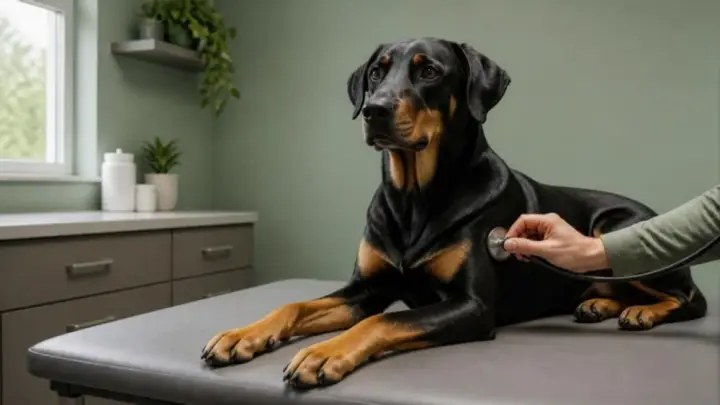
The vet starts with your dog's history and a physical exam. With a stethoscope they may hear a soft murmur, an extra heart sound called a gallop, or an irregular rhythm. A normal exam does not rule DCM out, especially in the early phase.
Chest X-rays show the size of the heart and whether fluid has built up in the lungs. An electrocardiogram (ECG) records the heart's electrical activity and picks up rhythm problems. An ultrasound of the heart, called an echocardiogram, is the key test. It shows the size of each chamber and how well the muscle squeezes.
For breeds prone to rhythm problems, the vet may suggest a Holter monitor. This is a small recorder the dog wears for a day at home to capture every heartbeat. A heart blood test called NT-proBNP is sometimes added as an extra check, and the ultrasound remains the main test. Other blood tests check the kidneys and other organs before treatment, and in some dogs the vet also measures taurine. Many dogs are referred to a veterinary cardiologist for the heart ultrasound and ongoing care.
Treatment and daily care
Most forms of DCM cannot be cured. Treatment can slow the disease, ease the signs, and help many dogs live more comfortably. Your vet sets the plan based on the stage of the disease and the heart rhythm.
Vets use medicines that help the heart muscle pump more strongly, medicines that clear extra fluid from the lungs and body, medicines that ease the strain on the heart, and medicines that control abnormal rhythms. When screening finds early disease, some dogs start treatment before any signs appear. A dog in crisis may need oxygen and a stay in hospital, and fluid in the chest or belly may be drained.
The vet may recommend a change of diet, especially if the current food is high in pulses. Taurine may be suggested for dogs with low levels or for breeds known to respond, such as American Cocker Spaniels, Golden Retrievers, and Dalmatians. Any benefit from taurine can take a few months to show. Fish oil is sometimes suggested to help with weight and muscle loss. It usually helps to avoid salty treats and table scraps, and a lower-salt diet may be advised in advanced stages.
At home, it helps to give medicines on schedule and to check with the vet before changing or stopping any of them. Walks can stay gentle, at a pace the dog sets. A simple log of the sleeping breathing rate, appetite, and energy is useful at rechecks, which often include repeat heart scans and blood tests.
The outlook varies. It is usually guarded once heart failure has started, and it is often poorer in Dobermans. Dogs whose DCM is linked to diet or to low taurine can do much better, and some improve over time. Your vet or cardiologist can give you a realistic picture for your own dog.
Prevention and screening
Inherited DCM cannot be prevented. Screening can often find it before signs start, which gives time to begin treatment and plan ahead. For Dobermans, veterinary cardiology guidelines advise a heart ultrasound and a Holter recording every year, starting at about three years of age. In Boxers, a related inherited heart muscle disease mainly causes rhythm problems, and a yearly Holter recording is a common check. Your vet can suggest a schedule for your own dog.
For any dog, a complete and balanced diet and a talk with your vet before feeding a food rich in pulses are sensible steps. DCM itself is not contagious, so other pets and people in the home cannot catch it from an affected dog.
Notes for adopters
At Paw Squadron, the first stops after every rescue are the vet and a bath. Every dog gets a checkup, treatment against parasites, vaccinations, and a microchip before adoption. Early DCM can stay hidden even during a careful exam, so it helps to keep the heart in mind in the months after adoption.
If you adopt a large-breed dog, or one that looks like a Doberman, Boxer, or Great Dane, mention it at your first vet visit and ask whether heart screening makes sense. Bring the dog's records and tell the vet what food you are feeding. Heartworm disease also occurs in southern Europe and can cause similar signs, such as coughing and tiring quickly, so your vet may want to rule it out in a dog that has lived there.
If you are thinking about giving a dog a home, our Adoptions page shows the dogs waiting now, and you can find more health guides in PawPedia.
Veja também
Dos nossos resgates
 11:00Filhote abandonado foi jogado numa caçamba de lixo e lutava para sobreviver até que isso aconteceuBruce Springclean · 18 de junho de 2022
 12:49Filhote abandonado implorava desesperadamente por ajuda até que isto aconteceuShania Drain · 9 de março de 2022
 9:33Filhote abandonado estava em lágrimas e lutava para sobreviver até que isto aconteceuDustin Timberlake · 5 de março de 2022
Este artigo traz informações gerais, e não orientação veterinária. Consulte sempre um veterinário sobre a saúde do seu animal. Algumas imagens da PawPedia podem ter sido geradas por IA.
This page was last updated on October 5, 2026.