Ασκαρίδες σε κουτάβια και γατάκια: σημάδια, κίνδυνοι και πρόληψη
Από την PawPedia, μια εγκυκλοπαίδεια για τη ζωή με τα ζώα
Περιεχόμενα

| Αιτία | Mainly Toxocara canis in dogs and Toxocara cati in cats |
|---|---|
| Affects | The small intestine, where the adult worms live |
| Σε μεγαλύτερο κίνδυνο | Young animals and animals that lived on the street |
| Πώς μεταδίδεται | Puppies are often infected before birth or through the mother's milk; pets also swallow eggs from soil or eat infected small animals |
| Συνήθη σημάδια | A pot belly even in a thin animal, slow growth, a dull coat, diarrhea, vomiting and worms in the stool or vomit |
| Diagnosis | A stool check by the vet; it can miss early or light infections, so vets usually deworm young animals on a set schedule |
| Θεραπεία | A deworming medicine chosen by the vet for the animal's age, weight and health |
| Πρόγνωση | Usually simple to treat and to prevent with regular veterinary care |
| Πρόληψη | No vaccine; regular deworming on a plan from the vet and good hygiene |
| Κίνδυνος για τους ανθρώπους | Can infect people, causing an illness called toxocariasis |
| Επείγον αν | A hard, swollen or painful belly, repeated vomiting, straining with no stool, weakness, pale gums, labored breathing or a seizure |
Roundworms are among the most common intestinal worms in puppies and kittens. Many puppies are born with them, and kittens often pick them up early in life. With regular veterinary care, they are usually simple to treat and to prevent.
The main species are Toxocara canis in dogs and Toxocara cati in cats. A third species, Toxascaris leonina, can infect both. It is less common and mostly affects older dogs. Adult worms live in the small intestine. Female worms lay huge numbers of eggs, so even a light infection can leave many eggs in the droppings.
Σημάδια που πρέπει να προσέχετε
Puppies and kittens with many worms often show clear signs. Adult pets with only a few worms usually look healthy. Common signs in young animals are listed below.
- A round, swollen belly, often called a pot belly, even when the animal is thin
- Slow growth or weight loss despite a good appetite
- A dull, rough coat
- Diarrhea, sometimes with mucus
- Vomiting
- Worms in the stool or vomit
- Coughing, which can happen while young larvae pass through the lungs
- Low appetite and less energy than usual
Adult roundworms are pale, round and several inches long, a bit like cooked spaghetti. Worms like this in the stool or vomit point to a roundworm infection. Not seeing any does not rule it out, because the worms usually stay inside the gut.
Πότε είναι επείγον
A heavy roundworm burden can be dangerous for very young or weak animals. A large mass of worms can block the intestine, and in rare cases the infection can kill a young puppy or kitten.
Contact a veterinarian right away if your puppy or kitten has a hard, swollen or painful belly, vomits again and again, stops eating or nursing, strains without passing stool, seems weak or cold, or has pale gums. Fast or labored breathing, a cough that gets worse, or a seizure also need urgent care. Very small animals can lose fluids quickly through diarrhea and vomiting, so it is better to call early.
How puppies and kittens get them
Puppies are often infected before birth. Roundworm larvae can rest for a long time in the tissues of an adult female dog. During pregnancy they become active again and pass to the unborn puppies. Young worms may already be in a puppy's intestine by the end of its first week. More larvae reach the puppies through the mother's milk.
Kittens are not infected before birth. Larvae can reach them through their mother's milk, although this seems to happen mainly when the mother herself was infected late in pregnancy or while nursing.
Older puppies, kittens and adult pets are infected in two other ways. They swallow eggs from soil, grass, sand or fur, or they eat a mouse or other small animal that carries resting larvae. Eggs in fresh droppings are not yet infective. They need about two to four weeks outside the body to develop. After that they can survive in soil for months or even years.
After a pet swallows infective eggs or eats an infected mouse, it takes roughly a month, and sometimes longer, before its own worms start to lay eggs. Deworming guidelines use this gap when they set how often to treat pets at higher risk.
Πώς τη διαγιγνώσκουν και τη θεραπεύουν οι κτηνίατροι
The usual test is a stool check. A small sample is mixed with a solution that makes any eggs float, so they can be seen under a microscope. Some laboratories also offer antigen or DNA tests that can pick up infections the microscope misses.
A stool test has limits. Puppies infected before birth can carry many worms before any eggs appear in their stool, and light infections can be missed. For this reason, vets usually deworm young puppies and kittens on a set schedule without waiting for a positive test.
Treatment is a deworming medicine chosen by the vet for the animal's age, weight and health. Many of these medicines act only on the worms in the gut. They do not reach larvae that are still moving through the body, so the treatment is repeated, often after about two weeks. The vet may ask for a follow-up stool sample to check that the worms are gone. A mother who is nursing a litter is usually treated at the same time as her puppies or kittens.
Some dewormers are not suitable for very young animals, and the right amount depends on body weight. It is safest to let your vet choose the product and timing. For a pregnant dog or cat, the vet can also suggest treatment late in pregnancy to reduce the larvae passed to the litter.
Preventing roundworms
There is no vaccine against roundworms. Prevention rests on regular deworming and good hygiene.
Veterinary guidelines in Europe and the US commonly suggest starting to deworm puppies at about two weeks of age and kittens at about two to three weeks. Treatment is then usually repeated every two weeks until shortly after weaning. Many vets then advise monthly treatment until about six months of age, especially when new infection is likely.
For adult pets the plan depends on lifestyle. European guidelines suggest deworming at least four times a year for pets that go outdoors. Monthly treatment may be advised when the risk is higher, for example for pets that roam or hunt, or that live with young children or someone with a weak immune system. Regular stool tests are another option in place of routine treatment. Your vet can suggest the right plan.
A few simple habits reduce the number of eggs around the home.
- Pick up dog droppings every day and put them in the household trash. Compost is not a safe place for them.
- Scoop the litter box every day. Fresh eggs are not yet infective, so daily cleaning removes them before they become a risk.
- Wash your hands after handling pets, soil or sand, and before eating.
- Wear gloves for gardening.
- Cover children's sandboxes when they are not in use.
- Groom dogs regularly, since eggs can stick to the coat.
- Keep cats from hunting where you can, since mice and other small animals can carry larvae.
Risks to other pets and people
Because eggs need time outside the body to become infective, the main risk to other pets comes from a contaminated yard, shared litter box or favorite walking area, where eggs can stay infective for years. While a new puppy or kitten is being treated, it helps to clear droppings quickly and to keep resident pets on the deworming plan their vet recommends.
Toxocara roundworms can also infect people, causing an illness called toxocariasis. People are infected by swallowing infective eggs, usually from soil, sand or unwashed hands. Young children are most at risk because they play on the ground and often put their hands in their mouths. In people the larvae stay immature and wander through the body's tissues. Many infected people never have symptoms. Sometimes the larvae affect organs such as the liver or lungs and cause fever, cough or belly pain. Rarely a larva reaches the eye and harms vision. The infection does not spread from person to person.
Deworming pets on schedule and clearing droppings every day are the main ways to lower the risk. Pregnant women and people with a weakened immune system may want to take extra care with hygiene. Anyone worried about symptoms can talk to a doctor.
Why it matters for rescued animals
Roundworms are more common in young animals and in animals that lived on the street. A review of European studies from 1994 to 2019 found roundworm infection in about four in ten dogs under six months old and in about one in three stray cats, on average. A 2024 study of owned dogs in Serbia found dog roundworm eggs in about one in nine dogs, and in more than a quarter of the dogs younger than one year. Studies in Bulgaria, Greece, Serbia and other countries in the region have also found signs of past exposure in people.
At Paw Squadron, the first stops after every rescue are the vet and a bath. Each animal gets a checkup, deworming and treatment against fleas and other parasites. Before adoption, every animal also receives a checkup, treatment, vaccinations and a microchip.
Deworming usually continues in the new home. Dewormers do not reach every larva resting in the tissues, and a young animal can pick up new eggs at any time. European worm control guidelines also call for treating and separating new arrivals in kennels and multi-pet homes.
After adoption, it is a good idea to bring the animal's health records to your own vet and ask about a stool check and a deworming plan. If you have questions about an animal's care before or after adoption, our FAQ may help, or you can send us an adoption inquiry.
Δείτε επίσης
Από τις διασώσεις μας

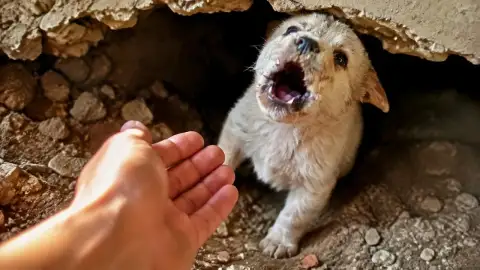

Αυτό το άρθρο παρέχει γενικές πληροφορίες και δεν αποτελεί κτηνιατρική συμβουλή. Να συμβουλεύεστε πάντα κτηνίατρο για την υγεία του ζώου σας. Ορισμένες εικόνες στην PawPedia μπορεί να έχουν δημιουργηθεί με τεχνητή νοημοσύνη.
Η σελίδα ενημερώθηκε τελευταία φορά στις 26 Σεπτεμβρίου 2026.