Nourrir au biberon des chiots et des chatons orphelins : lait maternisé, chaleur et soins quotidiens
Un article de PawPedia, une encyclopédie de la vie avec les animaux
Sommaire
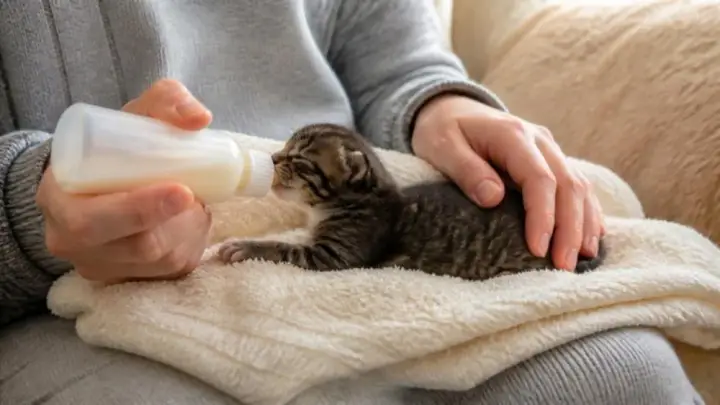
| Best start | A vet visit within the first day or two |
|---|---|
| Warmth first | A chilled newborn cannot digest food properly, so warming always comes before feeding |
| Nest temperature | About 29 to 32°C (84 to 89°F) in the first week, falling to about 21 to 24°C (70 to 75°F) by week four |
| What to feed | A commercial milk replacer made for puppies or for kittens |
| Avoid | Cow's milk, goat's milk, and human baby formula |
| How often | Most newborns need a meal every two to four hours, around the clock, in the first two weeks |
| Feeding position | On its belly, the way it would lie to nurse, not on its back |
| Toilet help | After every meal, gently rub the genital and anal area with a warm, damp cotton ball or soft tissue |
| Weight gain | Healthy newborns usually gain about 5 to 10 percent of their body weight a day |
| Weaning | Most kittens are ready for solid food at three and a half to five weeks; puppies usually start around then |
| Urgence si | Cold, limp or too weak to suckle; milk from the nose or fast breathing; no weight gain; diarrhea, vomiting, or a swollen, tight belly |
Newborn puppies and kittens depend on their mother for almost everything. She keeps them warm, feeds them, and licks them so they can pee and poop. When a litter is orphaned, or the mother cannot care for them, a person has to take over all three jobs, day and night, for the first weeks of life.
Hand-rearing is demanding, and newborns have very little in reserve. The best start is a vet visit within the first day or two. The vet can check each baby, estimate its age, and help you set a feeding plan that fits it.
Warmth comes first
Puppies and kittens cannot control their own body temperature until about four weeks of age. They rely on the warmth around them. A chilled newborn cannot digest food properly, so warming always comes before feeding.
If a baby feels cool to the touch, warm it slowly over 30 to 60 minutes, for example held against your body or on a covered heating pad set to low. Wait to feed it until it is warm and moving normally. Milk in a cold, sluggish stomach can come back up and be breathed into the lungs.
Veterinary guidance puts the nest at about 29 to 32°C (84 to 89°F) in the first week, about 27°C (80°F) in weeks two and three, and about 21 to 24°C (70 to 75°F) by week four. Moderate humidity, around 55 to 65 percent, is also recommended. Heat only part of the box so the babies can crawl away if they get too warm. Check the temperature with a thermometer at their level, and cover any heat source so it cannot burn them.
Formula and feeding times
Use a commercial milk replacer made for puppies or for kittens. Commercial formulas work better than homemade mixtures, although none fully matches a mother's milk. Cow's milk, goat's milk, and human baby formula are not suitable substitutes. They do not give a newborn what it needs and can upset its stomach.
Mix the formula fresh, following the label, and warm it to about body temperature. Test a few drops on the inside of your forearm. It should feel about as warm as your skin.
In the first two weeks, most newborns need a meal every two to four hours, around the clock. From about two to four weeks, the gap can usually stretch to every four to six hours. Puppies are usually fed on a similar schedule, and very small or weak babies may need to eat more often. For amounts, start with the milk replacer's label and ask your vet to check the plan against each baby's weight. Overfeeding can cause diarrhea.
Babies that never nursed from their mother also missed colostrum, the first milk that carries protective antibodies. Newborns can absorb these antibodies only during roughly the first day of life. Tell your vet if you know or suspect a litter missed it, because those babies may be more vulnerable to infection.
How to bottle-feed
- Lay the baby on its belly, the way it would lie to nurse. Do not feed it on its back like a human baby.
- Choose a nipple hole that lets formula drip slowly when the bottle is turned upside down. A steady stream is too fast.
- Let the baby suck at its own pace. Squeezing the bottle can push milk into the lungs.
- Stop if milk bubbles from the nose, or if the baby coughs or struggles to breathe, and call your vet.
- Wipe the face with a warm, damp cloth after each meal so formula does not dry on the skin.
Some weak babies cannot suckle at all. Vets sometimes feed these through a soft tube passed into the stomach. Only do this at home after a vet has shown you how, because a tube in the wrong place can put milk into the lungs.
Helping them pee and poop
Newborns cannot empty their bladder and bowels without help. After every meal, gently rub the genital and anal area with a warm, damp cotton ball or soft tissue until the baby finishes, which usually takes well under a minute. Then clean and dry the area, since urine left on the skin can cause scalding.
This help is usually needed from birth until about three to four weeks of age. Around four weeks, kittens can be offered a shallow litter box. Keep stimulating them until they use it reliably. Healthy stool in a bottle-fed kitten is usually formed and yellowish. Watery stool, or no stool for more than two days, is a reason to call your vet.
Weighing and weaning
Weigh each baby every day on a kitchen scale that reads in grams, at about the same time, and write the numbers down. Healthy newborns usually gain about 5 to 10 percent of their body weight a day, and kittens often double their birth weight in about a week. A baby that stops gaining or starts losing weight should see a vet as soon as possible.
Most kittens are ready to start on solid food somewhere between three and a half and five weeks of age, and puppies usually start around the same age. Begin with a soft mix of formula and wet puppy or kitten food in a shallow dish. Keep offering the bottle while they learn, and let each one move at its own pace. Your vet can tell you when a baby is ready.
Quand il s’agit d’une urgence
Newborns have tiny energy reserves and can get worse within hours. Low body temperature and low blood sugar often go together. Call a vet right away if you notice any of these signs.
- Cold to the touch, limp, or too weak to suckle
- Milk coming from the nose, coughing, or noisy or fast breathing
- Constant crying or restlessness that feeding does not settle
- Weight loss, or no weight gain from one day to the next
- Diarrhea, vomiting, or a swollen, tight belly
Milk from the nose can also be a sign of a cleft palate, a gap in the roof of the mouth that some babies are born with. Your vet can check for it.
How vets usually help
The vet will usually weigh each baby, check its temperature and hydration, look inside the mouth, and listen to the heart and lungs. Chilled babies are warmed slowly. Weak or dehydrated babies may need fluids and support for low blood sugar, and some are tube-fed for a while. The vet may also look for signs of infection, fleas, and worms, and adjust the feeding plan.
Hygiene and other pets
Chilling, a dirty nest, and mistakes with formula feeding all raise the risk of serious infection in newborns. Wash your hands before and after handling the litter. Wash bottles and nipples after every feeding, and store formula as the label directs. Clean dirty babies with a warm, damp cloth and dry them well. A full bath can chill a newborn quickly.
Orphans found outdoors may carry fleas, intestinal worms, or ringworm, a skin fungus. Some of these can spread to other pets, and some to people. Keep the litter in a separate room from your own animals until your vet has checked them. Ask your vet when to start deworming and flea control, because not every product is safe at this age.
At Paw Squadron, the first stop after every rescue is the vet. Every animal gets a checkup, treatment, vaccinations, and a microchip before adoption. If you are thinking about fostering or adopting, visit our Adoptions page, or find more care guides in PawPedia.
Voir aussi
Issu de nos sauvetages

Cet article fournit des informations générales et ne constitue pas un avis vétérinaire. Consultez toujours un vétérinaire au sujet de la santé de votre animal. Certaines images de PawPedia peuvent avoir été générées par IA.
Cette page a été mise à jour pour la dernière fois le 27 septembre 2026.