Why Does My Dog Lick His Paws? Causes and How to Help
From PawPedia, an encyclopedia of life with animals
Fact-checked against veterinary sources
Contents
In short
Occasional paw licking is normal grooming. Constant licking usually means the feet itch or hurt, most often because of allergies, often with yeast or bacterial infection on top, or because of a cut, grass seed or cyst between the toes. Red-brown fur shows the licking has gone on for a while, so it is worth a vet check.
| Cause | Allergies are among the most common; others include yeast and bacterial infections, injuries or something stuck in the paw, interdigital cysts, pain, mites, hormone problems, boredom and stress |
|---|---|
| Affects | Dogs; brief licking after a walk or before a nap is normal grooming |
| Usual age | Environmental allergy signs usually start between six months and three years of age |
| Common signs | Licking for long periods or at night, and fur turning pink, rusty red or brown from saliva staining, most visible on white and light-colored dogs |
| Diagnosis | Questions about the pattern and season, tape or swab tests under a microscope, skin scrapings, and sometimes cultures, blood tests, a diet trial, X-rays or a small skin sample |
| Treatment | Depends on the cause: medicated shampoos, foot soaks or wipes, medicines for infection or itch, removing a foreign body, or treating an allergy or hormone problem |
| Outlook | Allergies can be managed but not cured; most dogs respond well once the real cause is found |
| Prevention | Year-round flea control for an allergic dog; protect the pads from winter salt and ice |
| Home checks | Look at the pads, nails and skin between the toes, check for grass seeds, splinters, ticks and fleas, and smell the feet; do not use human creams or sprays |
| See a vet the same day if | Limping or not putting weight on a foot, a badly swollen or bleeding paw, something stuck that you cannot remove easily, a torn or broken nail |
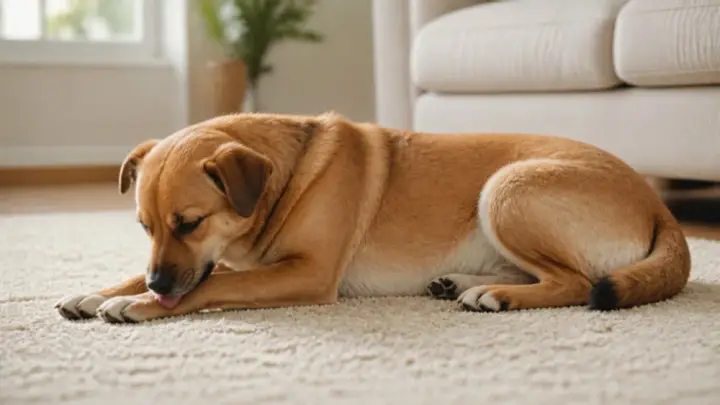
Dogs lick their paws as part of normal grooming, for example after a walk or before a nap. That kind of licking is brief and leaves no mark. Licking that goes on for long periods, wakes you at night, or turns the fur red-brown is different. It usually means the feet itch or hurt. This guide covers the common causes, what you can check at home, and when the licking needs a vet.
What red-brown staining means
Saliva contains natural pigments called porphyrins, which contain iron. When a dog licks the same spot again and again, these pigments build up in the fur and turn it pink or rusty red, and over time a darker brown. The color shows most clearly on white and light-colored dogs, often between the toes and on the feet and lower legs. Yeast overgrowth on the skin can also stain the fur reddish brown.
The staining itself is mainly a cosmetic problem, but it tells you something useful. It means the licking has been going on long enough to change the coat. Wiping the stain away does not help, because the cause of the licking still needs to be found and treated. Most causes are easier to treat when caught early, so staining is a good reason to book a vet visit.
Allergies
Allergies are one of the most common reasons dogs lick their feet. With environmental allergies, called atopic dermatitis, dogs react to things such as pollen and dust mites. The feet, face, ears, front legs and belly are the areas most often affected. Signs usually start between six months and three years of age, and they are often seasonal, though some dogs itch all year round. Many of these dogs also rub their face and get repeated ear infections. Our guide to allergies in dogs and cats explains the main types.
Food allergy can look very similar, but the itch usually changes little from season to season. The only reliable way to diagnose it is a strict diet trial with a special food chosen by your vet, fed for up to three months with nothing else. If the itch improves, the old food is offered again to see whether the signs come back.
Allergic itching tends to affect the tops of the paws and the skin between the toes. Contact reactions to something the feet touch, such as a cleaning product or a plant, more often affect the undersides. Flea bites can make any itchy dog worse, so year-round flea control is part of managing an allergic dog. For more on that, see our guide to fleas in dogs and cats.
Allergies can be managed but not cured. The aim is to keep the itch under control and prevent flare-ups, usually with a mix of medicated washes, itch-relief medicines your vet prescribes, and treatment of any infection.
Yeast and bacterial infections
Yeast called Malassezia normally lives on the skin in small numbers. When the skin is inflamed or oily, for example because of an allergy, the yeast can overgrow. Allergic skin disease is one of the most common reasons this happens. Yeast infection causes itching, redness and a musty smell. Over time the skin can become greasy, thickened and darker. Breeds such as West Highland White Terriers, Basset Hounds, Cocker Spaniels, Boxers, Shih Tzus and Dachshunds are prone to it. It is not contagious. More detail is in our guide to yeast infections in dogs.
Bacterial infection of the feet tends to cause red, swollen paws, bumps, sores or pus, hair loss and nonstop licking. Infection often sits on top of another problem, such as an allergy, so treating the infection alone may only bring short relief.
Injuries and things stuck in the paw
Licking that focuses on one paw, especially if it started suddenly, often points to a local problem. Look for these common causes.
- A cut, scrape or torn nail
- A splinter, piece of glass or thorn
- A grass seed or awn, which can lodge between the toes and work its way into the skin
- Burned or torn pads from hot pavement or rough ground
- A tick hidden between the toes
- Salt or grit from winter roads
In winter, salt and ice can crack and sting the pads. Our guide to winter paw care explains how to protect the feet in cold weather.
Interdigital cysts
Interdigital cysts are red, raised bumps between the toes. Despite the name, they are usually areas of deep inflammation and infection rather than true cysts. They can burst and leak fluid or blood, so you may see small spots of blood on the floor. Affected dogs lick and chew the area, which makes it worse, and some limp. Allergies are the most common cause. Friction is another, especially in overweight dogs, dogs with arthritis, and large short-coated breeds such as Labrador Retrievers, German Shepherds and bulldogs.
Other medical causes
Less often, paw licking is linked to mites such as Demodex, hormone problems such as an underactive thyroid or Cushing's disease, immune diseases that cause crusts and sores on the pads and nail beds, or a tumor on a toe or nail bed. Pain can cause licking too. A dog with sore joints may lick over the painful area.
Boredom, stress and habit
Some dogs lick when they are bored, anxious or under-stimulated. In some dogs it becomes a compulsive habit. A lick granuloma, also called acral lick dermatitis, is a thick, raw patch of skin caused by constant licking of one spot, usually on the front of the wrist or lower leg. It is thought to involve both physical causes, such as allergies or joint pain, and emotional ones, such as anxiety. Medium and large breeds are affected most often.
Behavior is usually the last explanation, not the first. A vet should rule out itch and pain before licking is put down to boredom. Once medical causes are treated, more exercise, play, chew toys and food puzzles can help, along with removing triggers for anxiety. If your dog licks mainly when left alone, our guide to separation anxiety may help.
Checks you can do at home
A careful look at the feet often narrows things down. Do it in good light, with a calm dog and a few treats.
- Look at the top and bottom of each paw, the pads, and the skin between the toes. Note redness, swelling, bumps, cuts or a dark or greasy look.
- Spread the toes gently and check for grass seeds, splinters, ticks or anything stuck.
- Check every nail for cracks, bleeding or swelling at the base.
- Smell the feet. A strong musty or sour smell can point to yeast or infection.
- Feel for heat or swelling, and notice whether your dog pulls away or limps.
- Part the fur on the back and belly and look for fleas or flea dirt.
- Keep a short note of when the licking happens: after walks, at certain times of year, or when your dog is alone.
If the licking seems to start after walks, rinse the feet gently with plain water and dry them well, then see whether it makes a difference. Do not use human creams or sprays on the paws unless your vet recommends them, because your dog will lick them off.
When to see a vet
Book a vet visit if you notice any of the following.
- Red-brown saliva staining on the feet or legs
- Licking that lasts more than a few days or keeps coming back
- Red, swollen or hot skin, bumps between the toes, or a bad smell
- Hair loss, raw patches, sores or pus
- Licking along with ear infections, face rubbing or scratching elsewhere
See your vet the same day if your dog is limping or will not put weight on a foot, if a paw is badly swollen or bleeding, if you see something stuck that you cannot remove easily, or if a nail is torn or broken. For bleeding and wounds before you reach the clinic, see our guide to first aid for dogs and cats.
How vets find the cause
Your vet will ask about the pattern of licking, your dog's diet, the season it started, and any other itching. The exam often includes simple tests done in the clinic. A piece of clear tape or a swab pressed on the skin, looked at under a microscope, shows yeast and bacteria. Skin scrapings and hair samples check for mites. Depending on what is found, your vet may suggest cultures, blood tests, a diet trial, X-rays or a small skin sample.
Treatment depends on the cause. It may include medicated shampoos, foot soaks or wipes, medicines for infection or itch, removing a foreign body, or treating an underlying allergy or hormone problem. A cone or a protective boot can stop the licking for a while so the skin can heal, but only as part of a plan from your vet. Most dogs respond well once the real cause is found.
After adoption
Dogs rescued from the street can arrive with fleas, other parasites or sore skin. At Paw Squadron, every rescued dog sees a vet first, with a checkup, deworming and treatment against fleas and other parasites. Allergies and yeast problems can still appear later, sometimes in a new season or after a change of food. If your adopted dog starts licking its paws, a visit to your own vet is the best way to find the reason early.
For more practical health guides, browse PawPedia. Questions about adopting from us are answered in our FAQ.
See also
From our rescues
 13:39Abandoned Puppy was Terrified and Freezing during a Massive Rainstorm until This HappenedEmma Storm · February 23, 2022
 12:28Rescue of a Lonely Puppy Nobody Cared ForCarrie Undercart · February 19, 2022
 12:26Abandoned Puppy Was Freezing To Death and Barely Surviving until This HappenedPalm Holland · February 12, 2022
Sources
Online sources
- Pododermatitis in Dogs · VCA Animal Hospitals
- Saliva staining and overgrooming in dogs · PDSA
- Why Does My Dog's Fur Turn Pink or Brown? · American Kennel Club
- Allergies in Dogs · Merck Veterinary Manual
- Yeast Dermatitis in Dogs · VCA Animal Hospitals
- Interdigital Cysts in Dogs · VCA Animal Hospitals
- Lick Granuloma in Dogs · VCA Animal Hospitals
- Prevent these five common summer paw problems · VCA Animal Hospitals
Encyclopedias
- Lick granuloma · Wikipedia
- Atopic dermatitis · Wikipedia
Books
- Miller WH, Griffin CE, Campbell KL. Muller and Kirk's Small Animal Dermatology. 7th ed. St. Louis: Elsevier, 2013. ISBN 9781416000280
- Ettinger SJ, Feldman EC, Côté E (eds.). Textbook of Veterinary Internal Medicine: Diseases of the Dog and the Cat. 8th ed. St. Louis: Elsevier, 2016. ISBN 9780323312110
- Щербаков Г. Г. и др.; под общ. ред. Г. Г. Щербакова. Внутренние болезни животных: учебник [Internal Diseases of Animals: A Textbook]. Санкт-Петербург: Лань, 2014. ISBN 9785811416820
- Nelson RW, Couto CG. Small Animal Internal Medicine. 6th ed. St. Louis: Elsevier, 2019. ISBN 9780323570145
This article is general information, not veterinary advice. Always consult a veterinarian about your animal’s health. Some pictures in PawPedia may be AI-generated.
This page was last updated on November 28, 2026.