Ear Infections in Dogs: Signs, Treatment, and Prevention
From PawPedia, an encyclopedia of life with animals
Contents
| Also called | Otitis externa |
|---|---|
| Cause | Bacteria and yeast that multiply when conditions inside the ear canal change |
| Most at risk | Dogs with long, floppy or hairy ears and dogs with narrow ear canals |
| How it spreads | Most ear infections do not pass from one dog to another |
| Common signs | Head shaking, scratching at the ear, a bad smell, yellow, brown or black discharge, redness or swelling, pain when touched |
| Diagnosis | Usually a swab of the discharge, checked under a microscope for yeast, bacteria or mites |
| Treatment | The vet often cleans the ear first; many dogs then go home with medicated ear drops |
| Outlook | Most dogs do well when treated early |
| Prevention | Finding and managing the underlying cause, often an allergy, with your vet |
| Risk to people | Ordinary ear infections are not considered a risk to people living with the dog |
| Emergency if | Head tilt, loss of balance, circling, eyes that flick back and forth, a face that droops on one side, or vomiting with ear signs |
Ear infections are among the most common health problems in dogs. Most start in the outer ear canal, a condition vets call otitis externa. Caught early, they usually clear up with treatment. Left alone, they can become painful and harder to treat, and the infection can spread to the middle and inner ear. This guide covers the signs to look for, how vets treat ear infections, and how to clean your dog's ears without causing harm.
Why dogs get ear infections
A dog's ear canal is long. It runs down from the opening and then turns inward toward the eardrum, in an L shape. This shape easily traps wax, moisture and debris. Healthy ears carry small numbers of bacteria and yeast. When something changes the conditions inside the canal, these germs can multiply and cause an infection. For this reason, an ear infection is often a sign of another problem underneath.
Allergies are a common underlying cause, especially when infections keep coming back. These can be food allergies or allergies to things in the environment, such as pollen and dust mites. Other causes include ear mites, a foreign object such as a grass seed, hormone problems such as an underactive thyroid, and, less often, growths in the ear canal.
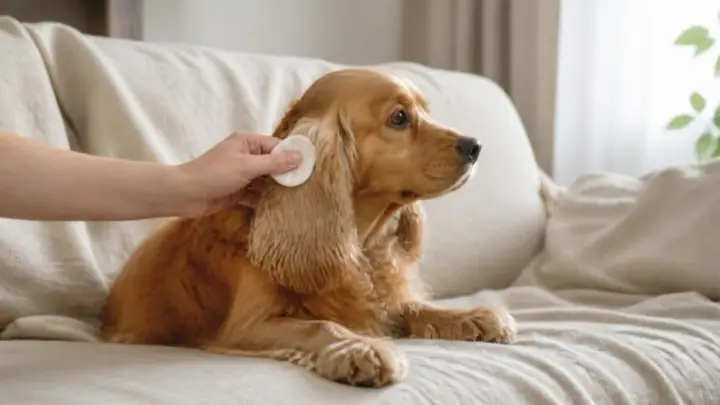
Some dogs are more at risk. Dogs with long, floppy or hairy ears, such as Cocker Spaniels and Poodles, get ear infections more often. So do dogs with narrow ear canals. Moisture from swimming or bathing adds to the risk, and so does cleaning the ears too often. Any dog can be affected, though.
Signs to watch for
One or both ears can be affected. Signs may appear suddenly or build up slowly over weeks. Common signs include the following.
- Frequent head shaking
- Scratching at the ear, or rubbing the head along the floor or furniture
- A bad smell from the ear
- Yellow, brown or black discharge
- Redness or swelling inside the ear flap or at the opening of the canal
- Pain when the ear or head is touched, or pulling away when you reach for it
- Crusts, scaly skin or thickened skin on the ear in longer-lasting cases
Dark brown discharge often points to yeast or ear mites. Bacterial infections can look similar, so the vet needs to check a sample under the microscope to know the cause.
Constant scratching and head shaking can break a small blood vessel in the ear flap. The flap then fills with blood and becomes a soft, puffy swelling called an aural hematoma. It needs a vet visit, and treatment is usually surgery. The ear problem that caused it needs treatment too.
When it is an emergency
A same-day vet visit is recommended if your dog shows signs that the infection may have gone deeper. These include a head tilt, loss of balance, walking in circles, trouble getting up, or eyes that flick back and forth. Drooping of the face on one side, an eyelid that will not close, or pain when opening the mouth also need prompt attention. So does a dog that seems very unwell, stops eating or vomits along with ear signs.
Sudden, intense head shaking focused on one ear, especially after a walk through long grass, can mean a grass seed is stuck in the canal. These seeds can move deeper into the ear and may damage the eardrum. It is safest to let a vet remove the seed, which sometimes needs sedation.
How vets diagnose it
The vet looks into the ear canal with an otoscope to check for swelling, discharge, foreign objects and growths, and to see whether the eardrum is intact. If the ear is very sore or blocked, your dog may need sedation or anesthesia so the vet can see properly.
Next, the vet usually takes a swab of the discharge and looks at it under a microscope. This shows whether yeast, bacteria or mites are present and helps guide treatment. For infections that keep coming back or do not improve, the vet may send a sample for culture. This shows which bacteria are involved and which medicines are likely to work.
If the middle ear may be involved, imaging such as X-rays, a CT scan or an MRI can show fluid or changes in the bone. For repeat infections, the vet will also look for the underlying cause, such as allergies or a thyroid problem.
How it is treated
Treatment depends on what the tests show and on whether the eardrum is intact. The vet often cleans the ear first, because wax and discharge can stop ear medicine from working. Many dogs then go home with medicated ear drops. These often combine a medicine against the infection with an anti-inflammatory to ease swelling and pain. Some dogs also need tablets or injections, especially when the infection is severe, long-lasting or has reached the middle ear.
Rechecks are part of treatment. Bacterial and yeast ear infections often need several vet visits over two to four weeks, until a sample shows the infection is gone. An ear can look and smell better before it has fully healed, so finishing the full course is recommended. Middle and inner ear infections usually need a longer course, often several weeks.
Most dogs do well when treated early. After a middle or inner ear infection, some dogs keep a head tilt or some hearing loss even once the infection has cleared. Infections that go on for a long time can thicken and narrow the ear canal, sometimes for good, and resistant bacteria become more likely. In the most severe cases, the vet may suggest surgery on the ear canal and will explain the choices.
It is best to ask your vet before putting anything into a sore ear. Some cleaners and medicines are not safe to use when the eardrum is torn. Home remedies such as vinegar mixtures, hydrogen peroxide or alcohol can make an inflamed ear worse.
How to clean ears safely
Not every dog needs routine ear cleaning, and cleaning too often can irritate the canal. Look at your dog's ears regularly, for example when you groom, and ask your vet whether your dog needs cleaning and how often. If an ear is red, smelly or painful, it is best to see the vet before cleaning it, since the eardrum may be damaged.
When your vet recommends cleaning, use a dog ear cleaner they suggest and follow these steps.
- Lift the ear flap and gently fill the canal with cleaner, without pushing the bottle tip into the ear.
- Massage the base of the ear for about 30 seconds to loosen wax and debris.
- Step back and let your dog shake its head.
- Wipe away loosened wax and cleaner from the ear flap and the canal opening with cotton balls or gauze.
- Finish with a treat and praise, so ear care stays calm and easy.
Cotton swabs are not recommended inside the ear canal. They can pack wax deeper or damage the eardrum. If your dog shows pain during cleaning, stop and check with your vet. After swimming or a bath, gently dry the ear flap and the opening of the canal. If your dog has prescribed ear drops, your vet may ask you to clean the ear before giving them.
Preventing repeat infections
Ear infections that keep coming back usually have a cause underneath, often an allergy. Finding and managing that cause with your vet is the best way to reduce new infections. Some dogs need long-term ear care, such as regular cleaning with a product the vet recommends. If your dog swims often, ask your vet whether cleaning the ears afterward would help. Regular checks at home help you spot changes early, while they are easier to treat.
Spread to other pets and people
Most ear infections do not pass from one dog to another. The bacteria and yeast involved usually already live on the dog in small numbers and cause trouble when conditions in the ear change. Ordinary ear infections are not considered a risk to the people living with the dog. Washing your hands after handling a sore ear or giving ear drops is still a good habit.
Ear mites are different. They spread easily between dogs and cats that live together, and they can survive for some time off the animal. If one pet has ear mites, vets usually recommend treating all the cats and dogs in the home and cleaning bedding and grooming tools.
Ear care after adoption
After every rescue, Paw Squadron's first stops are the vet and a bath, with a checkup, deworming and treatment against fleas and other parasites. Before adoption, every animal also gets vaccinations and a microchip. Ear infections can still develop later, as they can in any dog. In the first weeks, get to know what your dog's healthy ears look and smell like, and ask your own vet to check them at the first visit. Getting your dog used to gentle ear handling, with treats, makes checks and treatment much easier later.
If your new dog has an ear problem and you have other pets, tell your vet, so they can check for ear mites and decide whether the other animals need treatment. For more care guides, visit PawPedia, and for questions about adopting, see our FAQ.
See also
From our rescues
 12:49Abandoned Puppy was Desperately Pleading for Help Until This HappenedShania Drain · March 9, 2022
 9:33Abandoned Puppy was in Tears and Struggling to Survive Until This HappenedDustin Timberlake · March 5, 2022
 13:25Rescue of a Scared Abandoned Puppy with a Broken HeartClean Eastwood · February 26, 2022
This article is general information, not veterinary advice. Always consult a veterinarian about your animal’s health. Some pictures in PawPedia may be AI-generated.
This page was last updated on October 2, 2026.