Separation Anxiety and Destructive Chewing in Dogs: Signs, Causes, and What Helps
From PawPedia, an encyclopedia of life with animals
Contents
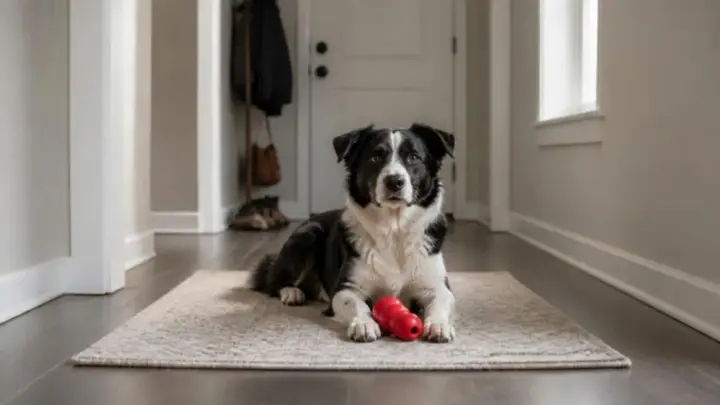
| Key clue | Chewing, barking or soiling that happens almost only when the dog is alone |
|---|---|
| Starts | Usually within the first 15 to 30 minutes after the owner leaves |
| May raise risk | A big life change, such as a new owner, shelter time, a move or a sudden change in routine |
| First step | A vet visit, especially if the problem started suddenly |
| Useful tool | A recording of the first half hour after you leave, to show your vet |
| What helps | Very short absences, built up slowly while the dog stays calm; moderate or severe cases usually do better with expert help |
| Takes | Training can take weeks or months |
| Avoid | Punishment, which tends to make separation problems worse |
| Second dog | Not a reliable fix |
| Other causes | Chewing while you are home too is more likely teething, boredom or habit |
| Emergency if | Swallowed fabric, string or stones; chewed a live cord, medicines or batteries; repeated vomiting, a painful belly or mouth bleeding |
A dog that chews the door frame, howls, or soils the floor only when it is alone is showing a pattern worth taking seriously. Owners often see the damage first and assume the dog is bored or being spiteful. Boredom is sometimes the cause. Often, though, the chewing is one sign of distress about being left alone. Vets call this separation anxiety or separation-related distress.
Timing is the best clue. A bored or teething dog may chew whether you are home or not. A dog with separation distress chews, barks, or soils almost only when it is alone. This guide explains how to tell the two apart, when chewing becomes an emergency, and what usually helps.
Signs to watch for
Signs usually start within the first 15 to 30 minutes after the owner leaves. Some dogs start to worry earlier, while the owner picks up keys or puts on shoes. Each dog shows its own mix of signs.
- Chewing or scratching at doors, door frames, and window sills
- Damage to the owner's things, such as shoes, pillows, or remote controls
- Barking, howling, or whining that goes on while the dog is alone
- Urine or stool indoors in a dog that is otherwise house-trained
- Pacing, panting, drooling, or being unable to settle
- Ignoring food or treats until the owner comes back
- Frantic escape attempts, sometimes with torn nails, sore paws, or damaged teeth
A video recording is one of the most useful tools here. Many owners only see the aftermath. A recording of the first half hour after you leave can help your vet see whether the dog is anxious, bored, or reacting to something outside, such as a delivery or another dog barking. For barking with other causes, see how to stop a dog from barking.
Why it happens
There is rarely a single cause. Risk seems to rise after a big change in a dog's life. That includes a change of owner or family, time in a shelter, a move to a new home, or a sudden change in routine, such as an owner who worked from home going back to the office. The death or departure of a household member can also set it off.
Puppies that were rarely left alone may find it harder later in life. A close bond on its own is no cause for worry. Dogs that follow their owners from room to room are not at higher risk than dogs that do not.
Medical problems can look like separation anxiety. Pain, urinary problems, incontinence, or some medicines can lead to accidents or restlessness. In older dogs, age-related decline in brain function can bring new anxiety. For this reason, a vet visit is the recommended first step, especially if the problem started suddenly.
When it is an emergency
Most chewing is a behavior problem. Some chewing turns into a medical emergency. Contact your vet or an emergency clinic right away in these situations.
- The dog swallowed fabric, stuffing, plastic, rope, string, bone, or stones
- The dog vomits repeatedly, refuses food, seems weak, or has a painful belly
- The dog chewed a live electrical cord, even if it seems fine afterward
- The dog chewed into medicines, batteries, or other household products
- The dog is bleeding from the mouth or paws, or has a broken tooth after trying to escape
Swallowed objects can block the stomach or intestines, and a blockage needs prompt treatment. String, thread, and rope carry extra risk because they can damage the intestine. It is best not to make the dog vomit at home unless a vet advises it. Vets usually look for a blockage with X-rays or ultrasound. Depending on the object and where it sits, the vet may remove it with an endoscope, a thin camera passed through the mouth, or with surgery.
After a shock from a cord, fluid can build up in the lungs hours later. That is why a vet check is recommended even when the dog seems normal.
How vets usually help
Your vet will usually examine the dog and ask about the pattern, including when it started, what happens as you get ready to leave, and what the video shows. Tests may be suggested to rule out medical causes, such as a urinary problem.
If separation anxiety is likely, treatment combines changes at home with gradual training. Mild cases often improve with a steady plan. Moderate or severe cases usually do better with help from a veterinary behaviorist or a qualified behavior consultant working with your vet. The training can take weeks or months.
Some dogs are too anxious to learn anything while alone. For them, a vet may recommend anti-anxiety medication alongside the training plan. Medication can lower the dog's distress so the training has a chance to work, and it tends to work best when both are used together. Only give medicines your vet has prescribed for your dog. Some vets also suggest calming pheromone diffusers, soft background sound, or blocking the view from a window if outside activity sets the dog off.
Teaching a dog to be alone
The aim is to show the dog, in small steps, that being alone is safe and that you always come back. Progress is usually slow, and setbacks are normal.
While you train, avoid long absences where you can. Each time the dog panics alone, the fear can grow. A dog sitter, a trusted neighbor, daycare, or taking the dog with you can fill the gaps.
Work on departure cues. Pick up your keys or put on your coat, then sit down again. Repeat this often through the day until these actions stop causing worry.
Practice very short absences. Step outside for a few seconds and come back before the dog becomes upset. Build up slowly, and only add time when the dog stays calm. Keep leaving and returning quiet and low-key.
Give the dog something good to do. A food puzzle or a toy stuffed with food, offered only when you leave, can help a mildly anxious dog link your departure with something pleasant. If the dog is too upset to eat when alone, the plan needs to go slower or needs professional help.
Meet daily needs. Regular walks with time to sniff, play sessions, and short training sessions give a dog an outlet for energy. A well-exercised dog may settle more easily.
Use crates with care. Some dogs feel safe in a crate that was introduced gently. Others panic and can hurt themselves trying to get out. If your dog pants, drools, or claws at the crate, a gated room may be a better choice.
What makes it worse
Punishment tends to make separation problems worse. The chewing and soiling are signs of distress. Dogs do not do them out of spite or disobedience. A dog scolded for damage it did hours earlier cannot link the scolding to the chewing, and it may become more anxious about your return. Tying a chewed object to a dog, taping its mouth, or leaving it crated for many hours is also harmful.
Getting a second dog is not a reliable fix. Many dogs with separation anxiety are attached to a particular person, and another animal in the house may not ease that distress.
Chewing with other causes
If your dog chews while you are home too, the cause is more likely to be teething, boredom, or habit. Puppies chew most while their adult teeth come in, and this phase usually ends by about six months of age. Dogs on a calorie-restricted diet may chew items that smell of food. Dogs that get too little exercise or mental work often chew to fill the time.
Management helps with most of this. Put shoes, cables, and children's toys out of reach. Offer several safe chew toys and rotate them every few days so they stay interesting. Supervise the dog when it is loose in the house, and swap anything it should not have for something it may chew. A bitter taste deterrent, sprayed on furniture daily for a few weeks, helps some dogs. When you cannot watch, a dog-proofed room or a crate for limited periods keeps both the dog and your home safe. Edible chews are best given under supervision.
For newly adopted dogs
Dogs that have changed homes or spent time in a shelter are more likely to struggle when left alone. Rescue, travel, and a new family bring a lot of change at once. At Paw Squadron, the first stops after every rescue are the vet and a bath, and every animal gets a checkup, treatment, vaccinations, and a microchip before adoption. Settling into a new home still takes time.
If you have just adopted, plan the first weeks with short, gradual absences instead of leaving the dog alone for a full workday straight away. Watch for the signs above, film the dog if you can, and talk to your vet early if you see distress. Many dogs improve with patience and a steady routine. For more on adoption, see our FAQ or send an adoption inquiry.
See also
From our rescues
 12:49Abandoned Puppy was Desperately Pleading for Help Until This HappenedShania Drain · March 9, 2022
 9:33Abandoned Puppy was in Tears and Struggling to Survive Until This HappenedDustin Timberlake · March 5, 2022
 13:25Rescue of a Scared Abandoned Puppy with a Broken HeartClean Eastwood · February 26, 2022
This article is general information, not veterinary advice. Always consult a veterinarian about your animal’s health. Some pictures in PawPedia may be AI-generated.
This page was last updated on October 10, 2026.