Found a Kitten? How to Tell If It Needs Help
From PawPedia, an encyclopedia of life with animals
Fact-checked against expert sources
Contents
In short
If the kitten is safe and healthy, move away and watch for a few hours, because the mother is often nearby. Act straight away if it is injured, sick, cold or in danger. Warm a chilled kitten slowly before feeding, never give cow's milk, and contact a vet, shelter or rescue.
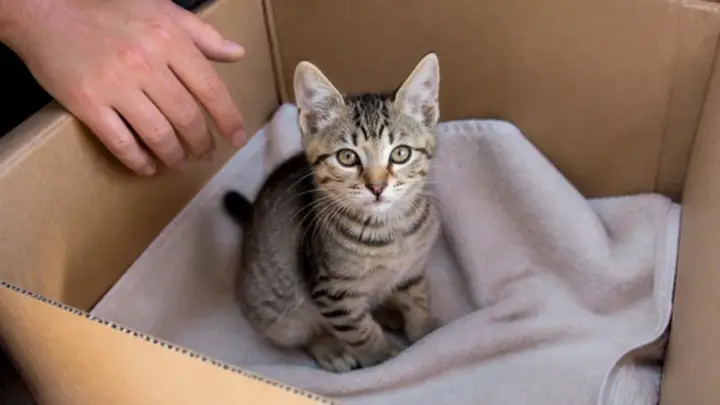
| First step | Check whether the kitten is in danger, injured, cold, limp or in an unsafe place such as a road, drain or yard with dogs |
|---|---|
| Is the mother near | Watch from a distance for a few hours; clean, plump, quiet kittens are probably being cared for |
| If she returns | Usually leave the kittens with her, putting out cat food and water a little way from the nest |
| Age clues | Under 1 week, eyes shut; 1 to 2 weeks, eyes open blue; about 3 weeks, first steps and teeth; 4 to 5 weeks, plays and laps; about 8 weeks, about 2 pounds |
| Warmth first | Wrap a cool kitten in a towel with a covered heat source under part of the bedding and warm it slowly; never feed a cold kitten |
| Feeding | Kitten milk replacer in a kitten bottle, never cow's or goat's milk; every two to four hours for very young kittens |
| Toileting | Very young kittens cannot pee or poop alone; rub the genital area with a warm, damp cotton pad after each feed |
| Take the kitten in if | The mother has not returned after a few hours, the kitten is cold, wet, weak or injured, or it is in danger and cannot be moved |
| Who to call | A local shelter, cat rescue group, vet clinic or animal control; ask for a microchip scan |
| Flea products | Never use dog flea products, since permethrin is highly toxic to cats; use only what the vet recommends |
| Urgent vet signs | Cold or limp, refuses to feed, weak or twitching, diarrhea, struggling to breathe, wounds or swelling |
Finding a tiny kitten alone in a yard, a parking lot or under a bush is upsetting, and the first instinct is to scoop it up. Sometimes that is exactly the right thing to do. Often, though, the mother cat is nearby. She may be out looking for food, or hiding until you leave. A kitten raised by its mother has the best chance of growing up healthy, so it is worth taking a few minutes to work out whether this kitten really needs your help. This guide walks you through the questions to ask and the steps to take.
Step 1: Is the kitten in danger right now?
Start with the kitten's safety and health. Act straight away if any of these are true.
- The kitten is injured, bleeding or clearly sick, for example with eyes crusted shut, labored breathing or diarrhea.
- It is cold to the touch, wet, limp or barely responding.
- It is somewhere dangerous, such as a road, a drain, a construction site or a yard with dogs.
- You know the mother cat has been killed or taken away.
A sick or injured kitten needs a vet, a shelter or a rescue as soon as possible. Call ahead so they know you are coming and can confirm they are open and able to take it. If the kitten is healthy but in an unsafe spot, move it, and any littermates, a short distance to somewhere safer and sheltered where the mother can still find them.
Step 2: Is the mother nearby?
If the kitten is safe and looks well, give the mother a chance to come back. Move well away, ideally somewhere you can watch without being seen, such as inside a house or a parked car. A mother cat is unlikely to approach while people are standing close by. Check back every so often over the next few hours.
The kittens themselves give clues. Kittens that are clean, plump and quiet are probably being cared for. Kittens that are dirty, thin and crying constantly may have been on their own for some time. The mother may also move her litter to a new spot while you are away, so an empty nest is not always a bad sign.
If the mother returns and the kittens are healthy, the best plan is usually to leave them with her. You can help by putting out cat food and fresh water a little way from the nest, and by offering dry, clean shelter. Kittens can be brought in, together with their mother if possible, once they are eating wet food on their own at about four to five weeks of age.
Step 3: How old is the kitten?
Age tells you how urgent the situation is. A newborn cannot survive long without warmth and milk, while an older kitten can eat on its own. These milestones give a rough guide.
- Under 1 week: the umbilical cord may still be attached, the eyes are shut and the ears are folded flat. The kitten cannot walk.
- 1 to 2 weeks: the eyes begin to open and are blue. The ears start to unfold, and the kitten crawls.
- About 3 weeks: the eyes and ears are fully open. The kitten stands, takes wobbly first steps and its first baby teeth appear.
- 4 to 5 weeks: the kitten runs, pounces and plays. It can lap from a dish, eat soft food and start to use a litter box. The eyes begin to change from blue to their adult color.
- About 8 weeks: the kitten weighs about 2 pounds and looks like a miniature cat.
Weight alone is not a reliable guide, since healthy kittens vary. A vet or an experienced rescue can estimate age more precisely.
Warmth comes before food
Young kittens cannot control their own body temperature. In the first weeks they rely on their mother and littermates to stay warm, and a kitten left alone chills quickly. A cold kitten's gut slows down and stops working properly. If it is fed while chilled, it may bring the milk back up and breathe it into the lungs, which can cause a serious pneumonia. Never feed a cold kitten.
If the kitten feels cool, warm it gradually before you think about food.
- Wrap it loosely in a soft towel or fleece.
- Use a covered heat source, such as a hot water bottle wrapped in a towel or a pet heating pad on its lowest setting.
- Put the heat under only part of the bedding, so the kitten can move away if it gets too warm.
- Warm it slowly, over one to a few hours. Avoid heat lamps and hair dryers, which can burn or dehydrate a kitten.
- Never leave a weak or unresponsive kitten alone with a heat source.
A kitten that is cold, limp or not responding needs a vet urgently, even if it seems to perk up as it warms. Take the warming bottle or pad with you in the car.
Feeding a kitten safely
Do not give cow's milk or goat's milk. Kittens struggle to digest it properly. Our guide Can cats drink milk? explains why.
Kittens under about four weeks old need a kitten milk replacer, sold at vet clinics and pet stores, and a small bottle made for kittens. Follow the label for mixing and amounts, since overfeeding is as risky as underfeeding. Warm the milk to about body temperature and test a drop on the inside of your wrist. It should feel neither hot nor cold. Feed slowly and carefully, because kittens can inhale milk.
Very young kittens need feeding every two to four hours, day and night, and every four to six hours from about two to four weeks of age. They also cannot pee or poop on their own at first. After each feed, gently rub the genital area with a warm, damp cotton pad until they go. Our guide to bottle-feeding orphaned kittens covers formula, warmth and daily care in detail. Kittens of four to five weeks and older can usually eat wet kitten food from a shallow dish.
When to take the kitten in
It is time to step in if any of the following apply.
- The mother has not come back after a few hours of watching from a distance.
- The kitten is cold, wet, weak, injured or sick.
- The kitten is in danger and cannot be moved somewhere safe nearby.
- The kittens are dirty, thin and crying constantly, or you know the mother is gone.
Orphaned kittens, especially newborns, need round-the-clock care. If you cannot provide it, contact a shelter or rescue quickly so a trained foster carer can take over.
Who to call
Contact your local animal shelter, a cat rescue group, a veterinary clinic or animal control. In some places you may need to file a found-animal report, so check your local rules. Ask a vet or shelter to scan the kitten for a microchip, and check older kittens for a collar or tag. Posting a photo and details in the neighborhood can help find an owner. Our guide on microchipping explains how chips help reunite lost pets with their families.
The first vet visit
Any kitten you take in should see a vet as soon as possible. The vet will estimate its age, weigh it, check for dehydration, look at the eyes and skin, and plan treatment for fleas and worms, which are common in young kittens.
Do not use flea products made for dogs on a kitten. Some dog flea treatments contain permethrin, which is highly toxic to cats, and even a small amount can cause tremors, seizures or death. Use only products your vet recommends for the kitten's age and weight. Our guides to fleas and caring for a new kitten explain the next steps.
Contact a vet urgently, or an emergency clinic out of hours, if the kitten shows any of these signs.
- It feels cold, or is limp and hard to rouse
- It refuses to feed
- It is weak or has muscle twitching, which can be signs of low blood sugar
- It has diarrhea, or has not passed stool for a day
- It struggles to breathe
- It has wounds, bleeding or swelling
Friendly or feral?
Kittens are easiest to tame while young. Once they are past about two months old, they become much harder to socialize. Kittens that are friendly with people can be fostered and adopted. Older, wary kittens and their mother may do better on a trap-neuter-return plan, where they are neutered and returned to their outdoor home. Cats can start breeding before six months of age, so neutering the mother and her kittens in good time prevents the next litter. Our guide to trap-neuter-return explains how it works.
Rescue and adoption
At Paw Squadron, we rescue dogs and cats, and every animal we take in sees a vet and is dewormed after rescue before it moves on toward a new home. If you have found a kitten and are not sure what to do, a local rescue or vet is the best place to start. And if you are thinking of giving a cat a home, adopting one that has already been checked by a vet is a good way to begin.
For more guides on kittens and cat care, browse PawPedia. If you have questions for us, write to us from the Contact page.
See also
From our rescues


Sources
Online sources
- I Found Kittens Outside, What Do I Do? · ASPCA
- How to Determine a Kitten's Age · Alley Cat Allies
- Hand-rearing kittens · Cats Protection
- Raising Kittens · VCA Animal Hospitals
- Husbandry of the Neonate · Small Animal Pediatrics (Fitzgerald and Newquist, 2011), via PubMed Central
- Critical Care for Kittens: Hypothermia · National Kitten Coalition
- Permethrin Poisoning · International Cat Care
Encyclopedias
- Kitten · Wikipedia
Books
- Miller L, Zawistowski S (eds.). Shelter Medicine for Veterinarians and Staff. 2nd ed. Ames, IA: Wiley-Blackwell, 2013. ISBN 9780813819938
- Turner DC, Bateson P (eds.). The Domestic Cat: The Biology of its Behaviour. 3rd ed. Cambridge: Cambridge University Press, 2014. ISBN 9781107025028
- Peterson ME, Kutzler MA (eds.). Small Animal Pediatrics: The First 12 Months of Life. St. Louis: Saunders Elsevier, 2011. ISBN 9781416048893
This article is general information, not veterinary advice. Always consult a veterinarian about your animal’s health. Some pictures in PawPedia may be AI-generated.
This page was last updated on November 19, 2026.