Why You Should Microchip Your Pet
From PawPedia, an encyclopedia of life with animals
Contents
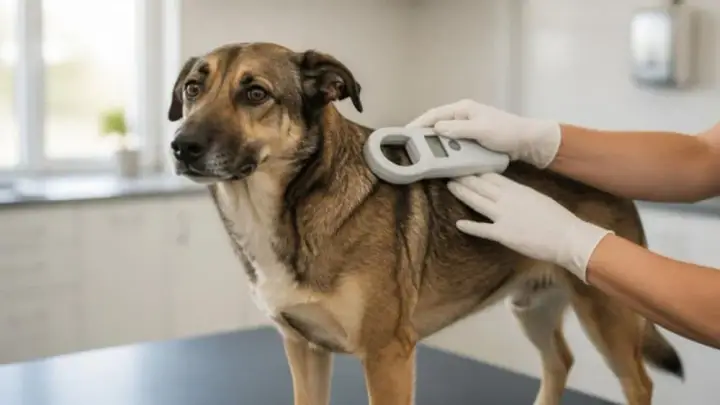
| What it is | A tiny electronic tag about the size of a grain of rice, with no battery |
|---|---|
| What it stores | Only its number; no name, address or phone number |
| Not a tracker | It cannot tell you where your pet is; it helps only once someone finds the pet, scans the chip and looks up the number |
| Implanting | Injected under the skin at a vet visit, usually at the back of the neck or between the shoulder blades |
| Takes | A few seconds, and usually no anesthetic is needed |
| Complications | Uncommon; occasionally some swelling, or the chip moves a short distance |
| Registration | A chip with no registration, or with an old phone number, is close to useless |
| Keep current | Update the record every time you move or change your phone number |
| EU travel | Needs a microchip, a valid rabies vaccination given after the chip, and an EU pet passport |
| Rabies timing | First vaccination from 12 weeks of age, then a 21-day wait before travel |
| Indoor cats | Need a chip too; they can get out through an open window, a door left ajar or a carrier that pops open |
A collar can slip off in a hedge. A tag can wear smooth until the phone number is unreadable. A microchip stays under the skin for the animal's whole life, and it is often the only thing that connects a lost pet to the people looking for it.
What a chip is, and what it is not
A pet microchip is a tiny electronic tag, about the size of a grain of rice, sealed inside a capsule made to sit safely in the body. It has no battery and does nothing on its own. When a scanner is passed over it, the scanner's radio signal powers the chip for a moment, and the chip sends back a unique identification number.
Most chips used in Europe follow an international standard, known as ISO 11784 and 11785, and carry a 15-digit number. Standard chips can be read by the scanners used at vet clinics, shelters and border checks across the continent. If your pet has an older or non-standard chip, ask your vet whether it can be read everywhere you plan to go, because for travel within the EU you would have to carry a reader for it yourself.
A microchip is not a GPS tracker. It cannot tell you where your pet is, and nobody can locate an animal through its chip. It only helps once someone has found the animal, brought it to a scanner and looked up the number.
The chip also stores no name, address or phone number. A standard chip holds only its number. Your contact details live in a separate registry database linked to that number, and that registry entry is the part that actually brings a pet home.
If you want to follow your pet's location in real time, you need a separate GPS collar. Many owners use both: the collar to find a wandering pet quickly, and the chip as the backup that cannot fall off.
How the chip is implanted
The chip is injected under the skin with a needle, usually at the back of the neck or between the shoulder blades, depending on local practice. It takes a few seconds and is much like a routine vaccination, though the needle is a little larger. Most animals barely react, and no anesthetic is usually needed.
Some owners choose to have it done while their pet is already under anesthesia for neutering, which spares the animal even that brief sting. Complications are uncommon. Occasionally there is some swelling at the site, or the chip moves a short distance from where it was placed, which is why vets scan the whole body if they cannot find it right away.
Register it, then keep it current
A chip with no registration, or with an old phone number, is close to useless. This is one of the most common reasons a chipped animal still does not get home: a vet or shelter scans the chip, contacts the registry, and the phone number on file no longer works. Fixing it takes a few minutes.
- Find your pet's chip number. It is in the vet records and, if your pet has one, in its pet passport.
- Ask your vet which registry the chip is recorded in, or use an online microchip lookup service.
- Check that the registered keeper is you, with your current phone number, email and address.
- Add a second contact, such as a relative or a friend, in case you cannot be reached.
- Update the record every time you move or change your phone number.
There is no single registry for the whole of Europe. Each country has its own databases, and some are linked through shared search networks, so a chip registered in one country can often be traced from another. If you move abroad with your pet, check whether you should also register the chip in your new country.
When you adopt an animal that is already chipped, the registration has to move to your name. Ask during the adoption how the transfer is done, and check a few weeks later that it has actually happened. If you are getting ready for a new dog, add this to your preparation list so it does not get forgotten in the excitement.
The law and travel
Many European countries now require dogs to be microchipped by law, and some require it for cats as well. The details differ from country to country, including the age by which the chip must be in place, so your vet is the best person to ask.
For travel, the rules are stricter. A dog, cat or ferret traveling between EU countries needs a microchip, a valid rabies vaccination given after the chip was implanted, and an EU pet passport. The order matters: a rabies vaccination given before the chip was implanted does not count for travel, and the animal has to be vaccinated again.
The first rabies vaccination can be given from 12 weeks of age, and after it the animal has to wait 21 days before it can travel. Coming into the EU from a country outside it can involve extra steps, such as a blood test to confirm the vaccine worked, depending on the country. The rules change from time to time, so go over them with your vet a few months before any trip. For the vaccine schedule and the travel rules in more detail, see rabies in dogs and cats.
Every animal Paw Squadron rescues is microchipped as part of its vet care, alongside the checkup, treatment and vaccinations, and it gets a pet passport before adoption. We adopt within Europe, so if you live in another country, tell us where in your adoption inquiry and we will explain how it works for you.
Cats need chips too
Owners of indoor cats often skip the chip because the cat never goes out. Indoor cats do get out, though, through an open window, a door left ajar during a move, or a carrier that pops open on the way to the vet. A frightened indoor cat outside for the first time tends to hide close by and stay silent, and without a chip, whoever finds it has no way of knowing it has a home.
Collars are less reliable on cats than on dogs, because a safe cat collar is designed to snap open if it catches on something. That feature protects the cat, and it also means the collar and tag are often lost. A chip has no such weakness, and it lets you use chip-reading cat flaps and feeders that open only for your own cat.
If you find a lost pet
If a lost-looking pet is calm and comes to you on its own, any vet clinic or animal shelter with a scanner can check it for a chip in a moment. When the chip is registered and the details are current, the owner can often be reached the same day.
A frightened or injured stray is a different situation. Our FAQ explains what to do when you find an animal in trouble. In short, do not try to catch it yourself, and send us the exact location. If you are outside the Balkan region, call your local animal control or an emergency vet as well.
A five-minute check for this week
If your pet is already chipped, do one thing this week: look up the chip number, find the registry and confirm that the phone number on file is the one you actually answer. If your pet is not chipped, ask for it at your next vet visit, or have it done during neutering.
At the next annual checkup, ask your vet to scan the chip as well. Chips very rarely fail, but a quick scan confirms that it still reads and that the number matches your records. Save the chip number in your phone next to a recent photo of your pet, so you have both ready if you ever need to report it missing.
See also
From our rescues



This article is general information, not veterinary advice. Always consult a veterinarian about your animal’s health. Some pictures in PawPedia may be AI-generated.
This page was last updated on September 30, 2026.