Lost Dog or Cat: How to Find Your Pet Fast
From PawPedia, an encyclopedia of life with animals
Fact-checked against expert sources
Contents
In short
Start searching at once and close to home. Lost dogs are most often found by searching the neighborhood, while missing indoor cats usually hide nearby, often within a few houses. On day one, also call your microchip registry, local shelters and vets, and put up posters.
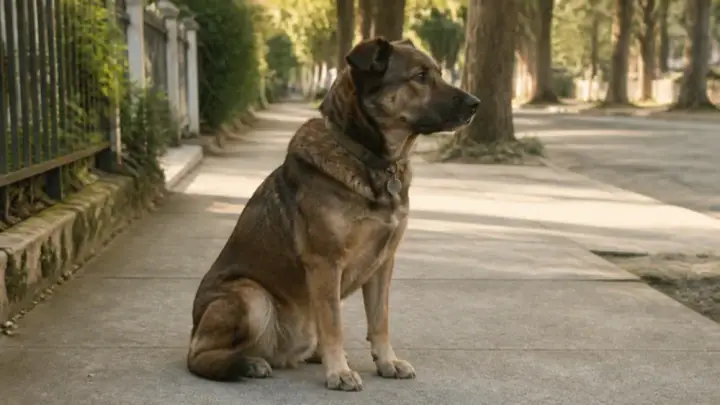
| Odds | In a 2012 ASPCA survey, 93% of lost dogs and 74% of lost cats were recovered |
|---|---|
| First hours | Search the home and yard, walk familiar routes, ask neighbors to check sheds and garages, and call the microchip registry |
| Contact early | Call shelters, animal control and vets on the first day; in an Ohio study owners of lost cats waited about three days on average |
| Dogs | 49% of recovered dogs were found by searching the neighborhood and 15% came home through an ID tag or microchip |
| Approaching a dog | Do not run toward it; crouch down, turn sideways, speak softly and toss treats |
| Cats | 59% of lost cats came home on their own and 30% were found by searching; scared cats hide silently close to home |
| Search radius | A 2018 study found 75% of missing cats within 500 meters; about 200 meters for an indoor cat and up to 2 km or more for a roamer |
| Posters | Large LOST DOG or LOST CAT heading, clear photo, description, last-seen place and your phone number, in plastic sleeves |
| Shelters and vets | Visit shelters in person and go back regularly; send vets a photo and check found and adoption listings |
| Microchips | In a US study owners were found for about 73% of microchipped animals; wrong or disconnected phone numbers were the main reason others were not |
| When your pet returns | Check for wounds, limping or ticks, and book a vet check if it was gone for more than a day or seems unwell |
Few things are as frightening as an empty yard or an open door and no pet in sight. The good news is that most lost pets do come home. In a US survey published by the ASPCA in 2012, 93% of lost dogs and 74% of lost cats were recovered. What you do in the first hours matters, and the most useful work usually happens close to home. This guide covers the first steps, how to search for a dog compared with a cat, and how posters, shelters and microchips help.
The first hours
Start straight away. Do not wait to see whether your pet comes back on its own.
- Search your home and yard thoroughly first. Many missing indoor cats are actually hiding inside the house, in cupboards, behind appliances or under furniture.
- Walk the places your pet knows: your street, the usual walking routes, and your old address if you moved recently.
- Ask neighbors to check sheds, garages, basements and anywhere a pet could be shut in by accident.
- Take treats and a favorite squeaky toy. Familiar sounds and smells can draw a pet toward you.
- Call your microchip registry, report your pet missing and check that your phone number is correct.
- Find a clear, recent photo and write down where and when your pet was last seen.
Then contact local shelters, animal control and veterinary clinics on the first day. Many owners wait. In one Ohio study, owners of lost cats took about three days on average before contacting a shelter, and owners of lost dogs about one day.
How to search for a dog
Lost dogs are usually found by people looking for them. In the ASPCA survey, 49% of recovered dogs were found by searching the neighborhood, and 15% came home because they had an ID tag or a microchip. Most lost dogs are found less than a mile from home, so start nearby and work outward.
Go back to the place your dog was last seen, especially late at night or very early in the morning when streets are quiet. Take your dog's favorite food and a flashlight, call its name, then wait and listen before you call again.
A frightened dog may not come even to its own family, and it may run if people chase it. If you spot your dog, do not run toward it. Crouch down, turn slightly sideways, speak softly and toss a few treats on the ground. Let the dog come to you. Our guide on helping a fearful dog explains the body language to watch for.
How to search for a cat
Cats behave very differently. In the ASPCA survey, 59% of lost cats came home on their own and 30% were found by searching the neighborhood. A 2018 study of more than 1,200 missing cats found that 75% were found within 500 meters of where they escaped, and half within 50 meters.
Indoor-only cats rarely go far. In that study they were usually found within about 40 meters of home. Cats allowed outdoors traveled further, with a typical distance of about 300 meters. The researchers suggested a search radius of around 200 meters for an indoor cat, and up to 2 kilometers or more for a cat used to roaming.
A scared cat usually hides and stays silent, even when it hears you call. Most cats found outdoors were hiding under porches, decks, cars or plants close to the house. About one in ten was found inside someone else's home, often in a garage. So a slow, careful search beats a fast walk around the block.
- Search at night or early in the morning with a flashlight, when the streets are quieter.
- Look under and inside things: decks, porches, parked cars, bushes, sheds and garages.
- Ask neighbors for permission to search their yards, rather than only asking whether they have seen your cat.
- Put your cat's favorite food just inside an open door, then watch from a distance.
- If your cat is too frightened to come out, ask a local shelter or rescue group about borrowing a humane trap.
Frightened cats may hide for several days before they come out. In the 2018 study, about a third of cats were found alive within a week, half within a month, and some much later, so keep going.
Posters and online groups
Posters still work. In the Ohio study, neighborhood signs helped bring home 15% of recovered dogs and 11% of recovered cats, yet fewer than half of owners put them up.
A good poster includes the following.
- "LOST DOG" or "LOST CAT" in large letters
- A clear photo of your pet
- Name, sex, age, breed or type, size, color and any unique markings
- Collar details, and the microchip number if you have it
- Where and when your pet was last seen
- Your phone number
Put posters in clear plastic sleeves so rain does not ruin them. Place them where your pet was lost and near your home, at veterinary clinics, shops and notice boards. Post the same details in local lost-and-found groups and neighborhood pages, and make your post public so others can share it.
Sadly, lost pet posts sometimes attract scams. Be careful with anyone who asks for money before showing you the animal. Ask callers to describe your pet in detail, and consider leaving one feature off the poster so you can check their story.
Shelters, vets and the microchip
Contact every shelter and animal control service in your area, then widen the circle, since pets are sometimes taken to a shelter in another district. Visit in person instead of only phoning. Staff are busy, and a description over the phone can easily miss your pet. Ask to see all the animals, and go back regularly. Call local vets as well and send them a photo, because an injured pet may be brought straight to a clinic. Check "found" and "for adoption" listings too, since a finder may describe your pet differently than you would.
A microchip is a permanent ID, but it only helps if the details are current. In a US study of microchipped animals arriving at shelters, owners were found for about 73% of them. Where owners could not be found, the most common reason was a wrong or disconnected phone number. Our guide on why you should microchip your pet explains how registration works. A tag on the collar with your phone number helps too, because anyone who finds your pet can call you without a scanner.
When your pet comes home
Check your pet for wounds, limping or ticks, and offer water and a small meal. If your pet was gone for more than a day or seems unwell, book a vet check. Then let everyone who helped know, and take down your posters and online posts.
Prevention
Most of what helps you find a lost pet has to be in place before it goes missing.
- Keep a collar and tag with your phone number on your dog, and on your cat if it wears one safely.
- Microchip your pet and update the registry whenever your phone number or address changes.
- Keep recent photos that show your pet's face and full body.
- Check gates, fences, doors and windows, especially when visitors or workers come and go.
- Keep pets indoors and secure during fireworks and storms. Our guide to holiday dangers for dogs and cats covers loud celebrations.
- Consider keeping cats indoors or in a secure outdoor area. Our guide on indoor and outdoor cats weighs up the options.
A newly adopted dog or cat does not know your home or your street yet, so the first weeks need extra care with doors, leashes and gates. If you ever find someone else's pet, our guide on what to do if you find a stray dog walks you through it.
At Paw Squadron, every rescued animal sees a vet after rescue, and every animal we place in a home is microchipped before adoption. Please keep the registration details up to date for your pet's whole life. If a dog or cat you adopted from us goes missing, tell us as well.
For more guides on life with a rescue pet, browse PawPedia, or reach us through our Contact page.
See also
From our rescues



Sources
Online sources
- How Many Pets are Lost? How Many Find Their Way Home? ASPCA Survey Has Answers · ASPCA
- Search Methods Used to Locate Missing Cats and Locations Where Missing Cats Are Found (Huang et al., Animals, 2018) · PubMed Central
- Lost dogs found more often than lost cats, study suggests · The Ohio State University
- Microchips result in higher rate of return of shelter animals to owners · The Ohio State University
- What to do if you have lost a dog · Battersea Dogs & Cats Home
- What do I do if my cat goes missing? · RSPCA Australia
- What to do if you lose your pet · RSPCA Queensland
- How to Find a Lost Dog, Cat, or Other Pet · Best Friends Animal Society
- What to Do if You've Found a Lost/Stray Dog or Cat · Best Friends Animal Society
Encyclopedias
- Microchip implant (animal) · Wikipedia
Books
- Miller L, Zawistowski S (eds.). Shelter Medicine for Veterinarians and Staff. 2nd ed. Ames, IA: Wiley-Blackwell, 2013. ISBN 9780813819938
- Silverstein DC, Hopper K (eds.). Small Animal Critical Care Medicine. 2nd ed. St. Louis: Elsevier, 2015. ISBN 9781455703067
- Weiss E, Mohan-Gibbons H, Zawistowski S (eds.). Animal Behavior for Shelter Veterinarians and Staff. Ames, IA: Wiley-Blackwell, 2015. ISBN 9781118711118
This article is general information, not veterinary advice. Always consult a veterinarian about your animal’s health. Some pictures in PawPedia may be AI-generated.
This page was last updated on November 15, 2026.