Can Cats Drink Milk? Lactose, Kittens, and Safe Treats
From PawPedia, an encyclopedia of life with animals
Fact-checked against expert sources
Contents
- (Top)
- Why milk upsets many cats
- Signs that milk did not agree with your cat
- Milk adds nothing your cat needs
- Kittens: mother's milk or kitten milk replacer
- Lactose-free cat milk and other dairy
- Better treats for your cat
- Helping your cat drink more water
- When to see a vet
- Milk, stray cats and rescue
- See also
- From our rescues
- Sources
In short
Milk is not a good drink for cats, because most adults digest lactose poorly and it can cause loose stool, gas and vomiting; fresh water is better. Kittens need their mother's milk or a kitten milk replacer, never cow's milk. See a vet if diarrhea lasts more than a day or two.
| Short answer | Not recommended; most adult cats digest milk poorly, and fresh water is the best everyday drink |
|---|---|
| Why it upsets cats | Lactase activity falls after about four to seven weeks of age, so lactose can cause loose stool, gas and a bloated belly |
| Signs | Loose or watery stool, gas, a bloated belly, extra trips to the litter box or vomiting, usually within a day |
| Nutrition | Adds nothing a complete cat food does not already supply; WSAVA lists milk among foods to avoid |
| Treat limit | Treats should be no more than 10 percent of daily calories, about 20 to 25 calories for an average adult cat; 60 ml of semi-skimmed milk is about 27 calories |
| Kittens | Need their mother's milk or a commercial kitten milk replacer, never cow's or goat's milk |
| Feeding a kitten | Warm the replacer to about 38°C (100°F), hold the kitten level and use a nipple that lets out one drop at a time |
| Cat milk | Lactose-free cat milk is less likely to cause diarrhea but is still a treat and not a replacement for water |
| Better treats | Commercial cat treats, plain cooked chicken, turkey or fish without bones or seasoning, or a wand toy game ending in a few pieces of dry food |
| More water | Fresh water daily, several bowls around the home, a pet water fountain and wet food if your vet agrees |
| See a vet if | Diarrhea for more than a day or two, repeated vomiting, blood or black tarry stool, hiding or refusing food for over a day, dehydration, any diarrhea in a young kitten |
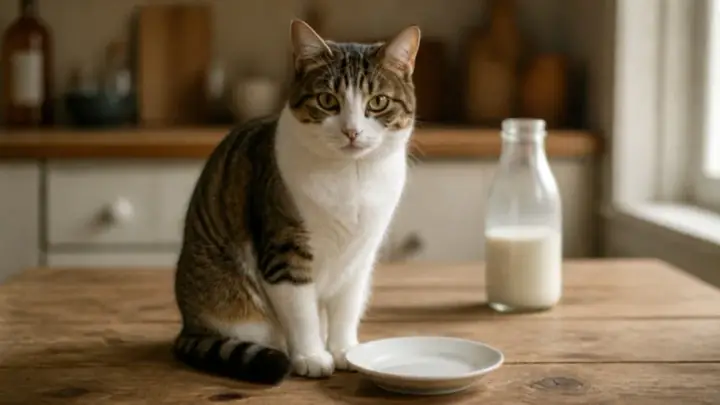
A saucer of milk is one of the most familiar images of cats. Many cats love milk and cream, and many kind people still put out a bowl for a stray. But milk is not the healthy drink it looks like. Most adult cats digest it poorly, kittens need a very different kind of milk, and the best everyday drink for any cat is fresh water. This guide explains why, and what to offer instead.
Why milk upsets many cats
Milk contains a sugar called lactose. To digest it, the gut needs an enzyme called lactase. Kittens make plenty of lactase while they nurse, because their mother's milk is their only food. As kittens grow and are weaned, lactase activity falls. Veterinary nutritionists note that this drop begins after about four to seven weeks of age.
When a cat takes in more lactose than its gut can break down, the leftover sugar moves on into the large intestine. There it draws water into the gut and is fermented by bacteria. The result can be loose stool, gas and a bloated, uncomfortable belly. Some cats also vomit.
How much a cat can handle varies. Some adult cats drink a little milk with no obvious problem, in the same way that some adults tolerate dairy. Others get diarrhea after a few laps. Early research found that many adult cats could digest a modest amount of lactose, while larger amounts caused diarrhea. In an older study, adding lactose to the diet gave some cats diarrhea and also made the protein in the rest of their food less digestible. So the real question is not whether a cat is lactose intolerant, but how much it can take before its gut objects.
Signs that milk did not agree with your cat
- Loose or watery stool
- More trips to the litter box, or accidents outside it
- Gas and a rumbling belly
- A bloated belly, or restlessness that suggests discomfort
- Vomiting
Signs usually appear within a day of drinking milk. A mild upset normally settles once the milk stops. Diarrhea has many other causes, though, so if it lasts or your cat seems unwell, read the warning signs further down.
Milk adds nothing your cat needs
A complete and balanced cat food already contains everything an adult cat needs. A veterinary nutritionist at Tufts University has pointed out that cats gain nothing nutritionally from milk that a good commercial cat food does not already supply. Cornell's Feline Health Center advises that cats have clean, fresh water available at all times, and says milk is not generally recommended as a treat.
Milk is also richer than it looks. The World Small Animal Veterinary Association (WSAVA) advises that treats make up no more than 10 percent of a cat's daily calories. For an average healthy adult cat of 3 to 5 kg (about 6.5 to 11 pounds), that is only about 20 to 25 calories a day. WSAVA lists 2 fluid ounces (about 60 ml) of semi-skimmed cow's milk at about 27 calories. A small saucer can use up the whole day's treat allowance, and a daily habit adds up to weight gain over time. Our guide to overweight dogs and cats explains why a few extra calories matter so much.
WSAVA includes milk and dairy products in its list of foods to avoid, because many cats are lactose intolerant. The ASPCA gives the same advice, noting that pets do not make much lactase.
Kittens: mother's milk or kitten milk replacer
Kittens are the one group that truly needs milk, but it has to be the right milk. Cow's milk is a poor substitute for a mother cat's milk. According to VCA Animal Hospitals, a mother cat's milk contains more than twice as much protein as cow's milk, and cow's milk is also lower in fat and calories and higher in lactose. Goat's milk is no better. Its makeup is close to cow's milk, with less than half the protein of cat's milk.
An orphaned or rejected kitten needs a commercial kitten milk replacer, sold by vets and pet stores. VCA recommends these over both cow's milk and homemade mixtures. Follow the label for amounts and timing. Warm the formula to about 100°F (38°C), and hold the kitten level and horizontal while it feeds, with its head in a natural position. Choose a nipple that lets out only one drop at a time, because milk that flows too fast can go down into the lungs and cause pneumonia.
Kitten milk replacer is the only food a kitten needs until about three to four weeks of age, when weaning onto soft solid food can begin. A kitten that feels cold should be gently warmed before it is fed. Our guide to bottle-feeding orphaned puppies and kittens covers feeding schedules, warmth and toileting in detail. For the weeks after weaning, see caring for a new kitten.
If you find a very young kitten on its own, keep it warm and contact a vet or a rescue group quickly. Do not offer cow's milk while you wait.
Lactose-free cat milk and other dairy
Pet stores sell cat milk, which is usually cow's milk with the lactose removed or reduced. It is less likely to cause diarrhea than ordinary milk, but it is still a treat, not a food and not a replacement for water. Veterinary nutritionists point out that it is not essential for most cats. If you buy it, pour a small amount rather than a full bowl, and count it within the daily treat allowance.
Lactose-free milk for people and plant milks such as soy, oat or almond are sometimes suggested as alternatives. Your cat does not need them, and they add calories with no benefit. Flavored drinks are a real risk: chocolate, coffee and other caffeinated drinks are on the ASPCA's list of foods that are dangerous for pets.
Cheese, yogurt and cream are dairy too. Fermented foods such as yogurt and hard cheese contain less lactose than milk, but they are high in calories. WSAVA lists 1 ounce (28 g) of cheddar at about 120 calories, several times a cat's whole daily treat allowance. A tiny taste now and then is unlikely to harm a cat that tolerates dairy, but these foods are best kept off the regular menu.
Better treats for your cat
Treats are a good way to bond with your cat, reward it and add interest to its day. Safer choices include the following.
- Commercial cat treats, counted within the 10 percent allowance
- Small pieces of plain cooked chicken, turkey or fish, with no bones, skin, seasoning, onion or garlic
- A spoonful of your cat's usual wet food, offered in a puzzle feeder or as a separate snack
- Play with a wand toy that ends with a few pieces of dry food to find
Portions should be smaller than most people expect. WSAVA lists 1 ounce (28 g) of lean cooked chicken breast at about 47 calories, close to double the daily treat allowance for many cats. A treat means a few small bites, not a meal.
Avoid raw meat and bones. Raw animal-based treats can carry germs that affect cats and people, and bones can cause serious injury or blockage. If your cat has a health condition or eats a veterinary diet, ask your vet before giving any treats, because some diets do not work properly with extra food. For daily portions and food types, see our guide to how to feed your cat.
Helping your cat drink more water
Some people give milk because their cat does not seem to drink much. Cats that eat wet food take in a lot of water with their meals and may rarely visit the bowl. Cats on dry food need to drink more, and many tend to drink too little. A few habits can help.
- Offer fresh water every day in a clean bowl
- Place several water bowls in different spots around the home
- Try a pet water fountain, since many cats prefer moving water
- Add wet food to the diet if your vet agrees
When to see a vet
A mild upset after a lick of milk usually settles quickly. Contact your vet if you notice any of the following signs.
- Diarrhea that lasts more than a day or two, or keeps coming back
- Repeated vomiting, or vomiting and diarrhea together
- Blood in the stool, or black, tarry stool
- Hiding, unusual tiredness, or refusing food for more than a day
- Signs of dehydration, such as dry, sticky gums or sunken eyes
- Any diarrhea in a young kitten, since kittens can become dehydrated quickly
Our guides to vomiting in cats and a cat that is not eating explain what else to watch for.
Milk, stray cats and rescue
Many kind people leave a saucer of milk for a stray cat. Fresh water and a little cat food help far more, especially for a thin cat or a mother cat feeding kittens. At Paw Squadron, every rescued cat and kitten sees a vet and is dewormed after rescue. Digestive upsets in a newly rescued cat can have many causes besides diet, including parasites, so a vet check always comes first.
For more practical guides on feeding cats at every age, browse PawPedia. If you have found a kitten and are not sure what to do, write to us from the Contact page.
See also
From our rescues



Sources
Online sources
- Feeding Your Cat · Cornell Feline Health Center, Cornell University College of Veterinary Medicine
- Feeding Treats to Your Cat · World Small Animal Veterinary Association (WSAVA)
- People Foods to Avoid Feeding Your Pets · ASPCA Animal Poison Control Center
- Feeding Orphaned Kittens · VCA Animal Hospitals
- Cat Treats · VCA Animal Hospitals
- Cats can drink cow's milk: true or false? · Chaire Bien-être animal, VetAgro Sup
- Carbohydrate digestion by the domestic cat (Felis catus) · British Journal of Nutrition (Morris, Trudell and Pencovic, 1977)
- What's the Deal With... Cats and Milk? · Vetstreet (with Tufts Cummings School of Veterinary Medicine)
- Cats and Dairy: Get the Facts · WebMD Pets
- What should I feed my cat? · RSPCA
Encyclopedias
- Lactose intolerance · Wikipedia
- Cat food · Wikipedia
- Lactose intolerance · Encyclopædia Britannica
- 乳糖不耐症 [Lactose intolerance] · 日本大百科全書(ニッポニカ), 小学館, via Kotobank
Books
- Case LP, Daristotle L, Hayek MG, Raasch MF. Canine and Feline Nutrition: A Resource for Companion Animal Professionals. 3rd ed. Maryland Heights, MO: Mosby Elsevier, 2011. ISBN 9780323066198
- Стекольников А. А. и др.; под общ. ред. А. А. Стекольникова. Кормление и болезни собак и кошек. Диетическая терапия [Feeding and Diseases of Dogs and Cats: Diet Therapy]. Санкт-Петербург: Лань, 2005. ISBN 5811405979
- J. Wills、K. W. Simpson 編(竹内啓 監訳). ウォルサム小動物の臨床栄養学 [The Waltham Book of Clinical Nutrition of the Dog and Cat (Japanese edition)]. 東京: 講談社, 1995. ISBN 4061537091
This article is general information, not veterinary advice. Always consult a veterinarian about your animal’s health. Some pictures in PawPedia may be AI-generated.
This page was last updated on November 4, 2026.