Overweight Dogs and Cats: How to Tell and How to Help Them Slim Down
From PawPedia, an encyclopedia of life with animals
Fact-checked against veterinary sources
Contents
In short
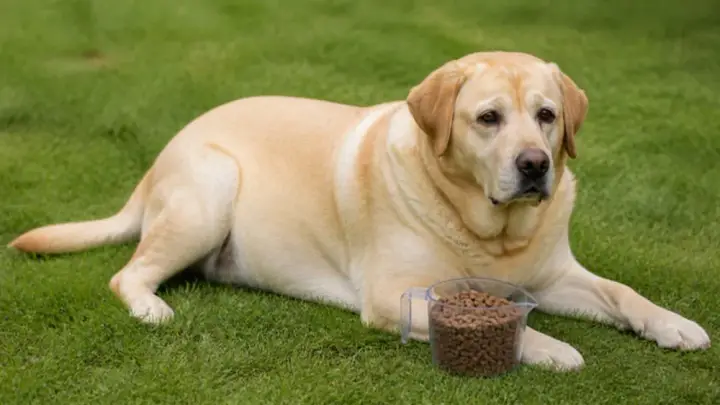
Check your pet at home by feeling the ribs and looking for a waist from above and the side. If the ribs are hard to find, it is likely overweight. See a vet first to set a target weight, then measure meals and limit treats, and never starve an overweight cat, because it risks fatty liver disease.
| Definition | Overweight is 10 to 20 percent above ideal weight; obese is more than 20 percent above |
|---|---|
| How common | A 2022 US survey found about 59 percent of dogs and 61 percent of cats overweight |
| Home check | Ideal body score is 4 or 5 out of 9 for dogs and 5 for cats; feel the ribs and look for a waist and a tucked belly |
| Risks | Osteoarthritis, diabetes, heart disease, high blood pressure, bladder stones in dogs, some cancers and more risk during surgery |
| Medical causes | An underactive thyroid or Cushing's disease in dogs; check with a vet before any diet |
| Best start | A vet visit to confirm the weight, check for illness and set a target weight and daily calories |
| Rate of loss | About 1 to 2 percent of body weight a week for dogs; no more than 1 to 2 percent for cats, and many vets aim lower |
| Food | Measured meals at set times, often a weight-loss food; treats no more than 10 percent of daily calories |
| Exercise | Dogs: longer or more frequent walks over several weeks; cats: at least two play sessions of 10 to 15 minutes a day |
| Avoid | A sudden starvation diet in cats, which can cause fatty liver disease; simply cutting the usual food |
| See a vet if | A cat refuses food, yellow gums, eyes or ear skin, drinking and peeing more, stiffness or limping, weight loss that is too fast |
Extra weight is the most common preventable health problem in dogs and cats, and one of the easiest to miss. It creeps on slowly, a few treats and a slightly fuller bowl at a time. When you see the same round dog or cat every day, it starts to look normal. A 2022 survey by the US-based Association for Pet Obesity Prevention found that about 59 percent of dogs and 61 percent of cats were overweight. This guide shows how to check your pet at home, why the extra weight matters, and how to help your dog or cat slim down safely.
Vets usually call a pet overweight when it weighs 10 to 20 percent more than its ideal weight. A pet more than 20 percent above its ideal weight is called obese.
How to check your pet at home
The scale tells you the weight, but not whether that weight is right for your pet's frame. Vets use a body condition score instead, most often on a scale from 1 to 9. A score of 1 is severely thin and 9 is severely obese. For dogs, a score of 4 or 5 is ideal. For cats, 5 is ideal, although a score of 6 may be acceptable in some cats, especially older ones. You can do a simple version at home in three steps.
- Feel the ribs. Run your flat hands along both sides of the chest, just behind the front legs. If the ribs feel like the back of your hand, the body condition is probably good. If they feel like your knuckles, your pet may be too thin. If they feel like the soft, fleshy part of your palm, or you have to press to find them, there is likely too much fat.
- Look from above. A healthy dog or cat has a visible waist behind the ribs. An overweight pet looks straight-sided or wider in the middle.
- Look from the side. In a healthy dog, the belly tucks up behind the ribs. In cats, look for only a small fat pad on the belly. A rounded, sagging belly and fat over the lower back and the base of the tail are signs of excess weight.
Long or thick coats hide a lot, so trust your hands more than your eyes. Weigh your pet regularly as well. Small dogs and cats can be weighed at home on a baby scale, or by weighing yourself with and without your pet in your arms. Your vet clinic will usually let you use its scale too.
Why extra weight matters
Fat is not just stored energy. Fat tissue is active and releases substances that cause low-grade inflammation throughout the body. That is why vets now treat obesity as a chronic disease rather than a cosmetic problem. Compared with lean pets, overweight dogs and cats have a higher risk of the following problems.
- Osteoarthritis and faster wear of the joints. Extra weight also makes existing joint pain worse. See our guide to arthritis in dogs.
- Diabetes
- Heart disease and high blood pressure
- Bladder stones in dogs
- Some cancers
- More risk during anesthesia and surgery
- Skin and coat problems in cats
Weight also affects how long pets live. In a lifelong study of 48 Labrador Retrievers, one dog in each pair was fed 25 percent less than its partner from puppyhood. The leaner dogs lived significantly longer, and signs of chronic disease appeared later. Being even moderately overweight may shorten a dog's life by close to two years. In cats, one study found a 2.8-fold higher death rate in obese cats aged 8 to 12 than in lean cats of the same age.
Rule out medical causes
Most pets gain weight because they take in more calories than they burn. Sometimes an illness plays a part. In dogs, an underactive thyroid gland and Cushing's disease can both lead to weight gain. Read more in our guide to hypothyroidism in dogs. A pet that gains weight while eating no more than usual, or whose belly swells, should see a vet before any diet starts.
Spaying and neutering change appetite and energy use. In one study, male cats with free access to food ate more for months after neutering and gained about 20 percent of their body weight, mostly as fat. Neutering is still the right choice for most pets. It is simply a good moment to review portions with your vet. Our guide to spaying and neutering cats covers recovery and care.
Make a weight loss plan with your vet
Start with a vet visit. Your vet will confirm that your pet is overweight, check for medical problems, set a realistic target weight and work out how many calories your pet should eat each day. Simply cutting down the amount of your pet's current food is not a good plan. Ordinary food is balanced for a full portion, so a much smaller amount can leave your pet short of protein, vitamins and minerals over time. Vets often recommend a food made for weight loss, fed in a measured portion at set meal times.
Slow and steady is the goal. A healthy rate of loss for dogs is about 1 to 2 percent of body weight per week. For a 30 kilogram dog, that is about 300 to 600 grams a week. Cats should lose weight more slowly, no more than 1 to 2 percent a week, and many vets aim lower. Weigh your pet every two weeks or so, and see your vet about once a month to check progress. If the weight is falling too fast or not at all, the plan needs adjusting.
Food, treats and portions
- Measure every meal with a measuring cup or, better, a kitchen scale. Small extra handfuls add up.
- Feed set meals instead of leaving food out all day. Free feeding is a major cause of weight gain in cats.
- Keep treats to no more than 10 percent of your pet's daily calories. For example, an 8 pound (about 3.6 kilogram) cat at a healthy weight needs only about 20 calories a day from treats.
- Use part of the daily food ration as treats and training rewards, and count chews and table scraps too.
- For cats, ask your vet about wet food. Canned food is mostly water and is often higher in protein and lower in carbohydrates than dry food.
- Make meals last longer with puzzle feeders and food toys.
- Make sure everyone in the home knows the plan, so your pet is not fed twice.
Many people show love with food, and pets learn to beg for it. Try replacing some treats with attention your pet enjoys, such as a walk, a game or a brushing session. More practical feeding advice is in our guides on how to feed your dog and how to feed your cat.
Exercise
Exercise helps your pet keep muscle while losing fat, and it is good for the mind too. For dogs, start with the walks your dog already manages, then make them a little longer or more frequent over several weeks. Heavy dogs and dogs with joint pain need a gentle start, and your vet may suggest a rehabilitation or physiotherapy plan. For cats, aim for at least two play sessions of 10 to 15 minutes a day with a wand toy or a toy they can chase. Cat trees, shelves and scratching posts also encourage climbing and moving around.
Why crash diets are dangerous for cats
Never put a cat on a sudden starvation diet, and never try to force weight loss by offering only a food your cat refuses. When a cat eats too little, its body sends large amounts of stored fat to the liver. The cat's liver cannot process it all, and fat builds up inside the liver cells. This condition is called hepatic lipidosis, or fatty liver disease. It can be fatal without prompt treatment, and it is much more common in overweight cats.
An overweight cat that stops eating needs to see a vet promptly, even if it seems otherwise well. Signs of fatty liver disease include refusing food, hiding, drooling at the sight of food and a yellow tinge to the gums or the skin of the ears. Treatment usually involves a stay in hospital and feeding through a tube, often for about a month at home afterwards.
When to see a vet
- Before starting any weight loss plan
- Your cat refuses food, especially if it is overweight
- Yellow gums, eyes or ear skin
- Weight gain while eating normally, or a swollen belly
- Drinking and peeing more than usual
- Stiffness, limping or reluctance to jump or climb stairs
- Weight loss that is too fast, or that you cannot explain
Keeping the weight off
Reaching the target weight is a great step, but keeping it is often harder. Once your pet is at a healthy weight, ask your vet for a maintenance portion and keep measuring food and counting treats. Some cats, especially those that beg and are not very active, do best staying on a weight control food with slightly larger portions. Keep weighing your pet once a month, and act early if the numbers start to creep up again.
At Paw Squadron, every rescued animal starts with a vet check, deworming and treatment against fleas and other parasites. A vet visit is also the right starting point for your pet's weight. Once a rescued dog or cat settles into a home with regular meals, it is worth weighing it every few weeks in the first months, so you can adjust portions early.
For more practical guides on feeding and everyday care, browse PawPedia. If you adopted your pet from us and have questions, write to us from the Contact page.
See also
From our rescues
 13:05Abandoned Puppy was Scared to Death and Struggling to Survive until This HappenedChilly Eilish · January 29, 2022
 10:01Small Puppy was Crying In Pain For Help until This Man Finally Heard HimBin Diesel · January 22, 2022
 50:39He was Alone and Scared, but then Everything ChangedDig Jagger · October 17, 2026
Sources
- Body Condition Score: Dogs · WSAVA Global Nutrition Committee
- Body Condition Score: Cats · WSAVA Global Nutrition Committee
- Obesity in Dogs · VCA Animal Hospitals
- Obesity in Cats · VCA Animal Hospitals
- Feline Fitness: How to Help Your Cat Lose Weight · American Animal Hospital Association (AAHA)
- Obesity · Cornell Feline Health Center
- Hepatic Lipidosis · Cornell Feline Health Center
- Calorie Calculator · Pet Nutrition Alliance
- Effects of diet restriction on life span and age-related changes in dogs (JAVMA, 2002) · PubMed
- Early Effects of Neutering on Energy Expenditure in Adult Male Cats (PLoS One, 2014) · PubMed Central
This article is general information, not veterinary advice. Always consult a veterinarian about your animal’s health. Some pictures in PawPedia may be AI-generated.
This page was last updated on October 29, 2026.