Hypothyroidism in Dogs: Signs, Diagnosis, and Treatment
From PawPedia, an encyclopedia of life with animals
Contents
In short
Hypothyroidism means a dog's thyroid gland makes too little hormone, which slows the body down. Typical signs are weight gain without eating more, tiredness, a dull coat and skin or ear infections that keep coming back. Blood tests confirm it, and a daily tablet usually controls it for life. See a vet if you notice these signs.
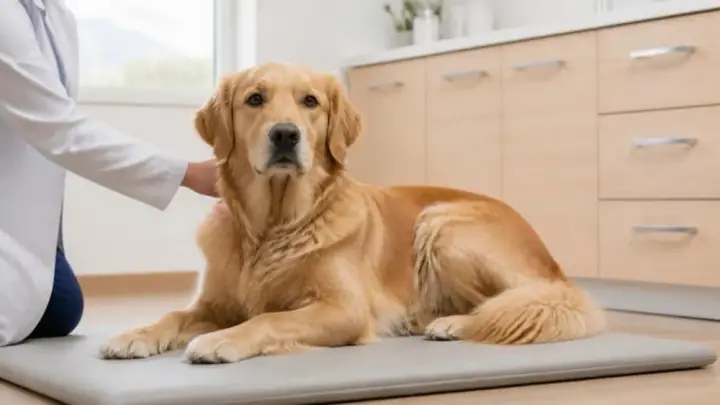
| Cause | Mostly the immune system destroying thyroid tissue, or the tissue slowly being lost and replaced by fat |
|---|---|
| Most at risk | Medium and large dogs are affected more often than small ones |
| Usual age | Most dogs are diagnosed between 4 and 10 years of age, often around 6 or 7 |
| First signs | Gradual changes that are easy to mistake for normal aging |
| Common signs | Weight gain without eating more, tiredness, seeking warm places, a dull thinning coat, skin and ear infections that keep returning |
| Diagnosis | No single perfect test; vets combine the history, the exam and several blood results |
| Treatment | Levothyroxine, a synthetic thyroid hormone, usually a tablet once or twice a day as the vet directs; most dogs need it for life |
| Outlook | Good; with accurate diagnosis and regular monitoring, most dogs get back their energy and coat |
| Prevention | No known way to prevent it in an individual dog |
| Risk to people | None; it is not contagious and cannot pass to people, dogs or cats |
| Emergency if | The dog becomes extremely dull and then unresponsive, collapses or struggles to breathe; same-day vet if it keeps bringing up food |
Hypothyroidism means the thyroid gland makes too little thyroid hormone. This hormone sets the pace of the body's metabolism. When levels fall, many body systems slow down, and the effects show in energy, weight, skin, and coat. It is one of the most common hormone disorders in dogs, and it usually appears in middle age. It also responds well to treatment. Most affected dogs do well on daily medication and regular checkups.
What goes wrong in the thyroid
The thyroid is a small gland in the neck with two lobes. In more than 95 percent of affected dogs, the problem lies in the gland itself. Two causes account for most cases. In lymphocytic thyroiditis, the immune system attacks and slowly destroys thyroid tissue. In idiopathic atrophy, thyroid tissue is gradually lost and replaced by fat, and the reason is not known.
The damage builds up slowly, so signs tend to appear gradually. Thyroiditis often runs in families. Less common causes include thyroid tumors, problems with the pituitary gland at the base of the brain, and defects present from birth. Puppies born with low thyroid function may grow poorly, stay small, and develop slowly in body and mind.
Dogs most at risk
Most dogs are diagnosed between 4 and 10 years of age, often around 6 or 7. Medium and large dogs are affected more often than small ones. Breeds with a higher risk include Golden Retrievers, Doberman Pinschers, Irish and English Setters, Beagles, Boxers, Dachshunds, Cocker Spaniels, Miniature Schnauzers, and Airedale Terriers. Mixed-breed dogs can develop it as well. Males and females are affected about equally, although spayed females and neutered males may have a somewhat higher risk.
Signs to watch for
Because the changes are gradual, it is easy to mistake them for normal aging. These are the signs owners notice most often.
- Weight gain without eating more
- Tiredness, dullness, and less interest in walks or play
- Seeking warm places and disliking the cold
- A dry, dull coat, heavy shedding, and hair that grows back slowly after clipping
- Thinning hair or bald patches, often on both sides of the body, the backs of the thighs, or the tail
- Darker skin where the hair has thinned
- Skin and ear infections that keep coming back
- Thickened skin on the forehead and face, which can make the face look puffy
The hair loss itself usually does not itch. If your dog scratches a lot, a skin infection, fleas, mites, or allergies may also be involved, and these need their own treatment.
Less common signs include a slow heart rate, weakness or an unsteady walk, drooping on one side of the face, bringing up food soon after eating, a change in the bark or noisy breathing, and fertility problems in dogs that are not spayed or neutered. None of these signs proves a thyroid problem on its own. Many other conditions look similar, which is why testing matters.
When it is an emergency
Hypothyroidism is usually a slow, long-term condition. In rare cases, severe untreated disease leads to a crisis called myxedema coma. The dog becomes extremely dull and then unresponsive, and its body temperature and heart rate drop. This needs emergency veterinary care right away. Emergency care is also recommended for any dog that collapses or struggles to breathe. A dog that keeps bringing up food should be seen by a vet the same day.
How vets diagnose it
There is no single perfect test, so vets combine the history, the exam, and several blood results. Routine blood work often shows high cholesterol and sometimes mild anemia. These findings raise suspicion but do not prove the diagnosis.
The usual first thyroid test measures total T4, the main hormone the gland releases. A normal result makes hypothyroidism much less likely. A low result is harder to read. Many other illnesses can lower T4 in a dog whose thyroid works fine. Vets call this euthyroid sick syndrome. Some medicines can do the same, including steroids, certain seizure medicines, and some antibiotics. Sighthounds such as Greyhounds also have naturally lower thyroid levels than most breeds.
To confirm the diagnosis, the vet may add other tests. Free T4, measured by a method called equilibrium dialysis, is more specific. TSH is the pituitary hormone that tells the thyroid to work. It is often high in affected dogs, though not in all of them. Thyroid antibodies point to thyroiditis. Some vets also look at the gland with ultrasound.
If your dog is ill with something else, the vet may suggest waiting until it recovers before testing. Hypothyroidism is thought to be one of the most overdiagnosed diseases in dogs, so careful testing helps avoid lifelong treatment a dog does not need. Tell your vet about every medicine and supplement your dog takes, since some can affect the results.
Treatment and daily life
Treatment replaces the missing hormone with a synthetic thyroid hormone called levothyroxine. It is usually a tablet given by mouth once or twice a day, as your vet directs. Most dogs need the medicine for the rest of their lives.
Energy and alertness often improve within about two weeks. The coat, skin, and weight change more slowly and can take a few months. If there is little improvement after that, talk to your vet again, since the diagnosis or the dose may need another look.
Your vet will usually repeat a blood test a few weeks after treatment starts and again if the dose changes. Once the level is stable, checks are often needed once or twice a year. Ask your vet how to time the medicine on the day of a blood test. A few habits make treatment easier at home.
- Give the medicine the same way every day, either always with food or always without.
- If you miss a dose, ask your vet what to do, and do not give two doses at once.
- Keep a supply on hand so treatment is not interrupted.
- Talk to your vet before stopping the medicine or changing the dose.
- As energy returns, work with your vet on food portions and exercise to bring the weight down.
Getting too much thyroid hormone is rare in treated dogs. Signs include heavy panting, restlessness, drinking and urinating more, weight loss, and a fast heartbeat. If you notice these, contact your vet for advice.
The outlook is good. With an accurate diagnosis and regular monitoring, treatment rarely fails, and most dogs get back their energy and coat.
Prevention and breeding
There is no known way to prevent hypothyroidism in an individual dog. Because thyroiditis often runs in families, breeding choices matter. Screening programs test breeding dogs for thyroid function and thyroid antibodies and repeat the tests over several years, because the autoimmune form usually appears between 2 and 5 years of age. Breeders can use the results to choose pairings that lower the risk for puppies.
For your own dog, regular checkups and weighing your dog every few months help you and your vet spot slow changes early.
Other pets and people
Hypothyroidism is not contagious. It cannot pass to other dogs, to cats, or to people. People can have thyroid disease too, but they do not get it from their pets.
Cats rarely develop hypothyroidism on their own. In cats it usually follows treatment for an overactive thyroid, which is a different condition.
Newly adopted and rescued dogs
At Paw Squadron, the first stops after every rescue are the vet and a bath. Each animal gets a checkup, deworming, and treatment against fleas and other parasites. Before adoption, every animal also has vaccinations and a microchip.
A rescued dog may arrive with a thin or patchy coat, skin infections, low energy, or a changed weight. These signs have many causes, including parasites, poor food, stress, and skin disease. Thyroid tests are also less reliable while a dog is ill or recovering, so vets usually deal with other problems first. If a dull coat, low energy, or weight gain continue once your dog is healthy, settled, and eating well, ask your vet whether thyroid testing makes sense.
If you adopt a dog that already has a diagnosis, plan for daily medication and regular blood tests for life. Bring any records to the first visit so your new vet knows the history. You can meet the animals looking for homes on our Adoptions page and find more health guides in PawPedia.
See also
From our rescues
This article is general information, not veterinary advice. Always consult a veterinarian about your animal’s health. Some pictures in PawPedia may be AI-generated.
This page was last updated on October 4, 2026.