How to Feed Your Dog: Portions, Schedules, and Safe Foods
From PawPedia, an encyclopedia of life with animals
Contents
In short
Feed your dog a complete food made for its life stage, measure the portions, and keep a steady routine, usually two meals a day for adults. Check its body shape every few weeks and keep treats under 10 percent of daily calories. Call a vet right away if your dog eats grapes, chocolate, onions or xylitol.
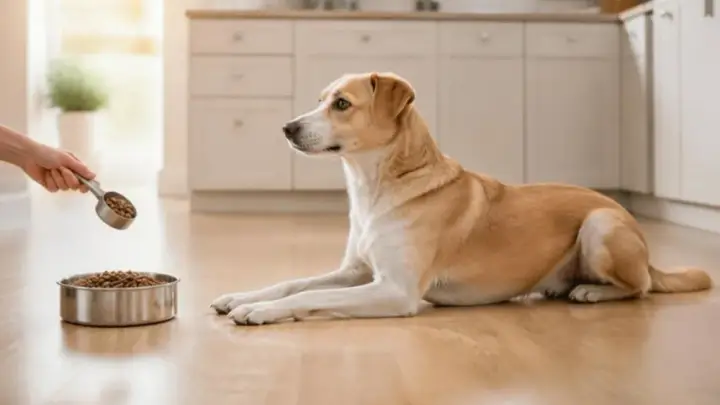
| What to feed | A commercial food made to be the whole diet |
|---|---|
| How much | The feeding guide on the bag is only a starting point; needs vary with age and activity |
| Measuring | Weigh food on a kitchen scale if you can; measuring cups were off by up to 80 percent in one study |
| Healthy weight | Body condition score of 4 or 5 out of 9; ribs easy to feel under a thin layer of fat |
| How often | Most adult dogs once or twice a day; two measured meals at set times work well for most |
| Puppies | Commonly four meals a day at 6 to 12 weeks, three at 3 to 6 months, two at 6 to 12 months |
| Treats | Less than 10 percent of your dog's daily calories |
| Changing food | Mix the new food into the old and raise its share over about a week |
| Avoid | Toxic foods such as grapes, chocolate, xylitol and onion |
| Very thin dogs | Small portions at first, raised gradually over several days on a plan set by your vet |
| See a vet if | It eats something toxic (even if it seems fine), retches without bringing anything up, has a swollen belly or vomits repeatedly |
Good feeding rests on three habits. Choose a complete food, give the right amount, and keep a steady routine. This guide covers each one, which kitchen foods are safe to share, and how to feed a thin rescued dog or a newly adopted one.
Start with a complete food
Dogs need protein, fat, carbohydrates, vitamins, minerals, and water in the right balance. The simplest way to cover all of them is a commercial food made to be the whole diet. In the European Union, labels must say whether a food is a complete feed, which covers the full daily ration, or a complementary feed, such as many treats and toppers, which works only alongside other food. In the United States, look for a statement that the food meets AAFCO nutrient profiles. Pick a food made for your dog's life stage. If you are choosing between wet and dry food, see the benefits of canned dog food.
Home-cooked diets can work, but they are hard to balance. When researchers checked 200 published recipes for dogs, only 9 met basic nutrient needs. If you want to cook for your dog, ask your vet about a recipe from a veterinary nutritionist. Veterinary nutritionists advise against home-cooked diets for puppies, because a small mistake can harm a growing body.
Extra supplements are usually not needed with a complete food, and some can cause harm. Too much calcium can damage the developing bones of large-breed puppies. Too much vitamin A or vitamin D can also lead to serious illness. Ask your vet before adding any vitamin, mineral, or calcium product.
Several veterinary and public health organizations discourage raw meat diets, and there is little evidence for the health benefits often claimed for them. Raw pet foods can carry bacteria such as Salmonella and Listeria. Dogs can pass these bacteria in their feces, and people can pick them up while handling the food. The risk is greater for children, older adults, and anyone with a weak immune system. If you handle raw food, wash your hands, bowls, and kitchen surfaces afterward.
How much to feed
The feeding guide on the bag is only a starting point. Dogs of the same weight can need very different amounts depending on age, activity, genetics, and whether they are neutered. When a veterinary nutritionist compared the feeding directions on eight dry dog foods with standard calorie needs, only two matched for dogs of every size.
Weigh food on a kitchen scale if you can. In one study, people portioning dry food with measuring cups were off by as much as 80 percent. Small daily errors add up over months.
Then check your dog's body shape every few weeks. Vets use a body condition score from 1 to 9, where 4 or 5 is ideal. At a healthy weight you can feel the ribs easily under a thin layer of fat. From above you see a waist behind the ribs, and from the side the belly tucks up behind the chest. If you struggle to feel the ribs, reduce portions a little. If the ribs, spine, and hip bones stand out, your dog may need more food and a vet check.
Treats and table extras count too. Vets recommend keeping them to less than 10 percent of your dog's daily calories.
How often to feed
Most adult dogs are fed once or twice a day. For most, two measured meals at set times work well and help prevent weight gain. Leaving a full bowl out all day makes it easy to overeat, and many dogs gain weight that way. Set meal times also show you quickly when appetite changes.
Puppies need smaller, more frequent meals. A common schedule is four meals a day from 6 to 12 weeks of age, three meals from 3 to 6 months, and two meals from 6 to 12 months. Toy-breed puppies can develop low blood sugar and may need more frequent meals. Large and giant breeds can take almost two years to mature. For puppies expected to weigh more than about 23 kg (50 lb) as adults, a food made for large-breed growth keeps calcium and calories at safer levels. Ask your vet when to move your puppy to adult food. For vaccines, teething, and the rest of the first year, see your puppy's first year, month by month.
Large, deep-chested dogs have a higher risk of bloat, a life-threatening condition in which the stomach fills with gas and can twist. One large meal a day adds to the risk, so vets recommend two or three smaller meals instead. Keep fresh, clean water available at all times.
When you change foods, go slowly. Mix a small amount of the new food into the old food and raise the share of new food over about a week. If stools turn a little soft but your dog acts normal, stay at the same mix for an extra day or two.
Human foods that are safe to share
Some kitchen foods make good treats when served plain, with no salt, spices, sauces, butter, or oil. Offer a small amount the first time and watch for an upset stomach.
- Carrot, cucumber, celery, or zucchini, cut into pieces that suit your dog's size
- Apple slices, with the core, seeds, and stem removed
- Plain cooked chicken, turkey, or lean beef, with no bones, skin, or fat trimmings
- Plain cooked egg
- Plain cooked fish, with every bone removed
- A handful of your dog's usual kibble, kept in a treat bag or a food puzzle toy
Cook eggs and fish before sharing them. Raw egg white contains a protein that blocks biotin, a B vitamin, and raw eggs can carry Salmonella. Some raw fish contain an enzyme that destroys thiamine, another B vitamin. Milk is best left out. Dogs have little of the enzyme needed to digest milk sugar, so dairy can cause diarrhea.
Foods to keep away from your dog
These foods can make dogs seriously ill. With some of them, even a small amount is enough.
- Grapes and raisins, including cakes and breads made with them, which can damage the kidneys
- Onions, garlic, and chives, which can damage red blood cells
- Chocolate, coffee, and other sources of caffeine
- Xylitol, a sweetener found in sugar-free gum and candy, some peanut and nut butters, and some baked goods
- Macadamia nuts
- Alcohol and raw yeast dough
- Bones, cooked or raw, which can break teeth, injure the mouth or throat, or block the gut
- Fatty scraps and fried food, which may trigger pancreatitis
- Salty snacks
Some people add garlic to a dog's food as an old remedy against worms. Garlic belongs to the onion family and can harm red blood cells, so vets advise against it. Your vet can recommend a suitable worm treatment.
Feeding a thin or newly adopted dog
Stray and abandoned dogs are often thin when they are found. At Paw Squadron, the first stops after every rescue are the vet and a bath, with a checkup, deworming, and treatment against fleas and other parasites. Before adoption, every animal also gets vaccinations and a microchip. This matters for feeding, because worms and other health problems can keep a dog thin even when it eats well.
A very thin dog is safest with small meals at first. After a long time without enough food, a sudden large amount can upset the balance of minerals and salts in the blood. This is called refeeding syndrome, and it can be dangerous. Vets usually start a starved dog on small portions and raise them gradually over several days, sometimes with blood tests along the way. Your vet can set the plan and adjust it as the dog improves.
Once the dog is stable, aim for steady gains. Ask your vet for a target weight and how quickly to reach it. Weigh the dog every week or two and bring the numbers to checkups.
A newly adopted dog is also getting used to new people, new sounds, and often a new food. Keep the food the dog has been eating for the first days, and if you plan to switch, mix the foods slowly over about a week. Feed in a quiet spot at the same times each day. Feed other pets in separate places so no one feels the need to guard a bowl. If your new dog refuses food for more than about a day, call your vet, and call sooner for a puppy or a very thin dog.
When to call the vet
Call your vet or an emergency clinic right away if your dog eats something toxic, such as grapes, chocolate, xylitol, or onion, even if the dog seems fine. Xylitol can cause a dangerous drop in blood sugar within 10 to 60 minutes, and some poisons take hours to show signs. For the signs and the full list of household dangers, see common household poisons for dogs and cats.
Bloat is an emergency. Signs include retching without bringing anything up, a swollen belly, drooling, an anxious look, standing and stretching, panting, and weakness or collapse. Go to the nearest vet at once.
Also contact your vet about repeated vomiting, watery diarrhea, weakness, or signs of belly pain. A dog that stands with its front end down and its rear end up after a fatty meal may be in pain from pancreatitis.
For more guides on dog care and health, browse PawPedia. If you are thinking about adopting and have questions about a dog's needs, send an adoption inquiry.
See also
From our rescues



This article is general information, not veterinary advice. Always consult a veterinarian about your animal’s health. Some pictures in PawPedia may be AI-generated.
This page was last updated on October 6, 2026.