The Benefits of Canned Dog Food
From PawPedia, an encyclopedia of life with animals
Contents
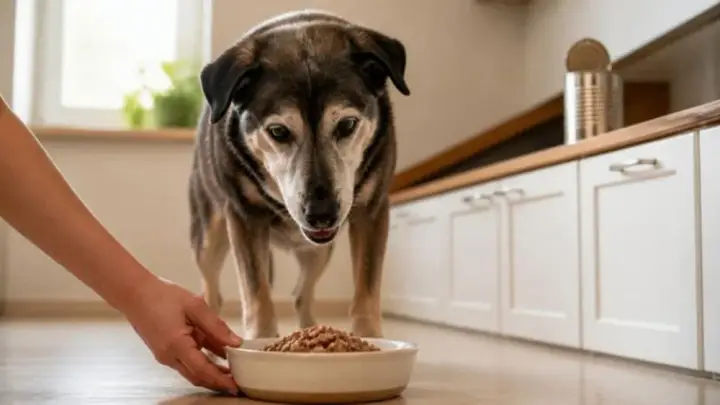
| Main difference | Moisture: canned food is usually around three quarters water, dry kibble only about ten percent |
|---|---|
| Good for | Underweight dogs (a very thin or weak one needs a vet's feeding plan), rescued dogs that need tempting, seniors with a faded appetite |
| Serving tip | Room temperature instead of straight from the fridge can help a reluctant eater |
| On the label | Check that the food is complete, meaning it contains everything a dog needs on its own |
| Downside | Costs more per calorie than dry food, and for a large dog the difference adds up quickly |
| Once opened | Keep the can in the fridge, covered, and use it within a few days |
| In the bowl | Pick up anything uneaten after about half an hour, sooner in hot weather |
| Mixing | For most households, dry food as the base and canned food as a topper |
| Switching food | Mix a little of the new food into the old and increase the share over about a week |
| Never add | Onions, garlic, grapes, raisins, chocolate or anything sweetened with xylitol |
| See a vet if | Vomiting or diarrhea over a day or with blood, a puppy that will not eat, an adult eating little for over a day or two, far more thirst |
Canned dog food is often treated as a luxury or a treat. For many dogs it does a practical job: it adds water to the diet, it is easy to chew, and most dogs eat it willingly. Here is where it helps, where it falls short and how to combine it with dry food.
Moisture is the main difference
Canned food is usually around three quarters water, while dry kibble contains only about ten percent. A dog on canned food gets a good share of its daily water from its meals. That helps dogs that do not drink much on their own, and it helps in hot weather.
Vets sometimes recommend extra moisture for dogs prone to bladder stones or other urinary problems, because more water in the diet means more dilute urine. Dogs with kidney disease may also benefit. If your dog has one of these conditions, ask your vet which food to use, since many need a prescription diet rather than any canned food.
Fresh water should still be available at all times, because canned food adds to what a dog drinks but never replaces the water bowl. A dog on mostly wet food often drinks less from the bowl, which is normal and no reason to worry.
Dogs that do better on canned food
Texture and smell matter more to some dogs than to others. These are the dogs that tend to gain the most from a wet diet or a wet topper:
- Underweight dogs, and newly rescued dogs that need to be tempted to eat
- Senior dogs whose appetite has faded or whose sense of smell has dulled
- Dogs with missing teeth, sore gums or a recent dental treatment
- Dogs recovering from illness or surgery, when the vet agrees
- Picky eaters that leave kibble in the bowl
- Dogs that need pills, which hide easily in a spoonful of wet food, once your vet confirms the medicine can be given with food
Smell drives appetite in dogs, and canned food smells much stronger than kibble, especially when it is not cold. Serving it at room temperature instead of straight from the fridge can make a real difference for a reluctant eater. If you warm it, do it gently, stir well and check that no part is hot.
Canned food can also help with weight control. Because so much of it is water, a portion of canned food looks bigger and fills the stomach more than the same calories of kibble, and some dogs feel more satisfied on it. The portion still has to follow the calories, not the size of the bowl.
First meals after a rescue
A dog coming off the street is often not used to regular meals. Small portions several times a day are easier on the stomach than one large meal, and a soft food with a strong smell can tempt a dog that is too stressed to eat. A dog that is very thin or weak should be fed on a plan from a vet, because too much food too fast can make a starved animal seriously ill.
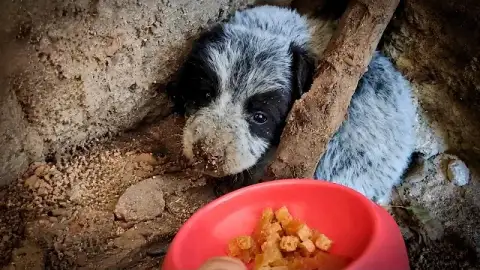
Patience matters as much as the menu. On the night we found Milky Cyrus, she did not drink any of the water we gave her in the car, so we stayed close and did not push her. She gave her first food one cautious sniff, then took a tiny bite and another, and bit by bit her trembling eased.
In a new home, quiet and routine help more than a perfect recipe. Feed in the same calm spot at the same times each day, and do not panic if an adult dog eats little for the first day or two. Puppies should not go long without food, so call your vet sooner if a young puppy will not eat. Our guide to the first 30 days with a small rescue dog covers the rest of that settling-in period.
Reading the label
Start by checking that the food is complete. In Europe, a "complete" food contains everything a dog needs on its own, while a "complementary" food, like many toppers and treats, is meant to be fed alongside something else. In the United States, look for a statement that the food is "complete and balanced" according to AAFCO standards.
Check the life stage too. Puppy food, adult food and food for all life stages differ in energy and minerals, and large-breed puppies need a food made for their growth, because too much calcium and too many calories can harm developing bones and joints.
The protein and fat figures on a can and on a bag of kibble cannot be compared directly. A can that lists 8% protein looks poor next to a kibble with 26%, but most of the can is water. To compare fairly, work out the share of the dry part: 8% protein in a food with 78% moisture is about 36% protein once the water is removed, while 26% protein in a kibble with 10% moisture is about 29%.
Grain-free food deserves a word of caution. In recent years vets have raised concerns about a possible link between some grain-free diets, especially those rich in peas and lentils, and a heart disease called dilated cardiomyopathy. No cause has been proven and the research continues, so ask your vet before choosing a grain-free food.
The downsides
Canned food costs more per calorie than dry food, and for a large dog the difference adds up quickly. It also creates more packaging and takes more space to store.
Once opened, a can belongs in the fridge, covered, and should be used within a few days. The label will say how long. Wet food spoils quickly in the bowl, so pick up anything uneaten after about half an hour, sooner in hot weather, and wash the bowl after every wet meal.
Wet food does nothing to clean the teeth, and ordinary kibble does little more. Whatever your dog eats, brushing is what keeps plaque under control, and our guide to dental care for dogs and cats shows how to start.
Mixing wet and dry food
For most households the practical answer is a mix, with dry food as the base and canned food as a topper. The dog gets more moisture and a meal it enjoys, and the cost stays manageable. The key is to count both toward the day's calories, or the extra food slowly turns into extra weight.
Start from your dog's daily calorie needs. The feeding guide on the kibble bag gives a starting point, and your vet can adjust it for your dog's age, weight and activity. If you want canned food to supply a quarter of the calories, feed three quarters of the usual kibble and add enough canned food to make up the rest. The energy content is often printed on the can, and if it is not, the maker's website usually lists it.
Change foods gradually. Mix a little of the new food into the old and increase the share over about a week, which gives the gut time to adjust. Never add onions, garlic, grapes, raisins, chocolate or anything sweetened with xylitol to make a meal more tempting, because all of them are toxic to dogs.
When to talk to your vet
Most healthy dogs do well on a good complete food, whether it is wet, dry or both. Ask your vet before changing the diet of a dog with a health condition, and call if you notice any of these:
- An adult dog that has eaten little or nothing for more than a day or two
- Vomiting or diarrhea that lasts more than a day, or any blood in either
- Drinking much more water than usual
- Weight loss or gain you cannot explain
- A prescription diet that your dog refuses, or that you want to mix with other food
If you have just adopted, ask what your dog was eating before and start with the same food, then change slowly if you want to. A settled stomach in the first weeks makes everything else easier. If you are still looking for a dog, our adoptions page lists animals as soon as they are ready for a home.
See also
From our rescues


This article is general information, not veterinary advice. Always consult a veterinarian about your animal’s health. Some pictures in PawPedia may be AI-generated.
This page was last updated on September 26, 2026.