Caring for a Senior Dog: Health, Comfort, and Daily Life
From PawPedia, an encyclopedia of life with animals
Fact-checked against veterinary sources
Contents
In short
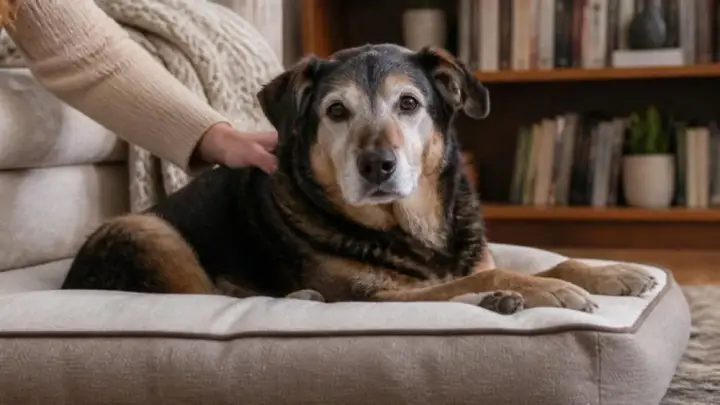
Caring for a senior dog, usually from about 7 or 8 years old, means regular checkups, a healthy weight, gentle daily exercise, and a comfortable home. Slowing down is normal, but stiffness, weight loss, confusion, or changes in thirst often have treatable causes, so tell your vet. A checkup at least twice a year is usually recommended.
| Senior from | About 7 or 8 years of age for many vets; large and giant breeds usually earlier |
|---|---|
| Checkups | At least twice a year is usually recommended |
| Watch for | Stiffness, weight loss, confusion, or a change in thirst, which often have a medical cause |
| Food | A healthy older dog in good condition on a balanced diet need not switch food just because of age |
| Healthy weight | You can feel the ribs easily without seeing them, and there is a visible waist from above |
| Treats | Best kept to about a tenth of daily calories |
| Exercise | Needed daily; several short walks often suit an older dog better than one long outing |
| Comfort at home | A thick, soft bed in a warm spot away from drafts, and rugs or runners on slippery floors |
| Teeth | Daily brushing with a toothpaste made for dogs helps keep the teeth clean |
| Avoid | Giving pain relievers made for people without asking your vet first |
| Emergency if | Collapse or can't stand, struggling to breathe, a swollen belly with retching, a seizure, pale or yellow gums, or straining to urinate |
Dogs age faster than people, and the senior years often arrive sooner than owners expect. An older dog may sleep more, walk slower, and need a bit more help. Some of these changes are a normal part of aging. Others are early signs of illness, and many illnesses are easier to manage when they are found early. This guide covers the changes to expect and how to keep an older dog healthy and comfortable.
When a dog becomes a senior
Many vets consider a dog senior from about 7 or 8 years of age. Size plays a part. Small dogs tend to live longer than large ones, so large and giant breeds usually reach their senior years earlier. Your vet can tell you when senior care should start for your own dog.
Vets often say that old age is not a disease. A gradual slowdown is normal. Stiffness, weight loss, confusion, or a change in thirst often have a medical cause, and many of those causes can be treated or managed. It is best not to blame them on age alone.
Changes to watch for
Changes in older dogs come on slowly and are easy to miss. Tell your vet if you notice any of these signs.
- Drinking more water or urinating more often
- Weight loss, weight gain, or a smaller appetite
- Coughing, labored breathing, or tiring quickly on walks
- Stiffness after rest, trouble on stairs, reluctance to jump, or limping
- Bad breath, or red, swollen gums that bleed easily
- New lumps or bumps, or old ones that change
- Cloudy eyes, bumping into things, or not coming when called
- Leaking urine, or accidents in the house
- Confusion, pacing at night, or new fears
Increased thirst and urination are often the first signs of kidney disease that owners notice, though they can also point to other conditions, such as diabetes. Coughing, trouble breathing, and tiring easily can be signs of heart disease.
A faint bluish haze in the eyes is common in older dogs. It is usually a normal change in the lens with age, and it does not affect sight much. A cataract is different. The lens turns white and cloudy and can block vision, and diabetes is one possible cause. An eye exam tells the two apart.
Hearing often fades slowly with age. A dog that seems to ignore you may simply not hear you. Deaf dogs startle more easily and cannot hear traffic. Keeping them on a leash near roads, and letting them see you before you touch them, helps keep everyone safe.
Lumps on or under the skin are the most common tumors in dogs. Many are harmless fatty lumps. Still, a harmless lump and a cancer can look and feel the same. To find out, vets usually take a few cells with a fine needle, or a small tissue sample. Feel for lumps when you brush, and have any new one checked.
Checkups and screening tests
Older dogs are more likely to get sick, so a checkup at least twice a year is usually recommended. At a senior visit, the vet checks weight, body and muscle condition, teeth, eyes, joints, heart, and lungs. Blood and urine tests are often advised, and blood pressure may be measured. Screening helps because kidney disease often shows no signs until it is advanced. Finding problems early gives more options for treatment.
Gum disease often starts by middle age, so many older dogs have it. It can be painful and may affect appetite. A thorough cleaning is done under anesthesia, and your vet can explain how they check an older dog's health beforehand. Daily brushing with a toothpaste made for dogs helps keep the teeth clean. Toothpaste made for people is not recommended for dogs. For a step-by-step brushing routine, see our guide to dental care for dogs and cats.
Keep up vaccines and parasite control as your vet recommends. Most older dogs keep good protection from earlier vaccines, but they may respond less well to germs they have never met. Age alone is not a reason to stop.
Food and a healthy weight
There is no legal standard for what a senior dog food must contain, and these foods vary a lot between brands. A healthy older dog in good body condition on a balanced diet does not need to switch food just because of age. A change makes more sense when a health problem appears, such as kidney disease, heart disease, diabetes, or arthritis.
Cutting protein is not recommended for a healthy older dog. Low-protein diets can add to the muscle loss that often comes with age. Dogs with certain illnesses, such as kidney disease, may need a special diet, and your vet can guide that choice.
Some dogs gain weight as they slow down. Others lose weight, and weight loss can be an early sign of illness. Weigh your dog regularly. At a healthy weight you can feel the ribs easily without seeing them, and there is a visible waist from above. Extra weight strains sore joints and is linked to a shorter life. If your dog needs to lose weight, ask your vet for a slow, safe plan. Treats are best kept to about a tenth of daily calories. Fresh water should be available at all times.
Exercise and comfort at home
Older dogs still need daily exercise to keep muscles strong, joints moving, and weight in check. Several short walks often suit them better than one long outing. Low-impact activity, such as leash walks or swimming, is easier on stiff joints. Let your dog set the pace, and keep outings short on very hot days.
Osteoarthritis is a common cause of stiffness and pain in older dogs. There is no cure. Vets manage it with a mix of weight control, suitable exercise, pain medicine made for dogs, and physical therapy, which helps many dogs live comfortably. Pain relievers made for people can act differently in dogs and cause serious side effects, so ask your vet before giving any.
Give your dog a thick, soft bed in a warm spot away from drafts. Put rugs or runners on slippery floors. A ramp or low steps can help with the car, sofa, or bed. A baby gate at the top of the stairs protects a dog with poor sight or balance. Offer more frequent bathroom breaks outside, and keep daily routines steady. Short training sessions, food puzzles, and new smells on walks keep the mind active too. For more ideas, see our guide to the intelligence of dogs, which has a section on keeping a dog's mind busy.
Behavior changes with age
Some older dogs develop cognitive dysfunction, a slow decline in brain function that is similar in some ways to dementia in people. It can start from around nine years of age. The dog may get lost in familiar rooms or stuck in corners, stare into space, sleep by day and pace at night, forget house training, greet the family less, or show new fears and anxiety.
Other problems can look very similar. Pain, poor sight or hearing, kidney or liver disease, and hormone disorders can all change a dog's behavior. A dog that suddenly growls when touched may be in pain. For this reason the vet usually examines the dog and runs blood and urine tests first. There is no cure for cognitive dysfunction. Mental and physical activity, special diets, and medicine can help slow it and make daily life easier.
Urine leaking during sleep or rest is a common problem in spayed female dogs. The dog is not doing it on purpose, and it can often be treated with medicine. Leaks and accidents can have other causes too, such as a bladder infection, so mention them to your vet. Punishment does not help and can make things worse.
When it is an emergency
Contact a vet or an emergency clinic right away if your dog shows any of these signs.
- Collapse, fainting, or not being able to stand
- Struggling to breathe, or fast breathing while resting
- A swollen belly with repeated retching that brings nothing up, restlessness, or heavy drooling
- A seizure, a sudden head tilt, or sudden loss of balance
- Pale gums, or yellow gums or eyes
- Straining to urinate while passing little or no urine
- Repeated vomiting, or sudden blindness
A swollen belly with retching can mean bloat, a life-threatening condition in which the stomach fills with gas and may twist. It mostly affects large, deep-chested dogs and becomes more common with age. For milder problems, such as a poor appetite, vomiting, or diarrhea that lasts more than a day or two, book a visit soon.
Adopting an older dog
An older dog can make a calm and rewarding companion. At Paw Squadron, the first stops after every rescue are the vet and a bath. Each animal gets a checkup, deworming, and treatment against fleas and other parasites. Before adoption, every animal has had a checkup, treatment, vaccinations, and a microchip.
Plan a visit with your own vet in the first weeks after adoption. Bring any health records you received, so the vet can plan senior screening and the next vaccines. A quiet corner, a steady routine, and patience help a new older dog settle.
If you would like to give an older dog a home, visit our Adoptions page or send an adoption inquiry.
See also
From our rescues
Sources
Online sources
- Feeding Senior Dogs · VCA Animal Hospitals
- Senior dog dementia · Cornell Richard P. Riney Canine Health Center
- Exercising your senior dog · PDSA
- Caring for older dogs · RSPCA
- Senior Dog Health · American Kennel Club
- Senior dogs · The Royal Kennel Club
- Caring for your senior dog · Battersea Dogs & Cats Home
- 2023 AAHA Senior Care Guidelines for Dogs and Cats · Dhaliwal R. et al., Journal of the American Animal Hospital Association (2023)
- Results of Screening of Apparently Healthy Senior and Geriatric Dogs · Willems A. et al., Journal of veterinary internal medicine (2017)
Encyclopedias
- Aging in dogs · Wikipedia
Books
- Блохин Г. И., Блохина Т. В., Бурова Г. А. и др. Кинология: учебник [Cynology: A Textbook]. Санкт-Петербург: Лань, 2013. ISBN 9785811414444
- Ettinger SJ, Feldman EC, Côté E (eds.). Textbook of Veterinary Internal Medicine: Diseases of the Dog and the Cat. 8th ed. St. Louis: Elsevier, 2016. ISBN 9780323312110
This article is general information, not veterinary advice. Always consult a veterinarian about your animal’s health. Some pictures in PawPedia may be AI-generated.
This page was last updated on October 17, 2026.