Why Does My Cat Bite Me? Love Bites, Play, and Overstimulation
From PawPedia, an encyclopedia of life with animals
Fact-checked against expert sources
Contents
In short
Most cats bite their owners for one of two reasons. During petting, touch can become unpleasant, and the cat bites to make it stop. During play, especially in kittens, hands and feet are treated as prey. Pain, fear and frustration can also lead to bites, so sudden changes need a vet check.
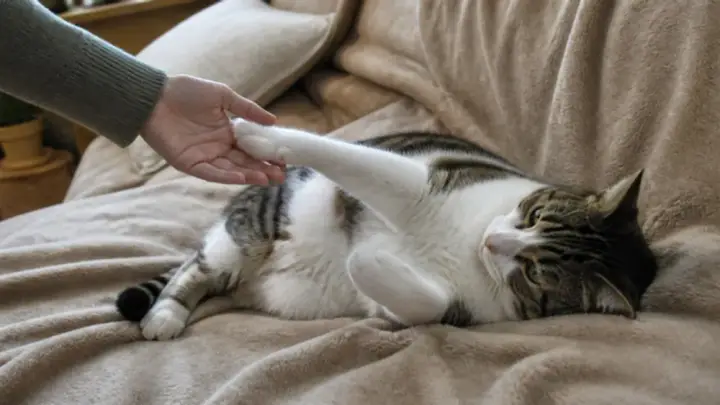
| Love bites | Petting-induced aggression: a cat enjoys stroking, then suddenly bites; possible explanations are overstimulation and the cat controlling when petting ends |
|---|---|
| Play biting | Most common in kittens and cats under about two years old, especially those with no other cats to play with |
| Other causes | Pain, fear, redirected aggression, and illness such as hyperthyroidism, osteoarthritis and dental disease |
| Warning signs | A swishing or thumping tail, ears turning sideways or flattening, rippling skin on the back, big pupils, tensing or freezing |
| Where to stroke | Cheeks, chin and head; avoid the legs, belly and base of the tail |
| Three-second rule | Stroke for about three seconds, then pause, and carry on only if the cat moves closer or asks for more |
| Play | Use wand toys and schedule several play sessions a day, never use hands or feet as toys, and stop and walk away if the cat bites |
| Never | Hit, flick, shout at or chase the cat; punishment increases fear and can make aggression worse |
| If you are bitten | Clean with soap and warm water, pat dry and cover with a clean dressing; cat bites are often deep and can carry bacteria such as Pasteurella multocida |
| Get medical help if | The bite becomes hot, swollen, red or more painful, fluid leaks from it, moving a finger or joint hurts, or you feel feverish or shivery |
| See a vet if | Biting is new, getting worse, causes injuries or comes with hiding, weight loss or a change in appetite |
Your cat is purring on your lap, and a moment later it sinks its teeth into your hand. Or your kitten ambushes your ankles every time you walk past. Bites like these confuse many owners, but they usually have a clear reason. This guide explains the common causes, the warning signs that come first, and how to reduce biting without making your cat afraid of you.
Petting-induced biting
This is the bite many people call a love bite. The cat seems to enjoy being stroked, then suddenly turns, bites and often runs off. Vets call it petting-induced aggression. The exact cause is not known. The Cornell Feline Health Center lists overstimulation, and an attempt by the cat to control when the petting ends, as possible explanations.
VCA Animal Hospitals describes a few other reasons. The feeling of being stroked can stop being pleasant after a while. A cat that rubs its cheek on you may be marking you with its scent, not asking to be petted. A cat on your lap may want warmth rather than strokes. A cat that wanted play or food may also bite in frustration when it gets petting instead. The ASPCA notes that this type of biting is more common in male cats.
Play biting in kittens and young cats
Kittens are built to stalk, chase and pounce. Play is how they practice hunting skills and learn about the world. Cornell explains that kittens learn they are biting or scratching too hard when their littermates stop playing or bite back. Kittens raised alone, or taken from their mother and littermates very early, may never learn that lesson. Play biting is most common in kittens and in cats under about two years old, especially those with no other cats to play with.
Hands make the problem worse. When people wiggle their fingers or let a kitten wrestle with their hands, the kitten learns that skin is a toy. VCA points out that a mouthy kitten may seem harmless, but the same behavior in an adult cat can cause real injuries. Ambushes from under furniture or around corners are another form of play aggression, often in cats with plenty of energy and too little to do.
Other reasons cats bite
Not every bite is about petting or play.
- Pain: a cat may bite when a sore spot is touched, or when it expects to be handled. Arthritis, dental pain and abscesses are common causes.
- Fear: unfamiliar people, animals, noises or a recent bad experience can make a cat defensive. A frightened cat may crouch, flatten its ears, hiss and puff up its fur.
- Redirected aggression: a cat that sees another cat through the window, or hears a loud noise, may lash out at the nearest person or pet instead. The ASPCA notes that the delay can last for hours, so the bite seems to come out of nowhere.
- Illness: Cornell lists hyperthyroidism, osteoarthritis, dental disease and problems of the nervous system among the medical causes of aggression.
If a gentle cat starts biting, or bites when one area is touched, book a vet visit. VCA notes that sore ears, inflamed gums, joint or back pain and itchy, inflamed skin can all make touch hard to bear. Our guides to dental care and hyperthyroidism in cats cover two common causes in older cats.
Reading the warning signs
Most cats give signals before they bite. They are easy to miss, especially when your attention is on stroking. Watch for these signs during petting or play.
- The tail starts to swish, flick or thump, especially at the tip
- The ears rotate sideways or backward, or flatten against the head
- The skin along the back ripples or twitches
- The pupils get bigger
- The cat turns its head quickly toward your hand
- The body tenses or goes still, or the cat shifts restlessly
Stillness can be a warning too. International Cat Care points out that many cats show discomfort by freezing, rather than by moving away. A cat that stays put is not always enjoying the contact.
Where you touch matters. International Cat Care describes the cheeks, chin and head as the areas most cats enjoy. The body and tail are less comfortable for many cats, and the legs, belly and base of the tail are best avoided. Even a cat that rolls over in front of you may not want its belly touched.
How to stop petting-induced biting
The goal is to stop before your cat feels the need to bite.
- Let your cat come to you and choose whether to be touched.
- Use the three-second rule from International Cat Care: stroke the cheeks, chin or head for about three seconds, then pause. Carry on only if your cat moves closer or asks for more.
- Keep sessions short. VCA suggests working out how many strokes your cat reliably accepts, then staying below that number.
- Stop at the first warning sign. Simply lower your hand or stand up and let the cat go.
- Reward calm behavior with a treat, and build up slowly over days and weeks.
Cornell advises keeping young children away from cats with a history of biting during petting, because children often miss the warning signs. Supervise any contact.
How to stop play biting
Play biting is a sign of a cat with energy to spare. The answer is to give it a better target, not to stop play.
- Never use your hands or feet as toys, and ask everyone in the home to follow the same rule.
- Use wand toys with a feather or toy mouse on the end, so your hands stay out of reach.
- Schedule several play sessions a day, ideally just before the times your cat is most active.
- Rotate toys so they stay interesting, and offer puzzle feeders and toys your cat can chase alone.
- If your cat bites during play, stop at once, stay still and quiet, and walk away. Start again only when your cat is calm.
- If your cat ambushes you in the same spots, toss a toy ahead of you to redirect it before you pass, or block hiding places.
VCA suggests that a cat with a strong need for social play may benefit from a second young cat, but only if both are well socialized with other cats. Introductions need to be slow. Our guide to introducing a new cat to your cat explains how.
What not to do
Do not hit, flick, shout at or chase your cat after a bite. Cornell, the ASPCA and VCA all warn that physical punishment increases fear and anxiety and can make aggression worse. It can also teach your cat to fear your hands. Do not try to break up a cat fight with your hands, and leave an agitated cat alone until it calms down.
If you get bitten
Cat bites are small but often deep. The Merck Manual, a medical reference for doctors, notes that a small puncture from a cat bite can injure tendons and joints, and that cat bites often carry bacteria such as Pasteurella multocida. Clean any bite with soap and warm water, pat it dry and cover it with a clean dressing. The UK's NHS advises getting medical advice for any bite on the hands, feet, face or head. Get help quickly if the bite becomes hot, swollen, red or more painful, if fluid leaks from it, if moving a finger or joint hurts, or if you feel feverish or shivery. The same care applies to bites between pets. See wounds and bite injuries in dogs and cats.
When to get professional help
Talk to your vet if biting is new, getting worse, causes injuries or comes with other changes, such as hiding, weight loss or a change in appetite. Your vet will look for pain and illness first. If the cause is behavioral, they may refer you to a veterinary behaviorist or a qualified behavior professional who uses reward-based methods.
Rescue cats and biting
Some rescue cats grew up on the street or were taken from their mothers too early. Some had little gentle human contact before they were found. These cats may need extra time to learn soft play and to trust being touched. At Paw Squadron, every cat we rescue sees a vet for a checkup and deworming, which helps rule out pain and illness early. If you are thinking of adopting, read our guide to adopting a rescue cat.
For more guides on cat behavior and care, browse PawPedia. If you adopted a cat from us and need advice, write to us from the Contact page.
See also
- How to Introduce a New Cat to Your Cat
- Wounds and Bite Injuries in Dogs and Cats
- Puppy Biting and Teething
- How to Raise a Dog and a Cat Together
- How to Litter Train a Kitten
- How to Stop a Cat Scratching Furniture
- Why Is My Cat Meowing at Night? Causes and Solutions
- Why Do Cats Purr and Knead? What It Means
From our rescues
 12:28Rescue of a Lonely Puppy Nobody Cared ForCarrie Undercart · February 19, 2022
 12:26Abandoned Puppy Was Freezing To Death and Barely Surviving until This HappenedPalm Holland · February 12, 2022
 13:05Abandoned Puppy was Scared to Death and Struggling to Survive until This HappenedChilly Eilish · January 29, 2022
Sources
Online sources
- Feline Behavior Problems: Aggression · Cornell Feline Health Center
- Aggression in Cats · ASPCA
- Cat Behavior Problems - Aggression - Petting Aggression · VCA Animal Hospitals
- Play and Predatory Aggression in Cats · VCA Animal Hospitals
- How To Handle Kitten Biting · VCA Animal Hospitals
- Cat Friendly Interaction · International Cat Care
- Infected Bite Wounds of the Hand · Merck Manual Professional Edition
- Animal and human bites · NHS
Encyclopedias
- Cat behavior · Wikipedia
Books
- Turner DC, Bateson P (eds.). The Domestic Cat: The Biology of its Behaviour. 3rd ed. Cambridge: Cambridge University Press, 2014. ISBN 9781107025028
- Bradshaw JWS, Casey RA, Brown SL. The Behaviour of the Domestic Cat. 2nd ed. Wallingford: CABI, 2012. ISBN 9781845939922
- Rodan I, Heath S (eds.). Feline Behavioral Health and Welfare. St. Louis: Elsevier, 2015. ISBN 9781455774012
- Блохина Т. В. Фелинология: учебное пособие [Felinology: A Study Guide]. 2-е изд. Санкт-Петербург: Лань, 2014. ISBN 9785811415175
- 大石孝雄. ネコの動物学 [The Zoology of the Cat]. 東京: 東京大学出版会, 2013. ISBN 9784130622240
This article is general information, not veterinary advice. Always consult a veterinarian about your animal’s health. Some pictures in PawPedia may be AI-generated.
This page was last updated on November 29, 2026.