Wounds and Bite Injuries in Dogs and Cats: First Aid and Care
From PawPedia, an encyclopedia of life with animals
Fact-checked against veterinary sources
Contents
In short
Bite wounds are worse than they look, because teeth push bacteria deep under the skin, so every bite should be checked by a vet. For first aid, press clean gauze firmly on bleeding and rinse small wounds with lukewarm water. Go right away for bleeding that will not stop, trouble breathing, or any wound on the chest or belly.

| Cause | Many bite wounds come from fights that can be avoided |
|---|---|
| Most at risk | Unneutered males, especially cats that go outdoors, which tend to roam and fight more |
| How it spreads | A wound itself is not contagious, but some infections can pass through bites |
| First signs | Bleeding, wet or matted patches of fur, and small puncture marks |
| Later signs | Over the next few days: swelling, redness, or warmth, pus, or a bad smell; in cats, hiding, tiredness, or eating less |
| Diagnosis | Vets recommend a check for every bite wound; X-rays or ultrasound may be used for bites over the chest or belly |
| Treatment | A vet clips the fur, flushes the wound with sterile fluid, and trims away damaged tissue, often under sedation or anesthesia |
| Outlook | Some heal well with simple care; others hide deeper damage or turn into an infection a few days later |
| Prevention | Neutering, and keeping cats indoors or in a secure outdoor space, lowers the risk |
| Risk to people | If an injured animal bites or scratches you, wash the area well and contact your doctor |
| Emergency if | Bleeding that will not stop, trouble breathing, a chest, belly, eye, or deep wound, pale or bluish gums, collapse, or many bites |
Cuts, scrapes, and bite wounds are among the most common injuries in dogs and cats. Some are minor and heal well with simple care. Others look small on the surface and hide deeper damage, or turn into an infection a few days later. This guide explains what to do right after an injury, which wounds need a veterinarian, and how to care for a wound while it heals.
Why bite wounds are worse than they look
A bite rarely makes a clean cut. The teeth puncture the skin, while the jaws press, tear, and crush the tissue underneath. The skin can slide back over the holes, so the surface may show only a few small marks or a bruise. Below it, muscle can be torn. A bite over the chest or belly can break ribs or injure internal organs, even when the skin looks almost normal.
Every bite also pushes bacteria from the other animal's mouth deep into the tissue. A cat's teeth are thin and sharp. They leave tiny punctures that close over quickly and trap the bacteria inside. These wounds often become infected and form an abscess, which is a pocket of pus under the skin. For these reasons, vets recommend having every bite wound checked, even one that looks minor.
Signs to watch for
Right after a fight, injuries can be easy to miss under thick fur. Run your hands gently over your pet and part the fur to look at the skin on the head, neck, legs, body, and tail. Look for bleeding, wet or matted patches of fur, and small puncture marks. A pet that limps, licks at one spot, or flinches when touched may have a wound you cannot see yet.
Over the next few days, watch for swelling, redness, or warmth in one area, and for pus or a bad smell. In cats, an abscess often appears a few days after a fight that nobody saw. The cat may hide, seem tired, and eat less before any lump shows. The swelling may then burst and drain thick, foul-smelling fluid. A cat whose abscess has burst on its own still needs a vet, because infection can remain under the skin.
When it is an emergency
Call your vet or the nearest emergency clinic and go in right away if you notice any of the following.
- Bleeding that does not stop after several minutes of firm pressure
- Trouble breathing, or any bite or wound on the chest
- A wound on the belly, or a deep wound where you can see muscle or fat
- Pale or bluish gums, weakness, or collapse
- A leg your pet cannot use, or a possible broken bone
- Any injury to or near the eye
- Many bites, or an attack by a much larger dog
Cuts that gape open or look deep may need stitches and are best seen the same day. A wound that stays open for a long time becomes more contaminated. The vet may then need to leave it open at first and close it later.
First aid at home
An animal in pain may bite, even a gentle family pet, so move slowly, speak calmly, and ask someone to help hold your pet. For safe handling and what to do about heavy bleeding, see first aid for dogs and cats.
- Press a clean gauze pad or cloth firmly on a bleeding wound. If blood soaks through, leave the first layer in place, add more layers on top, and keep pressing.
- If severe bleeding from a leg or the tail does not stop with firm pressure, veterinary guidelines support a tourniquet placed above the wound as the next step. Note the time you put it on and tell the vet.
- If the wound is small and the bleeding has stopped, rinse it gently with plenty of clean lukewarm water or sterile saline to wash out dirt and hair.
- Keep hydrogen peroxide, alcohol, and strong disinfectants out of the wound. They damage healthy tissue and can slow healing.
- Cover the area with a clean dressing or cloth for the trip to the clinic.
- Avoid human creams and medicines unless your vet advises them. Many human medicines are harmful to pets, and cats are especially sensitive.
After first aid, call your vet even if the wound seems small. They can tell you whether your pet needs to be seen today.
How vets treat wounds and bites
The vet first checks breathing and circulation and treats anything life-threatening. Pain relief is usually given early. Cleaning and exploring a wound is painful and needs the animal to stay still, so it is often done under sedation or general anesthesia.
The fur around the wound is clipped, and the wound is flushed with plenty of sterile fluid. Dead or badly damaged tissue is trimmed away. With bite wounds, the vet may open the wound further to see how far the damage goes. X-rays or an ultrasound scan may be used when a bite is over the chest or belly, or when a bone may be involved.
How the wound is closed depends on how clean it is and how much tissue is damaged. A clean, fresh cut can often be closed right away with stitches, staples, or tissue glue. Bite wounds and dirty wounds are usually too contaminated to close fully at once. The vet may close them around a drain, which is a small soft tube that lets fluid escape, or close them a few days later. Some are left to heal from the inside out with regular bandage changes. A cat bite abscess is usually opened, drained, and flushed.
When infection is likely, the vet may prescribe antibiotics and may send a sample to a laboratory to see which medicine will work best. It is best to give every medicine exactly as prescribed, for as long as your vet advises, even if the wound already looks better.
Caring for the wound at home
Before you leave the clinic, ask to be shown how to clean the wound or change the bandage. Most pets need to be stopped from licking or chewing the area, because this brings in bacteria and can pull stitches open. A cone collar or a soft recovery suit usually works well.
Keep bandages clean and dry, and check them every day. Contact your vet if a bandage slips, gets wet, or smells bad, or if the toes below it swell. Keep walks short and on a leash until the vet says otherwise. Animals that are thin, anemic, or unwell tend to heal more slowly, so good food and rest help.
Go to every recheck the vet schedules. Call sooner if you see more redness or swelling, heat, pus, a bad smell, or a wound that opens up again, or if your pet has a fever, seems tired, or stops eating.
Infection risks for pets and people
A wound itself is not contagious. Some infections can pass through bites, and a few of them matter for people as well.
In cats, feline immunodeficiency virus (FIV) spreads mainly through deep bite wounds from an infected cat. After a fight, your vet may suggest testing for FIV and feline leukemia virus (FeLV), with a repeat test some weeks later, since a recent infection may not show up on the first test.
Rabies also spreads through bites. In Europe it has been mostly eliminated in pet dogs, and it still occurs in some wild animals, such as foxes. If your pet was bitten by a wild animal, or by a dog or cat whose vaccination status is unknown, tell your vet. What happens next depends on local rules and on whether your pet's rabies vaccination is up to date. It can include a booster and a period of observation. Tetanus can follow deep, dirty puncture wounds, although dogs and cats are fairly resistant to it.
Wear gloves when you clean an infected wound, and wash your hands afterward. If an injured animal bites or scratches you, wash the area well and contact your doctor.
Preventing fights and injuries
Many bite wounds come from fights that can be avoided. Unneutered males, especially cats that go outdoors, tend to roam and fight more. Neutering, and keeping cats indoors or in a secure outdoor space, lowers the risk. Walk dogs on a leash in unfamiliar places, supervise play between dogs of very different sizes, and feed pets separately if they guard food. Introduce a new pet to the animals already in your home slowly, with separate spaces at first. A small first aid kit with gauze, bandage material, saline, a towel, a soft muzzle, and your vet's phone number helps you act quickly.
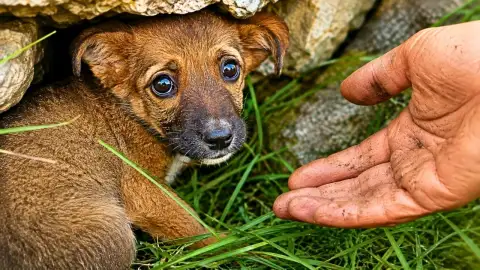
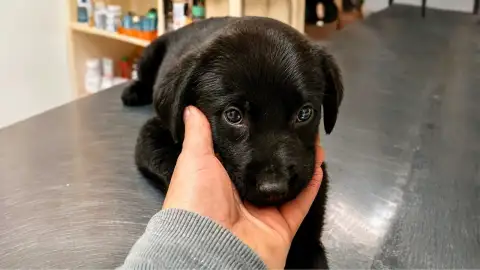
Rescued animals may arrive with old scars or healing wounds. At Paw Squadron, the first stops after every rescue are the vet and a bath, and every animal gets a checkup, treatment, vaccinations, and a microchip before adoption. If you adopt a cat, ask your vet about FIV and FeLV testing, which is recommended for all newly adopted cats. For more guides on emergencies and everyday care, browse PawPedia.
See also
From our rescues

Sources
Online sources
- Bite Wounds in Dogs · VCA Animal Hospitals
- Care of Open Wounds in Cats · VCA Animal Hospitals
- Wounds and skin injuries · PDSA
- First aid for bite wounds · PDSA
- Dog Wound Care: Everything You Need to Know · American Kennel Club
- Bite Wounds · American Kennel Club
- Bite-related and septic syndromes caused by cats and dogs · Oehler R.L. et al., The Lancet. Infectious diseases (2009)
Encyclopedias
- Wound · Wikipedia
- С. С. Харнас. Рана [Wound] · Большая российская энциклопедия, т. 28, Москва, 2015, с. 215 (archived copy)
- 創傷 [Wound] · 日本大百科全書(ニッポニカ), 小学館, via Kotobank
Books
- Fossum TW (ed.). Small Animal Surgery. 5th ed. Philadelphia: Elsevier, 2018. ISBN 9780323443449
- Silverstein DC, Hopper K (eds.). Small Animal Critical Care Medicine. 2nd ed. St. Louis: Elsevier, 2015. ISBN 9781455703067
- Ettinger SJ, Feldman EC, Côté E (eds.). Textbook of Veterinary Internal Medicine: Diseases of the Dog and the Cat. 8th ed. St. Louis: Elsevier, 2016. ISBN 9780323312110
- Щербаков Г. Г. и др.; под общ. ред. Г. Г. Щербакова. Внутренние болезни животных: учебник [Internal Diseases of Animals: A Textbook]. Санкт-Петербург: Лань, 2014. ISBN 9785811416820
- 田中茂男、津曲茂久、鎌田寛、亘敏広. 猫の医学 [Feline Medicine]. 東京: 時事通信出版局, 2011. ISBN 9784788711617
This article is general information, not veterinary advice. Always consult a veterinarian about your animal’s health. Some pictures in PawPedia may be AI-generated.
This page was last updated on October 13, 2026.