Dog Vomiting: Causes, What to Do at Home, and When to See a Vet
From PawPedia, an encyclopedia of life with animals
Fact-checked against veterinary sources
Contents
In short
Most dogs vomit now and then, often after eating something they should not have, and many mild episodes settle within a day. Vomiting is a sign rather than a disease, though, and can point to a blockage, poisoning, or illness. Call a vet straight away for repeated retching with nothing coming up, blood in the vomit, or a swallowed object.
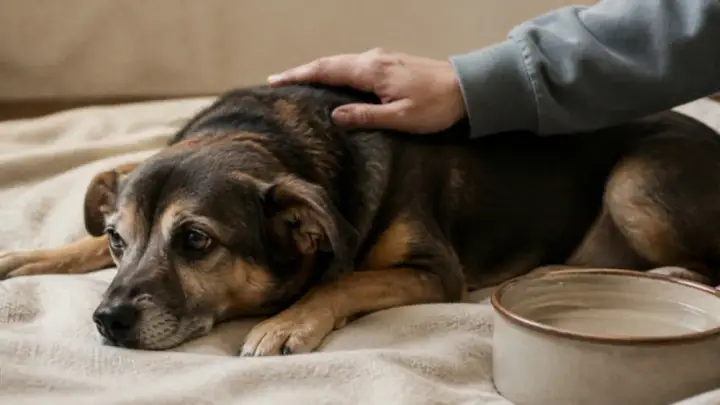
| Cause | Many causes, from eating something unusual or a sudden food change to parasites, infections, poisons, a swallowed object, pancreatitis and kidney or liver disease |
|---|---|
| Most at risk | Puppies and unvaccinated dogs for parvovirus; large, deep-chested breeds for bloat |
| Not the same as | Regurgitation, when undigested food slides back up with little effort and no heaving, often soon after a meal |
| Common signs | Drooling, lip licking, restlessness, then belly heaving and partly digested food or yellow or green fluid |
| Diagnosis | Questions and a full exam; blood and urine tests, a stool test, X-rays or an ultrasound scan if the dog is quite unwell or it keeps coming back |
| Treatment | Depends on the cause; fluids, medicine for nausea or stomach acid, an easily digested diet; bloat and many blockages need surgery |
| Outlook | Many mild cases improve within 24 hours |
| Prevention | Change food over about a week; keep bins, scraps, bones, small toys, medicines and chemicals out of reach |
| Home care | For a healthy adult dog, a short food break (often about 12 hours), water little and often, then small bland meals |
| Emergency if | Repeated retching with nothing coming up, vomiting many times in a row, blood or coffee-ground vomit, a swallowed object or poison, swollen or painful belly, weakness or pale gums, a puppy |
Vomiting is one of the most common reasons dogs are taken to a vet. Most dogs throw up now and then, often after eating something they should not have, and many of these episodes settle within a day. Vomiting can also be the first sign of a blockage, a poisoning or an illness that needs prompt treatment. This guide explains the usual causes, what the vomit itself can tell you, safe care at home, and the signs that mean your dog should see a vet.
Vomiting or regurgitation?
It helps to know which one you are seeing, because the causes are different. Vomiting is an active process. Most dogs show signs of nausea first, such as drooling, lip licking, repeated swallowing, restlessness or pacing. Then the belly heaves and the stomach contents come up. The material is often partly digested and may contain yellow or green fluid.
Regurgitation is passive. Food or water slides back up with little or no effort and no heaving, often soon after a meal. The food usually looks undigested and may come out in a tube shape. A one-off episode may just mean your dog ate too fast. Regular regurgitation can point to a problem with the food pipe, such as megaesophagus, and needs a vet check.
Retching is a third pattern: gagging and heaving with little or nothing coming up. A single retch is rarely a worry. Repeated retching that brings nothing up is an emergency, as explained below.
Common causes
Vomiting is a sign rather than a disease. The cause can be minor or serious, and a single episode rarely tells you which. Common causes include the following.
- Eating something unusual, such as garbage, spoiled food, table scraps or plants
- A sudden change of food, or a food intolerance or allergy
- Intestinal worms and other parasites
- Bacterial and viral infections, including parvovirus in puppies and unvaccinated dogs
- Poisons, including some human foods, medicines and household or garden chemicals
- A swallowed object, such as a sock, toy, stick, food wrapper or bone, that blocks the gut
- Pancreatitis, which can follow a fatty meal
- Kidney disease, liver disease, diabetes or Addison's disease
- An infected womb, called pyometra, in females that are not spayed
- Stomach ulcers, inflammatory bowel disease or cancer
- Side effects of some medicines, travel sickness and heatstroke
Pancreatitis is worth knowing about, because it often follows a rich or fatty meal, such as leftovers from a family dinner. Dogs with it may vomit, have a painful belly and run a fever. It needs prompt veterinary care. For more on this condition, see Pancreatitis in Dogs.
What the vomit can tell you
It is worth taking a look, and a photo, before you clean up. Color and contents give your vet useful clues, though they cannot replace an examination.
- Undigested food soon after a meal: often regurgitation, or a dog that ate too quickly
- Partly digested food: true vomiting, often from an upset stomach
- Yellow or green foam or liquid: usually bile, often from an empty stomach
- Grass: often harmless once, but frequent episodes deserve a check
- Fresh red blood or streaks of blood: needs a vet
- Dark brown or black specks that look like coffee grounds: digested blood, which needs a vet
- Pieces of plastic, fabric, toys or bone: a possible blockage, so call your vet
Some dogs bring up a little yellow bile early in the morning, before breakfast, and are otherwise bright and hungry. Vets sometimes call this bilious vomiting syndrome. It is thought to happen when bile flows back from the intestine into an empty stomach and irritates it. A small meal just before bed may help, and your vet may suggest medicine as well. In dogs it is usually not an emergency. Other causes, such as parasites, a partial blockage or long-term pancreatitis, need to be ruled out first, so mention the pattern to your vet.
Coffee-ground vomit is easy to miss, because it does not look like blood. It is blood that has been partly digested in the stomach, and it often points to bleeding from a stomach ulcer. In dogs, ulcers are linked most often to anti-inflammatory painkillers, liver disease and some tumors. Never give your dog painkillers from your own medicine cabinet. Some human medicines cause stomach ulcers or poisoning in dogs.
When it is an emergency
Contact your vet straight away, or an emergency clinic out of hours, if you notice any of these signs.
- Repeated retching that brings up nothing, especially with a swollen belly, drooling or restlessness
- Vomiting many times in a row, or being unable to keep even water down
- Blood in the vomit, or vomit that looks like coffee grounds
- Any chance your dog swallowed a poison, a medicine or an object such as a toy, sock or bone
- Vomiting together with diarrhea, especially if there is blood in the stool
- A painful or swollen belly, or a fever
- Weakness, collapse, confusion or pale gums
- Signs of dehydration, such as dry, sticky gums or sunken eyes
- Vomiting in a puppy, especially one that is not fully vaccinated
Repeated, unproductive retching with a swelling belly can mean bloat, also called gastric dilatation-volvulus. The stomach fills with gas and can twist, which blocks both its entrance and its exit. Large, deep-chested breeds such as Great Danes, Saint Bernards, Weimaraners and Standard Poodles are most at risk, but any dog can be affected. Treatment is needed within minutes to a few hours. Read more in Bloat (GDV) in Dogs.
A swallowed object is also urgent. A blockage can cut off the blood supply to part of the gut, and that tissue can die within hours. Signs include vomiting, a poor appetite, a tender belly, tiredness and straining to pass stool. Our guide to swallowed objects in dogs explains what to do. If you think your dog has eaten something toxic, do not make it vomit unless your vet tells you to, and take the packaging with you. The usual dangers are listed in Common Household Poisons for Dogs and Cats.
Parvovirus mainly affects puppies and unvaccinated dogs. It causes vomiting and often bloody diarrhea, and it is life-threatening without treatment. See Parvovirus in Dogs for the signs.
Book a regular appointment if your dog seems well but keeps vomiting for more than a day or two, vomits on and off over weeks, or is losing weight. Call sooner for older dogs and for dogs with other health problems, such as diabetes or kidney disease.
Care at home for mild cases
Home care is meant for an adult dog that has vomited once or twice, is still bright and alert, and shows none of the warning signs above. If you are unsure, phone your vet for advice first.
For a healthy adult dog, many vets suggest a short break from food, often around 12 hours, so the stomach can settle. Advice on the length of this pause varies, so follow your own vet's guidance. Keep fresh water available and offer it little and often. Puppies, toy breeds and dogs with diabetes or other illnesses should not go without food unless your vet says so, because small or sick bodies have little in reserve.
If the vomiting does not return, offer small meals of a bland, low-fat food every few hours. Plain boiled chicken breast or white fish with plain boiled white rice is a common choice, or a veterinary diet made for digestive upsets. Avoid fatty food, rich treats, milk and bones while the stomach settles. If all goes well, mix your dog's usual food back in gradually over two to three days.
Do not give human medicines for nausea or an upset stomach unless your vet recommends one, since some can harm dogs. Many mild cases improve within 24 hours. If the vomiting comes back, your dog seems worse at any point, or it is not back to normal within a day, call your vet.
How vets diagnose and treat it
Your vet will ask when the vomiting started, how often it happens and what it looks like. They will also ask whether your dog could have reached garbage, toys, plants or poisons. A full examination follows, including the mouth and belly.
If your dog is quite unwell, or the vomiting keeps coming back, the vet may suggest blood and urine tests, a stool test, X-rays or an ultrasound scan. Long-term vomiting sometimes needs a camera exam of the stomach and small intestine, with small tissue samples taken for testing.
Treatment depends on the cause. It may include fluids to correct dehydration, medicines to stop nausea or reduce stomach acid, and an easily digested diet. Bloat needs emergency surgery, and many blockages need surgery too. Your vet will also treat any underlying problem, such as parasites, pancreatitis or kidney disease.
Prevention
Not every case can be prevented, but a few habits lower the risk. Change food gradually, mixing the new food in over about a week. Keep bins, table scraps, bones and small toys out of reach. Store medicines, cleaning products and garden chemicals where your dog cannot get them. If your dog gulps its food, try smaller meals or a slow-feeder bowl. Keep vaccinations and parasite treatments up to date, as your vet recommends. For portion sizes and safe foods, see How to Feed Your Dog.
After adoption
A rescue dog's first days in a new home bring new food, new people and a new routine, and some dogs have an upset stomach while they settle. At Paw Squadron, the first stops after every rescue are the vet and a bath. Each animal has a checkup, deworming and treatment against fleas and other parasites, and before adoption every animal also gets vaccinations and a microchip. If your dog vomits more than once, or shows any of the warning signs above, contact your own vet rather than waiting for it to pass.
For more practical guides on dog health, browse PawPedia. If you adopted from us and have questions, write to us from the Contact page.
See also
From our rescues
 9:36He Cried In Pain For Days Until Someone Finally Heard HimCozy Osbourne · February 8, 2023
 9:16Small Puppy Was Screaming for Help and Struggling to Survive Until This HappenedJames Brownie · November 12, 2022
 9:47Abandoned Puppy Was Scared to Death and Barely Surviving Until This HappenedCorner O'Brien · October 29, 2022
Sources
- Vomiting in Dogs · Merck Veterinary Manual (Pet Owner Version)
- Vomiting in Dogs · VCA Animal Hospitals
- Dog Vomiting · PDSA
- Vomiting · Cornell Richard P. Riney Canine Health Center
- Bloat: Gastric Dilatation and Volvulus in Dogs · VCA Animal Hospitals
- Ingestion of Foreign Bodies in Dogs · VCA Animal Hospitals
- Emergencies in Dogs · VCA Animal Hospitals
- Testing for Pancreatic Disease · VCA Animal Hospitals
- Gastrointestinal Ulcers in Small Animals · Merck Veterinary Manual (Professional Version)
- Why Is My Pet Vomiting? Here's One Option (Bilious Vomiting Syndrome) · University of Illinois College of Veterinary Medicine
This article is general information, not veterinary advice. Always consult a veterinarian about your animal’s health. Some pictures in PawPedia may be AI-generated.
This page was last updated on October 27, 2026.