Castração de gatos e gatas: idade certa, benefícios e recuperação
Da PawPedia, uma enciclopédia da vida com animais
Índice
| What it is | Routine surgeries that stop a cat from breeding: spaying for females, neutering for males |
|---|---|
| Best age | Before five months, say several major US veterinary groups; around four months, says International Cat Care |
| Going home | Most cats go home the same day or the next morning |
| Heat cycles | Spaying ends heat cycles and pregnancy, whether the vet removes the ovaries alone or the uterus as well |
| Spraying | Neutering reduces or stops spraying, roaming and fighting in most cats |
| Health benefits | Spaying prevents pyometra, removes ovarian and uterine cancer risk and lowers mammary cancer risk |
| Rest period | Limit running and jumping for about two weeks |
| Wound care | A cone collar or soft recovery suit helps stop licking or chewing of the wound |
| Avoid | Human painkillers, which can be poisonous to cats |
| Weight | A cat needs less energy after surgery, so the same amount of food can lead to weight gain |
| See a vet | At once for a wound that opens, heavy bleeding, pale gums, collapse or trouble breathing; same day for swelling, oozing or a bad smell |
Spaying and neutering are routine surgeries that stop a cat from breeding. Spaying is the operation for females. Neutering, also called castration, is the operation for males. This article explains when to plan the surgery, what it changes, and how to care for your cat while the wound heals.
What the surgery involves
Both operations are done under general anesthesia. In a spay, the vet removes the ovaries, and usually the uterus as well. The cut is small and is usually made on the belly, although some vets work through the side. Removing only the ovaries is also an accepted method. Both methods end heat cycles and pregnancy.
In a neuter, the vet removes both testicles through two small cuts in the scrotum. The cuts are so small that stitches are rarely needed.
Most cats go home the same day or the next morning. Before surgery, the clinic will tell you when to take away food. An empty stomach lowers the risk of the cat breathing in vomit under anesthesia, so follow these instructions closely.
The right age
For many years, six months was the standard age. Today, several major veterinary organizations in the United States recommend spaying and neutering cats before five months of age. In the UK, International Cat Care advises around four months.
Kittens can reach sexual maturity from about four months old. A young female can become pregnant much sooner than many owners expect, and brothers and sisters from the same litter can mate with each other. A female can have up to three litters a year.
Shelters often spay and neuter healthy kittens as young as eight weeks. Adult cats can also have the surgery after a health check. Your vet will suggest the best timing for your cat. If your female is in heat or may be pregnant, tell the vet. They will advise whether to operate now or wait.
How it changes heat and spraying
An unspayed female comes into heat again and again during the breeding season, often every two to three weeks if she does not get pregnant. During heat she may call loudly, rub against people and furniture, roll on the floor, and urinate outside the litter box. She also attracts male cats from the area. Spaying ends these cycles.
Intact males mark their territory by spraying strong-smelling urine on walls and furniture. They roam widely, often at night, in search of females, and they fight with other males. Neutering reduces or stops these behaviors in most cats.
The earlier a male is neutered, the better the chance of preventing these habits. The longer a cat has been spraying and fighting, the less likely neutering is to stop it completely. Surgery also does not change habits that have other causes. A cat that sprays because of stress, tension with another cat, or a dirty litter box may keep doing it. If spraying continues, ask your vet to look for other causes.
Most cats keep their personality after surgery. They usually stay as playful and affectionate with their people as before.
Health benefits
Spaying prevents pyometra, a serious infection of the uterus, and removes the risk of ovarian and uterine cancer. It also lowers the risk of mammary cancer. The protection is strongest when a cat is spayed young, ideally before six months of age. Most mammary tumors in cats are malignant, so this benefit matters.
Some people believe a female should have one litter or one heat before she is spayed. There is no health benefit in this, and waiting raises her risk of mammary cancer.
Neutering prevents testicular tumors, although these are rare in cats. Because neutered males roam and fight less, they also get fewer bite wounds and abscesses. FIV spreads mainly through deep bite wounds, and FeLV can also pass between cats through bites. Both viral infections have no cure and are more common in intact males. Neither virus infects people.
Recovery at home
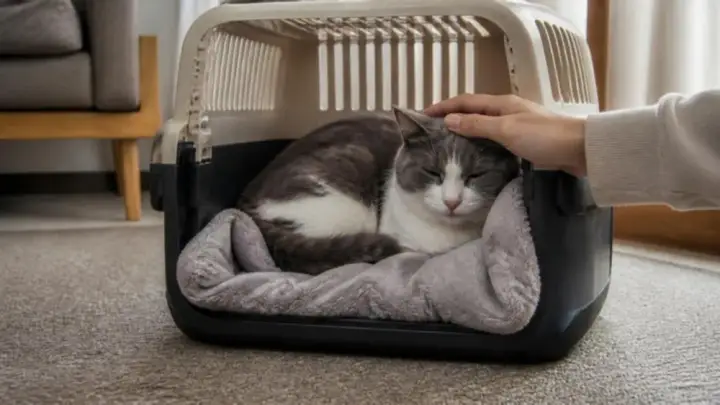
Most cats are sleepy and a little unsteady on the evening after surgery. Keep your cat indoors in a quiet, warm room away from children and other pets. The clinic will explain when to offer food and water and will usually send home pain relief. Give only the medicine your vet prescribes. Human painkillers can be poisonous to cats.
- Limit running and jumping for about two weeks, and keep the cat off high shelves where you can.
- Check the incision once or twice a day. A little redness at the edges can be normal in the first days.
- Stop your cat from licking or chewing the wound. A cone collar or a soft recovery suit helps.
- Do not bathe your cat or let the wound get wet for at least ten days.
- Keep the litter box clean, and ask the clinic if they suggest a particular litter for the first few days.
- Go to the follow-up visit. If there are skin stitches, they are usually removed after seven to ten days.
Many cats act normal within a day or two, long before the wound has healed. The activity limits still apply during this time. Other cats in the home may hiss at a cat coming back from the clinic because it smells different. Give them time and space, and keep them apart for a while if needed.
After spaying or neutering, a cat needs less energy, so the same amount of food can lead to weight gain. Ask your vet how much to feed after surgery, weigh your cat now and then, and keep up daily play. In Siamese and other pointed breeds, the fur over the shaved area may grow back darker. This is a change in coat color only and is not a health problem.
When to call the vet
Complications after spaying and neutering are uncommon. Call your vet the same day if you notice any of the following.
- The wound is swollen, very red, oozing, or smells bad.
- Your cat refuses food for more than a day, vomits more than once, or has diarrhea.
- Your cat is very weak, hides and will not move, or seems in pain despite the prescribed medicine.
- Bleeding from the wound does not stop.
An incision that opens, tissue showing through the wound, heavy bleeding, pale gums, collapse, or trouble breathing are emergencies. Go to a clinic right away.
Months or even years after a spay, a few cats show heat behavior again. This can mean that a small piece of ovarian tissue was left behind, a problem called ovarian remnant syndrome. It is uncommon. A vet can confirm it with tests and remove the tissue in a second surgery.
In a female that has not been spayed, low energy, poor appetite, extra thirst and urination, vomiting, discharge from the vulva, or a swollen belly can be signs of pyometra. This infection can become life-threatening quickly and needs a vet the same day.
Adopted and rescued cats
Many adopted cats arrive with little known history. If you are not sure whether your cat has been spayed or neutered, ask your vet. They can often tell during an exam, and tests can help when it is unclear. A female that comes into heat either has not been spayed or may have ovarian tissue left behind.
At Paw Squadron, the first stops after every rescue are the vet and a bath. There, each animal gets a checkup, deworming, and treatment against fleas and other parasites. Every animal is also vaccinated and microchipped before adoption. When you adopt, ask about your cat's spay or neuter status and what the vet recommends next. If you adopt a young kitten, plan the surgery with your vet early so the first heat or the first spraying never begins.
You can read more about cat health in PawPedia, or meet the cats waiting for homes on our Adoptions page. If you also have a dog, see the pros and cons of spaying a female dog.
Veja também
Dos nossos resgates
 12:49Filhote abandonado implorava desesperadamente por ajuda até que isto aconteceuShania Drain · 9 de março de 2022
 9:33Filhote abandonado estava em lágrimas e lutava para sobreviver até que isto aconteceuDustin Timberlake · 5 de março de 2022
 13:25Resgate de um filhote abandonado e assustado, de coração partidoClean Eastwood · 26 de fevereiro de 2022
Este artigo traz informações gerais, e não orientação veterinária. Consulte sempre um veterinário sobre a saúde do seu animal. Algumas imagens da PawPedia podem ter sido geradas por IA.
Esta página foi atualizada pela última vez em 30 de setembro de 2026.