Dog Not Eating: Causes and When to See a Vet
From PawPedia, an encyclopedia of life with animals
Fact-checked against veterinary sources
Contents
In short
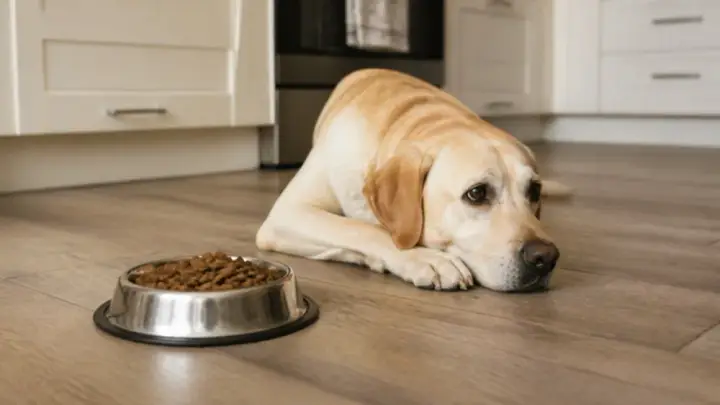
A bright, healthy adult dog that skips one meal is often fine. See a vet if your dog has eaten nothing for more than 24 hours, or refuses food along with vomiting, diarrhea, tiredness or pain. Puppies, especially toy breeds, should not wait, because they can develop dangerously low blood sugar.
| Cause | Many causes, from dental pain, nausea, fever and infection to organ disease, poisons, a swallowed object, cancer, stress and medicines |
|---|---|
| Picky or ill | A fussy dog still takes treats eagerly and has normal energy, stools and weight; illness brings weight loss, tiredness, vomiting or drooling |
| Hungry but cannot eat | A dog that picks up food and drops it or chews awkwardly often has pain in the mouth, jaw or throat |
| Most at risk | Puppies, especially toy breeds under about 12 weeks, which can develop low blood sugar (hypoglycemia) between meals |
| Temperature | Normal is about 99.5 to 102.5 F (37.5 to 39.2 C); 103 F (39.4 C) or higher needs a vet |
| When to call | A vet quickly if a dog has eaten nothing for more than 24 hours; the same day for any warning sign |
| Diagnosis | A history and full exam including the mouth, temperature and belly, then blood and urine tests, X-rays, ultrasound or endoscopy |
| Treatment | Targets the cause; fluids, medicine for nausea or pain, dental care, an appetite stimulant or a temporary feeding tube |
| Tempting a dog | Warm the food to body temperature, offer canned food or low-sodium broth without onion or garlic; avoid fatty leftovers and bones |
| New home | Many dogs eat little in the first days; keep regular feeding times and a quiet place, and call a vet after a day with no food |
| Emergency if | Retching with nothing coming up, a swollen belly, drooling and restlessness (bloat), repeated vomiting, collapse, yellow gums, possible poison or swallowed object, a puppy that skips a meal |
Most dogs love their food, so a full bowl is easy to notice. Sometimes the reason is simple, such as a new food the dog dislikes or a hot day. But a poor appetite is also one of the most common early signs of illness in dogs, and it is one of the most frequent reasons owners call the vet. This guide explains how to tell picky eating from a real problem, the common causes, and when a vet visit should not wait.
Picky eating or a real problem?
Vets separate two situations. In true loss of appetite, the dog simply does not want to eat. In the second situation, the dog is hungry but cannot eat comfortably. It may go to the bowl, pick food up and drop it, chew awkwardly or walk away. That pattern often points to pain in the mouth, jaw or throat.
Some dogs are simply fussy. They may refuse a food they do not like. Frequent diet changes and lots of human food can also upset the stomach and make appetite worse. A dog that is only fussy usually still takes treats eagerly, has normal energy, normal stools and a steady weight.
Watch for signs that point to illness rather than taste.
- Weight loss
- Tiredness or less interest in walks and play
- Vomiting or diarrhea
- Drooling, bad breath or pawing at the mouth
- Yellow gums, skin or whites of the eyes
- Hiding, restlessness or seeming grumpy or quiet
If you have more than one dog, feed them apart for a few days so you can see how much each one really eats.
Common causes
A poor appetite is a sign, not a diagnosis. The list of possible causes is long, but a few come up again and again.
- Dental pain. Tartar, loose or broken teeth, sore gums and tooth abscesses can hurt enough to stop a dog eating. Our guide to dental care for dogs and cats explains what to look for.
- Nausea. A nauseous dog may seem restless or anxious, lick its lips, drool and swallow repeatedly, often before it vomits. Stomach and gut problems such as gastritis and colitis usually cause vomiting or diarrhea as well. See our guide on dog vomiting.
- Fever and infection. A dog's normal temperature is about 99.5 to 102.5°F (37.5 to 39.2°C). Infections that raise the temperature, such as infected wounds, ear or urinary infections and dental abscesses, often dull the appetite. A temperature of 103°F (39.4°C) or higher needs a vet.
- Pain elsewhere in the body. A sore back or aching joints can put a dog off its food, and sometimes the only other sign is that the dog seems quieter than usual.
- Stress and change. A move, a new person or pet in the home, a change of routine or a stay in kennels can all lead to a few skipped meals.
- After vaccination. Some dogs run a mild, low fever for a day or two after vaccines, which can make them less interested in food. It usually passes on its own.
- Organ disease. Kidney and liver disease make dogs feel sick, and diabetes, heart or lung disease and hormone problems such as hypothyroidism can also reduce appetite.
- Other causes include poisons, a swallowed object blocking the gut, stomach ulcers, cancer, side effects of medicines and very hot weather.
Why puppies cannot wait
An adult dog has reserves to fall back on. A young puppy does not. Very young and very small puppies, especially toy breeds under about 12 weeks old, have little body fat and muscle and an immature liver, so they cannot store much sugar. They can use up their available blood sugar between meals, particularly when they are active, cold or stressed, or when they carry intestinal parasites such as roundworms, coccidia or Giardia.
Low blood sugar, called hypoglycemia, can show up as tiredness, weakness, trembling, wobbly walking, poor vision and, in severe cases, seizures or collapse. It can be fatal if it is not treated. A puppy that skips a meal and seems quiet or weak needs a vet the same day. If the puppy is awake and able to swallow, your vet may tell you to rub a little honey or syrup on its gums on the way to the clinic. That buys time but does not replace treatment.
Infections matter too. Parvovirus most often strikes unvaccinated puppies between 6 weeks and 6 months old, and its earliest signs are tiredness and a poor appetite, followed by vomiting and diarrhea. A puppy with these signs needs urgent care and a test for parvovirus.
When to see a vet
Contact your vet if your dog's eating habits change and you cannot find a clear reason. It is important to see a vet quickly if your dog has eaten nothing at all for more than 24 hours. Go sooner, the same day, if you notice any of these signs.
- Retching without bringing anything up, a swollen or tight belly, drooling and restlessness. This can be bloat (GDV), an emergency that needs immediate veterinary care. Large, deep-chested breeds are most at risk. Read more in our guide to bloat in dogs.
- Repeated vomiting, or vomiting with diarrhea
- Weakness, collapse or unusual tiredness
- A temperature of 103°F (39.4°C) or higher
- Yellow gums or eyes
- A painful mouth or heavy drooling
- Any chance your dog ate a poison, a medicine or an object such as a toy, sock or bone
- A puppy, especially a toy breed, that skips a meal
Older dogs and dogs with ongoing health problems, such as diabetes or kidney disease, also deserve an earlier call. Never give your dog human medicines to settle the stomach or bring down a fever unless your vet tells you to, because some are toxic to dogs.
Safe ways to tempt a dog
These ideas are for an adult dog that is bright and alert and shows none of the warning signs above. They are a short-term help while you watch your dog, not a replacement for a vet visit.
- Warm the food to about body temperature, around 100°F (38°C). If you use a microwave, stir well to avoid hot spots.
- Offer a canned food, or try a few different ones.
- Add a spoonful of low-sodium broth. Check the label first and avoid any broth made with onion or garlic, which can damage a dog's red blood cells.
- Ask your vet before switching to home-cooked food. A vet may suggest plain cooked chicken or cooked egg for a few days.
- Feed in a calm, quiet place, away from other pets and busy parts of the home.
- Avoid fatty leftovers, bones and rich treats. Fatty food can trigger vomiting, diarrhea and pancreatitis, and bones can injure or block the gut.
Try not to swap foods every day. Constant changes can upset the stomach, and some dogs learn to hold out for something better. For balanced, long-term feeding, see our guide on how to feed your dog.
How vets find the cause
Your vet will ask when your dog last ate normally, what it eats, whether it is drinking, and whether you have seen vomiting, diarrhea or changes in behavior. A full examination includes a careful look in the mouth, a check of temperature and a feel of the belly. Depending on what the vet finds, the next steps may include blood and urine tests, X-rays, an ultrasound scan and sometimes an endoscopy.
Treatment depends on the cause. It may include fluids for dehydration, medicines for nausea or pain, dental treatment, or a short course of a medicine that stimulates appetite. Dogs that need nutrition but will not eat can be fed for a while through a feeding tube. Tubes are usually fairly easy to care for and can be lifesaving. They are a temporary bridge until the dog eats well on its own again.
After rescue or adoption
Many dogs eat little in their first days in a new home. New smells, new people and a new routine are a lot to take in. Ask what food your dog was eating before, keep feeding times regular and give your dog a quiet place to eat. Our guide to the first 30 days with a rescue dog covers settling in.
At Paw Squadron, every dog we rescue sees a vet and is dewormed soon after rescue. Even so, a poor appetite in a new home should never be put down to nerves alone. If your new dog has eaten nothing for more than a day, or shows any of the warning signs above, call your vet.
For more practical guides on dog health, browse PawPedia. If you adopted your dog from us and have questions, write to us from the Contact page.
From our rescues
Sources
Online sources
- Anorexia in Dogs · VCA Animal Hospitals
- My dog isn't eating properly · PDSA
- Vomiting in Dogs · VCA Animal Hospitals
- Dog Fever and Temperature · American Kennel Club
- Hypoglycemia in Dogs · American Kennel Club
- Gastric Dilatation-Volvulus · American College of Veterinary Surgeons
- Parvovirus: Transmission to treatment · Cornell Richard P. Riney Canine Health Center
- People Foods to Avoid Feeding Your Pets · ASPCA Animal Poison Control Center
Encyclopedias
- Anorexia (symptom) · Wikipedia
- Анорексия [Anorexia] · Большая российская энциклопедия, т. 2, Москва, 2005, с. 17 (archived copy)
Books
- Washabau RJ, Day MJ (eds.). Canine and Feline Gastroenterology. St. Louis: Elsevier Saunders, 2012. ISBN 9781416036616
- Ettinger SJ, Feldman EC, Côté E (eds.). Textbook of Veterinary Internal Medicine: Diseases of the Dog and the Cat. 8th ed. St. Louis: Elsevier, 2016. ISBN 9780323312110
- Щербаков Г. Г. и др.; под общ. ред. Г. Г. Щербакова. Внутренние болезни животных: учебник [Internal Diseases of Animals: A Textbook]. Санкт-Петербург: Лань, 2014. ISBN 9785811416820
- Nelson RW, Couto CG. Small Animal Internal Medicine. 6th ed. St. Louis: Elsevier, 2019. ISBN 9780323570145
This article is general information, not veterinary advice. Always consult a veterinarian about your animal’s health. Some pictures in PawPedia may be AI-generated.
This page was last updated on November 17, 2026.