Ear Mites in Cats and Dogs: Signs, Treatment, and Prevention
From PawPedia, an encyclopedia of life with animals
Contents
In short
Ear mites are tiny parasites that live in the ear canal and cause itching, head shaking, and dark, crumbly debris that looks like coffee grounds. They spread easily between pets, so a vet should confirm them and usually treats all animals in the home together. Contact a vet the same day for head tilt, loss of balance, or pus.
| Cause | The ear mite Otodectes cynotis, up to about half a millimeter long |
|---|---|
| Affects | The ear canal of cats, dogs and ferrets |
| Most at risk | Kittens, puppies and cats that spend a lot of time outdoors |
| How it spreads | Close contact such as sleeping together, grooming each other and play |
| Common signs | Ear scratching, head shaking and dark, crumbly debris in the ear that looks like coffee grounds |
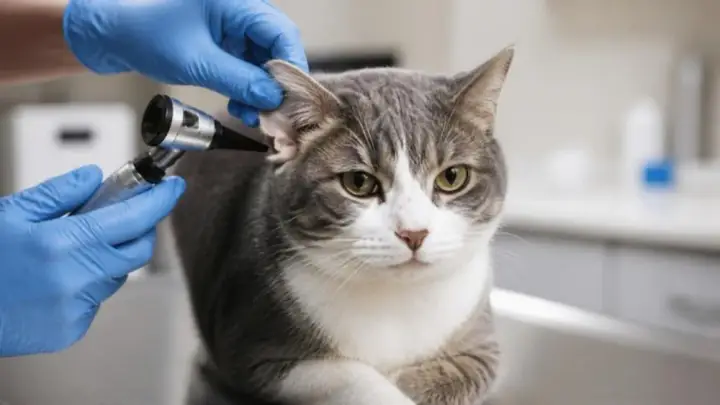
| Diagnosis | The vet looks into both ears with an otoscope, a small lighted instrument |
| Treatment | A medicine prescribed by the vet that kills mites, such as an ear drop, a product applied to the skin or a tablet |
| Outlook | Ear mites usually respond well to treatment |
| Prevention | No vaccine; regular parasite control and a quick look at the ears now and then |
| Risk to people | Very small; rarely a short-lived itchy rash |
| Emergency if | A head tilt or loss of balance, pus or blood from the ear, deep scratch wounds, strong pain, or a kitten or puppy that stops eating |
Ear mites are tiny parasites that live inside the ear canal of cats, dogs, and ferrets. They are one of the most common causes of itchy ears in cats, and they pass easily from one animal to another. Kittens, puppies, and cats that spend a lot of time outdoors pick them up most often.
Ear mites usually respond well to treatment. This guide covers the signs to look for, when to act quickly, how vets confirm and treat the problem, and how to keep the mites from coming back.
Signs to watch for
Signs range from mild to severe, and the number of mites does not always match how the animal feels. A cat with many mites may seem only a little itchy, while another with just a few may be very uncomfortable. Common signs include the following.
- Scratching at the ears or rubbing the head on the floor or furniture
- Frequent head shaking
- Dark brown or black crumbly debris in the ear that looks like coffee grounds
- Red, sore ear canals, sometimes with a bad smell
- Scratches, scabs, or hair loss around the ears and face
- Ears held flat against the head or drooping
- A soft, puffy swelling of the ear flap
- Less often, itchy, crusty spots farther from the ears, such as on the neck or near the tail
The puffy ear flap is called an aural hematoma. It is a pocket of blood that forms when hard shaking or scratching breaks small blood vessels between the skin and the cartilage of the ear flap. It should be checked by a vet.
Dark wax does not always mean mites. Yeast and bacterial ear infections can look similar, and they need different treatment. A vet can tell them apart.
When it is an emergency
Most ear mite cases can be seen at a regular vet appointment within a few days. It is best to contact your vet the same day, or an emergency clinic after hours, if you notice any of these signs.
- A head tilt, loss of balance, walking in circles, or falling over
- Pus or blood coming from the ear
- Deep wounds from scratching
- Strong pain, such as crying out when the head or ears are touched
- A kitten or puppy that stops eating, seems weak, or is unusually quiet
Balance problems and pus can mean that the infection has spread deeper into the ear or that the eardrum is damaged. Quick care gives the best chance of protecting your pet's hearing and balance.
What ear mites are
The ear mite found in pets is called Otodectes cynotis. It is tiny, up to about half a millimeter long. Under a bright light it can look like a small white speck that moves. The mite lives and breeds on the surface of the skin inside the ear canal. It grows from egg to adult in about three weeks, and adults keep producing eggs for weeks, so numbers can build up fast.
Ear mites are much more common in cats than in dogs. In cats they are a leading cause of inflamed ears. Dogs, especially puppies, can get them too. Dogs also have many other causes of ear trouble, such as allergies, so a vet check is the best first step before any treatment.
How they spread
Ear mites move between animals through close contact, such as sleeping together, grooming each other, and play. Cats can pass them to dogs, and dogs can pass them to cats. Mites can also survive for a while off the animal, so shared beds, blankets, and grooming tools may carry them too.
Some animals carry ear mites without showing any signs. This is especially common in cats. A calm, healthy-looking cat can still be the source of mites for every other pet in the home.
Ear mites are a very small risk to people. Rarely, someone living with an infested pet gets a short-lived itchy rash. Wearing gloves to handle an affected pet's ears and washing your hands afterward are simple precautions. If you develop an itchy rash, ask your doctor.
How vets diagnose ear mites
The vet will look into both ears with an otoscope, a small lighted instrument. Mites can sometimes be seen moving inside the canal. The vet will often also collect some ear debris on a swab and look at it under a microscope. This helps find mites that the otoscope alone can miss.
When the ears are very inflamed or full of pus, mites can be hard to find. The vet will also look at the eardrum. Some ear medicines and cleaners can harm hearing or balance if the eardrum is torn, so this check guides the choice of treatment. If your pet has itchy skin elsewhere on the body, the vet may examine those areas too.
How treatment works
Treatment is usually straightforward. The vet often starts by cleaning the ear canal, because thick wax and debris can keep medicine from reaching the mites. The vet then prescribes a medicine that kills mites. Depending on the pet, this may be an ear drop, a product applied to the skin, or a tablet. Some whole-body parasite products are licensed for ear mites.
Mite eggs are hard to kill, so some treatments need to be repeated or continued long enough to cover the three-week life cycle. It helps to follow the full schedule your vet gives you, even if your pet seems better after a few days. Stopping early can let the mites return. If bacteria or yeast have also infected the ear, the vet may treat that as well and may ask to see your pet again to make sure the ears are clear.
Vets generally recommend treating all cats, dogs, and ferrets in the home at the same time, even those without signs. An untreated carrier can pass the mites straight back. Ask your vet which product is right for each animal. Some products made for dogs can be dangerous for cats, so it is safest to use each medicine only for the pet it was prescribed for.
It is best not to put oils, drops, or other home remedies into the ears before a vet has checked them. During treatment, washing your pets' bedding, blankets, and grooming tools helps too, since mites that fall off can live there for a time.
Preventing ear mites
There is no vaccine against ear mites. Prevention comes down to regular parasite control, a quick look at the ears now and then, and care when a new animal joins the home.
Many of the monthly parasite products that vets recommend for fleas and other parasites also work against ear mites. Coverage differs between products, so ask your vet whether the one your pet uses includes ear mites. Cats that often go outdoors are at higher risk than cats that stay mostly inside, which is worth mentioning when you talk about prevention with your vet.
Get to know how your pet's ears look and smell when they are healthy. That way you will notice changes early. If a new pet joins your home, a vet check first is a good idea, and you can ask whether to keep it apart from your other animals until any treatment is finished.
Rescued and newly adopted animals
Ear mites are found throughout Europe. In a large study of pet cats in good general health, seen at veterinary school clinics in seven European countries including Romania and Hungary, about one in six had ear mites. They were the most common external parasite in the study, found more often than fleas. A study of kittens up to six months old around Thessaloniki in northern Greece found ear mites in about 14 percent of them. Ear mites tend to be even more common in cats that roam free.
Street animals and young litters are at higher risk, and mites pass quickly between animals that share space. At Paw Squadron, the first stops after every rescue are the vet and a bath. Each animal gets a checkup, deworming, and treatment against fleas and other parasites. Before adoption, every animal also receives a checkup, treatment, vaccinations, and a microchip.
A settling-in visit with your own vet is still a good idea after adoption. It lets the vet get to know your new pet and check the ears again. A light infestation can be hard to spot, so tell the vet about any ear scratching or head shaking, especially in the first weeks at home. If you already have pets, ask your vet how best to introduce the newcomer.
If you are thinking about adopting, you can learn more on our Adoptions page. You will find more practical health guides in PawPedia.
See also
From our rescues
 9:16Small Puppy Was Screaming for Help and Struggling to Survive Until This HappenedJames Brownie · November 12, 2022
 9:47Abandoned Puppy Was Scared to Death and Barely Surviving Until This HappenedCorner O'Brien · October 29, 2022
 8:56Small Puppy Changes Completely After Being RescuedBlake Shelter · August 20, 2022
This article is general information, not veterinary advice. Always consult a veterinarian about your animal’s health. Some pictures in PawPedia may be AI-generated.
This page was last updated on September 26, 2026.