Constipation in Cats: Causes, Treatment, and Prevention
From PawPedia, an encyclopedia of life with animals
Contents
In short
Constipation means a cat passes stool less often than usual or strains to pass it, and the stool is usually dry and hard. Mild cases often improve with more water, wet food, and a clean litter box. Call a vet after 48 to 72 hours without stool, or right away if a male cat strains and passes no urine.
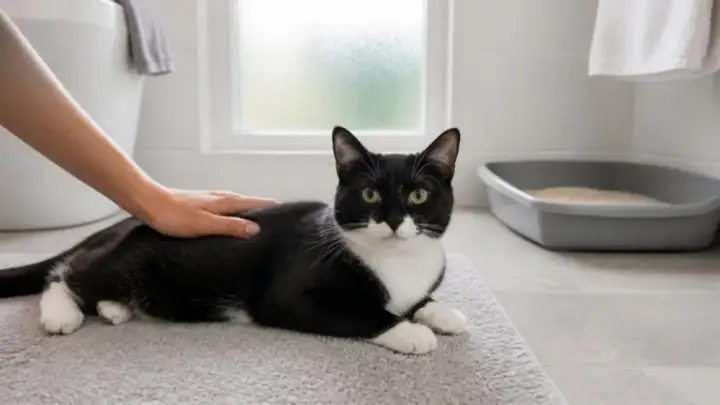
| Cause | Dehydration is one of the most common causes; the stool becomes hard and dry |
|---|---|
| Most at risk | Long-haired cats that swallow a lot of hair and cats with chronic kidney disease; obesity and too little activity are also linked |
| Usual age | Most often older cats, but it can happen at any age |
| First signs | A change in the litter box, such as long straining with little or nothing to show for it |
| Common signs | Passing stool less often or with trouble; the stool is usually dry and hard |
| Diagnosis | X-rays show how much stool is present and how wide the colon is |
| Treatment | A vet-prescribed laxative or stool softener in mild cases; worse cases often need enemas or stool removal by hand at the clinic |
| Outlook | Mild cases often improve with vet-guided care; constipation that keeps coming back can get worse over time |
| Prevention | Water, diet, movement and a litter box the cat is happy to use |
| Risk to people | None; constipation is not contagious |
| Emergency if | A male cat strains and passes little or no urine; also no stool in 48 to 72 hours, vomiting, not eating or crying out in pain |
Constipation means a cat passes stool less often than usual, or has trouble passing it. The stool is usually dry and hard. Most cats pass stool about once a day, so a cat that goes two or three days without a bowel movement, or strains each time it goes, may be constipated.
Mild cases are common. They often improve with changes to diet, water intake, and the litter box, guided by your veterinarian. Constipation that keeps coming back, or a cat that cannot pass stool at all, needs a veterinary visit. It can point to another health problem, and it can get worse over time. Constipation is seen most often in older cats, but it can happen at any age.
Signs to watch for
Many owners first notice a change in the litter box. Common signs of constipation are listed below.
- Straining in the litter box for a long time with little or nothing to show for it
- Small, hard, dry stools, sometimes left outside the box
- Crying out or looking uncomfortable while trying to pass stool
- Going in and out of the litter box many times
- Passing only a little watery stool, which owners can mistake for diarrhea
- Less appetite, vomiting, low energy, or a tense, sore belly in more severe cases
When it is an emergency
Straining in the litter box does not always mean constipation. A cat that strains to pass urine looks very similar. A male cat that strains and passes little or no urine may have a blocked urethra. This is a life-threatening emergency. A cat with a complete urinary blockage can die within a day or two without treatment. If you cannot tell whether your cat is trying to pass urine or stool, call a veterinarian right away.
Contact your veterinarian promptly if your cat has not passed stool in 48 to 72 hours, strains again and again with no result, vomits, stops eating, seems very tired, or cries out in pain. The most severe form of constipation is called obstipation. A cat with obstipation cannot pass the hard stool without help and often feels quite unwell.
Common causes
Constipation has many possible causes, and more than one can be present at the same time.
Dehydration is one of the most common. When a cat does not drink enough, or loses too much water through illness, the colon keeps drawing water out of the stool, and the stool becomes hard and dry. Chronic kidney disease, which is common in older cats, raises this risk.
Hair, bones, and other things that do not digest well can mix with stool and make it harder to pass. Long-haired cats that swallow a lot of hair while grooming are more at risk.
Pain can make a cat hold stool in. Arthritis in the hips or spine can make squatting hard, so a stiff cat may put off using the litter box. Pain around the anus, for example from an anal gland problem, can have the same effect.
The litter box itself matters. A dirty box, a litter the cat dislikes, a box in a busy or noisy spot, or another cat guarding the box can all lead a cat to hold stool for longer. Obesity and too little activity are also linked to constipation.
Less common causes include an old pelvic fracture that healed out of line and narrowed the canal, nerve damage from a spinal injury, tumors or other masses, low potassium in the blood, and side effects of some medicines. Some cats develop megacolon, a large, weak colon that no longer pushes stool along well. Megacolon is one of the most common causes of severe constipation in cats. In many cats its cause is never found, and long-standing constipation can also stretch the colon over time.
How vets diagnose it
Your veterinarian will ask about your cat's litter box habits, diet, water intake, medicines, and any past injuries. It helps to bring notes on when your cat last passed stool and what it looked like. During the exam, the vet can often feel hard stool in the belly, and a rectal exam may also be done.
X-rays show how much stool is present and how wide the colon is. They can also reveal an old pelvic fracture. For cats that become constipated again and again, the vet may suggest blood tests and a urine test. These look for kidney disease, dehydration, changes in blood minerals such as potassium and calcium, and thyroid problems. Some cats need an ultrasound or other tests to look for a mass or a nerve problem.
How it is treated
Treatment depends on how severe the constipation is and what is causing it. Mild cases often improve with more water, a change in diet, and a laxative or stool softener that your veterinarian prescribes. Cats that are dehydrated may need fluid therapy.
Moderate and severe cases often need enemas or removal of the stool by hand at the clinic. Removal by hand is usually done under general anesthesia, because it is uncomfortable and the cat needs to be kept still and safe. Some cats need to stay in the hospital for fluids and monitoring.
Once the colon is empty, many cats go home on a longer-term plan. This can include a special diet, laxatives or stool softeners, a medicine that helps the colon contract, and treatment for the cause the vet found, such as pain relief for arthritis. Cats with megacolon that do not respond to medical care may need surgery to remove most of the colon. Most cats do well after this surgery. Stools can stay loose for weeks or months afterward, and some cats still have episodes of constipation.
It is safest not to give your cat laxatives or enemas meant for people unless your veterinarian advises it. Some enemas sold for people contain phosphate, which can cause a dangerous imbalance of blood minerals in cats. Home treatment can also delay care for a cat that actually has a urinary blockage or another serious problem.
Prevention at home
Most prevention comes down to water, diet, movement, and a litter box your cat is happy to use. Ask your veterinarian which steps fit your cat, especially if your cat has kidney disease or another long-term condition.
- Offer wet food, alone or together with dry food, to add water to the diet.
- Keep fresh water in more than one spot around the home.
- Ask your veterinarian before adding fiber. Some cats do well with more fiber, while cats with severe constipation or megacolon often do better on a highly digestible diet that makes less stool.
- Help your cat stay at a healthy weight and play with it every day.
- Brush long-haired cats often to reduce the hair they swallow.
- Keep bones and other non-food items out of reach.
- Keep litter boxes clean and give each cat easy access to one. Older cats with stiff joints often do better with low-sided boxes and soft, sandy litter.
- Get to know what normal stool looks like for your cat, so you notice changes early.
Other pets and people
Constipation is not contagious. It does not pass from one cat to another, or from cats to dogs or people. If two cats in the same home become constipated, look at what they share, such as the litter boxes, the water, and the food, and mention it to your veterinarian.
Rescued and newly adopted cats
A move to a new home is stressful, and stress can change a cat's toilet habits for a while. A new cat may hold stool if the litter box is in a spot that feels unsafe, if the litter is different from what it knows, or if a resident cat blocks the way. Place the box in a quiet corner, add an extra box if you have other cats, and ask the rescue team what food and litter the cat is used to.
Rescued cats often have an unknown past. A cat that lived on the street may have had an injury, such as a broken pelvis that healed out of line, which can make passing stool harder later in life. If your adopted cat strains often, tell your veterinarian that its history is unknown, so they can check for old injuries.
At Paw Squadron, the first stops after every rescue are the vet and a bath. Each animal has a checkup, deworming, and treatment against fleas and other parasites. Before adoption, every animal gets a checkup, treatment, vaccinations, and a microchip. Once your cat is home, a visit to your own veterinarian in the first weeks helps you start a record of what is normal for your cat. If you have questions about adopting, see our FAQ, or find more cat care guides in PawPedia.
See also
From our rescues


This article is general information, not veterinary advice. Always consult a veterinarian about your animal’s health. Some pictures in PawPedia may be AI-generated.
This page was last updated on October 3, 2026.