Corneal Ulcers and Keratitis in Dogs: Signs and Treatment
From PawPedia, an encyclopedia of life with animals
Contents
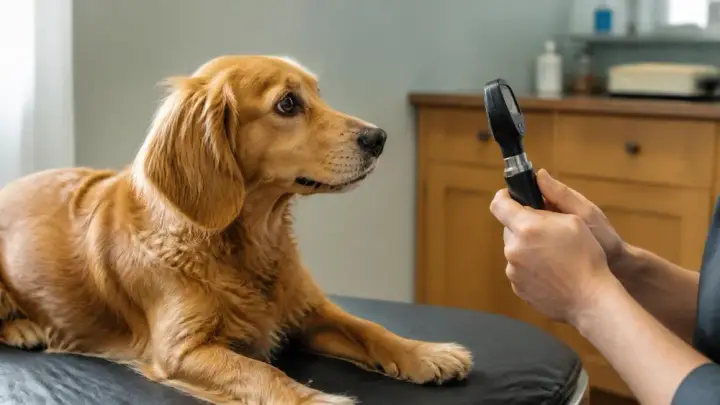
| Cause | Most ulcers in dogs start with an injury |
|---|---|
| Affects | The cornea, the clear window at the front of the eye |
| Most at risk | Flat-faced breeds such as Pugs, French Bulldogs and Bulldogs, with prominent eyes in shallow sockets |
| First signs | Squinting or holding one eye shut, more tears than usual, discharge from the corner of the eye |
| Common signs | Pawing at the eye, rubbing the face on the ground, avoiding bright light, a hazy or cloudy area |
| Diagnosis | The vet puts a drop of orange dye on the eye; it sticks where the outer layer is missing and shows up green |
| Treatment | From the vet: antibiotic drops or ointment and pain relief for a simple surface ulcer; many deep ulcers need surgery |
| Outlook | A simple surface ulcer often heals within a week; slow-healing and deep ulcers take longer, and a deep one can put the eye at risk |
| Prevention | Keep shampoo away from the eyes and introduce a new dog to a resident cat slowly and calmly |
| Risk to people | An ulcer from an injury, an eyelash or dry eye does not spread to other pets or to people |
| Emergency if | A pit or glassy spot on the eye, a soft or melting look, a growing cloudy area, thick yellow or green discharge, or a cat-claw injury |
The cornea is the clear window at the front of the eye. When part of its surface is scraped or worn away, the wound is called a corneal ulcer. Keratitis is the broader word for inflammation of the cornea. It can happen with an ulcer or without one.
Ulcers hurt, so most dogs show quickly that something is wrong. With prompt care, a simple ulcer often heals within about a week. A deep or infected ulcer can put the eye itself at risk. That is why it is recommended to have a squinting eye checked by a vet soon.
How the cornea gets damaged
The cornea is built in layers. The thin outer layer is the epithelium. Under it lies the stroma, the thick middle layer that gives the cornea its strength. Near the back is a very thin sheet called Descemet's membrane. A shallow ulcer affects only the outer layer. A deep ulcer reaches into the stroma. The deeper the ulcer, the more serious it is.
In dogs, most ulcers start with an injury. These are the most common causes.
- A scratch from a cat, a thorn, a branch, or rough play
- Rubbing the face on the carpet or furniture
- Seeds, sand, or other debris caught under the eyelids
- Shampoo, dust, or other chemicals getting into the eye
- Eyelids that roll inward, or extra eyelashes that rub the eye
- Low tear production, known as dry eye
Bacteria often get into an ulcer once it forms, and infection can make it deeper. Some health conditions also make ulcers more likely or slower to heal. These include diabetes, Cushing's disease, and an underactive thyroid.
Dogs at higher risk
Flat-faced breeds such as Pugs, French Bulldogs, and Bulldogs have prominent eyes set in shallow sockets. Some of these dogs cannot close their eyelids fully. The cornea stays exposed, so it dries out and gets injured more easily. Over the years, this can lead to scarring, brown pigment on the cornea, and repeated ulcers. Hairs or skin folds that touch the eye add to the problem.
Boxers are known for a slow-healing surface ulcer, often called an indolent ulcer. It usually appears in middle-aged or older dogs. Golden Retrievers can also be affected. Dogs of any breed with dry eye or eyelid problems have a higher risk too.
Signs to watch for
Many dogs show pain through their behavior before you notice anything on the eye. Watch for squinting or holding one eye shut, more tears than usual, and discharge from the corner of the eye. Your dog may paw at the eye, rub the face on the ground, or avoid bright light. The pink tissue around the eye can look red and swollen. Part of the eye may look hazy or cloudy. As the cornea heals, tiny red blood vessels can grow across its surface.
Some ulcers are too small to see without a special dye. If your dog squints or keeps one eye closed, it is recommended to have the eye checked soon, even if it looks normal to you.
When it is an emergency
Contact a vet right away if the eye has a visible pit or crater, or a clear, glassy spot in the middle of a cloudy area. These can be signs that an ulcer has gone almost all the way through the cornea. If the last thin layer tears, fluid escapes from inside the eye and the eye may not be saved. An eye that looks soft, jelly-like, or melting also needs urgent care. So does a cloudy area that keeps growing, thick yellow or green discharge, or any eye injury from a cat's claw.
If shampoo or a chemical gets into the eye, call the clinic right away. They may tell you to rinse the eye gently with clean lukewarm water before you come in. Flat-faced breeds need extra care with any eye injury, because their ulcers can deepen quickly.
How vets diagnose and treat it
The main test is quick. The vet places a drop of orange dye on the eye. The dye sticks to any area where the outer layer is missing and shows up green. A special light helps reveal very small ulcers. The vet will also look for the cause. This usually means checking the eyelids and lashes, looking under the lids for debris, and measuring tear production. For deep or infected ulcers, the vet may take a sample from the eye for lab tests.
Treatment depends on how deep the ulcer is and what caused it. A simple surface ulcer is usually treated with antibiotic drops or ointment to prevent infection, along with pain relief. Some dogs also get drops that relax the muscles inside the eye and ease the pain. The cause has to be corrected too. An ulcer will not heal while an extra eyelash or a rolled-in eyelid keeps rubbing it.
Deep ulcers need more intensive care. This can mean more frequent drops, medicine by mouth for pain and inflammation, and serum drops made from blood, which help slow the breakdown of the cornea. Many deep ulcers need surgery to support the cornea, such as a graft of tissue from the pink lining of the eye. Your vet may refer you to a veterinary eye specialist.
Indolent ulcers need a different approach. The outer layer at the edge of the ulcer stays loose and does not attach. The vet often removes this loose tissue and may lightly score the ulcer bed so new cells can hold on.
Steroid eye drops are not used while an ulcer is open, because they can slow or stop healing and lead to serious complications. For this reason, it is best not to use leftover drops from an earlier problem or from another pet unless your vet has checked the eye. After the ulcer has healed, your vet may sometimes use them to reduce leftover blood vessels and scarring.
Healing time and care at home
A simple surface ulcer often heals within a week, sometimes in three to five days. Indolent ulcers take longer and can come back. Deep ulcers take longer still and need close follow-up. Healing can leave a faint cloudy scar, and your vet can tell you whether it is likely to affect sight.
Your vet will repeat the dye test to confirm the ulcer has closed. Depending on how serious the ulcer is, rechecks can be anywhere from a day to a week apart. At home, these steps help the eye heal.
- If your vet sends your dog home in a cone collar, keep it on so your dog cannot rub or paw at the eye.
- Give each medication on the schedule your vet sets. If you have two kinds of drops, ask how long to wait between them.
- Continue treatment until your vet confirms the ulcer has healed, even if the eye looks better sooner.
- Go to every recheck visit.
- Call the clinic if the squinting gets worse, the cloudy area grows, or the discharge changes.
- Keep your dog away from brush, rough play, and other pets that might scratch while the eye heals.
Other types of keratitis
Pannus, also called chronic superficial keratitis, is an immune condition that usually does not involve an ulcer. It is seen most often in shepherd breeds, Greyhounds, and Dachshunds, though other breeds and mixed breeds can get it too. Blood vessels and cloudy tissue usually start at the outer, lower edge of the cornea and slowly spread across it. The third eyelid, the extra lid in the inner corner of the eye, can also thicken and lose the dark color along its edge. Ultraviolet light makes pannus worse. There is no cure, but lifelong eye medication and regular checks can keep it under control.
The brown pigment seen on the eyes of many flat-faced breeds is another form of long-term keratitis. It builds up slowly from exposure, dry eye, or lashes and hairs rubbing the eye. It usually cannot be fully reversed, so regular eye checks help catch it early and treat the cause.
Prevention and newly adopted dogs
A corneal ulcer caused by an injury, an eyelash, or dry eye does not spread to other pets or to people. Some contagious illnesses, such as distemper, can cause eye discharge along with other signs of sickness. Up-to-date vaccinations protect against these.
You cannot prevent every scratch, but a few habits lower the risk. Keep shampoo away from your dog's eyes at bath time. Introduce a new dog to a resident cat slowly and calmly. For flat-faced breeds, ask your vet to check the eyelids, lashes, and tear production at each visit. If your dog has dry eye or pannus, keep up with treatment even when the eyes look fine.
At Paw Squadron, the first stops after every rescue are the vet and a bath, and every animal gets a checkup, treatment, vaccinations, and a microchip before adoption. A dog that once lived on the street can have old scars on the cornea from past injuries. A new home can bring new risks too, such as a resident cat or lively first play with another dog. In the first weeks, watch for squinting or tearing, and book a visit with your own vet so they know your dog's eyes from the start. For more health guides, visit PawPedia.
See also
From our rescues

This article is general information, not veterinary advice. Always consult a veterinarian about your animal’s health. Some pictures in PawPedia may be AI-generated.
This page was last updated on September 30, 2026.