Infectious Canine Hepatitis: Signs, Treatment, and Prevention
From PawPedia, an encyclopedia of life with animals
Contents
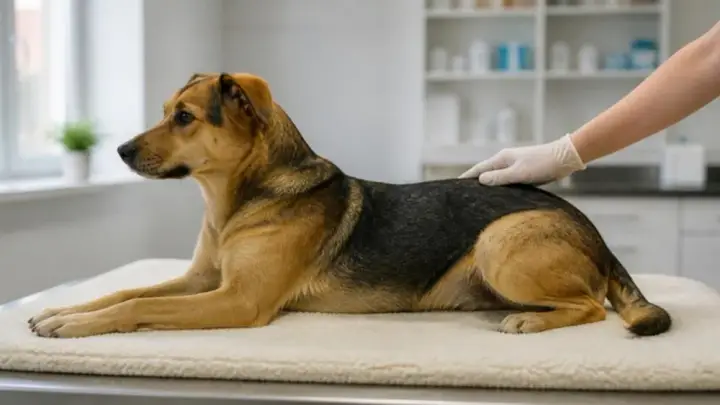
| Cause | Canine adenovirus type 1, often shortened to CAV-1 |
|---|---|
| Affects | The liver, kidneys, eyes, and the lining of blood vessels |
| Most at risk | Puppies in their first year and unvaccinated dogs of any age |
| How it spreads | Contact with urine, feces, saliva, or eye and nose discharge from an infected dog |
| Signs appear | Usually about 4 to 9 days after exposure |
| Common signs | Tiredness, eating less, and fever; serious cases can add vomiting, diarrhea, a painful belly, red eyes, and bruising |
| Treatment | No medicine kills the virus; vets give supportive care such as intravenous fluids, usually in hospital isolation |
| Outlook | About 10 to 30 percent of affected dogs die; losses are highest in young puppies |
| Prevention | Vaccination is the main protection; the disease is covered by the core vaccines |
| Risk to people | None; it is a different virus from the ones that cause hepatitis in people |
| Emergency if | Vomiting blood, bloody diarrhea, bleeding gums, pale or yellow gums, seizures, collapse, or high fever in a puppy not fully vaccinated |
Infectious canine hepatitis is a viral disease of dogs that damages the liver, kidneys, eyes, and the lining of blood vessels. Vaccine labels vary, and you may see DHPP, DHPPi, DAPP, or DA2PP. The H (hepatitis) or A (adenovirus) in these names is the part that protects against this disease. Thanks to routine vaccination, it is now uncommon in many places. It still affects puppies and dogs that were never vaccinated, and the virus still circulates in wild animals.
This guide covers what owners may notice, when to go to the vet right away, how vets treat the disease, and how the vaccine protects your dog.
What causes it
The disease is caused by canine adenovirus type 1, often shortened to CAV-1. It is a different virus from the ones that cause hepatitis in people, and it is not a risk to humans. It is not known to cause illness in cats.
Besides dogs, the virus infects foxes, wolves, coyotes, and bears. Studies in the United Kingdom, Germany, and Italy have found it in wild red foxes, and researchers regard the red fox as an important wildlife reservoir. This is one reason vets keep vaccinating dogs even where the disease has become rare.
A close relative, canine adenovirus type 2 (CAV-2), is one of the causes of kennel cough. It matters here because modern vaccines use this second virus to protect against hepatitis.
How it spreads
Dogs catch the virus through the mouth and nose after contact with urine, feces, saliva, or eye and nose discharge from an infected dog. It can also travel on objects such as food bowls, bedding, shoes, and hands.
The virus is hard to get rid of. It can survive outside the body for weeks or months, and it resists some common disinfectants. Dogs that recover can also keep shedding it in their urine for six months or longer, even when they look healthy.
Steam cleaning and a diluted household bleach solution inactivate the virus. If you need to clean up after a sick dog, ask your veterinarian for the right dilution and contact time.
Signs usually start about 4 to 9 days after exposure. Puppies in their first year and unvaccinated dogs of any age are most at risk, and the most severe illness is seen in young puppies.
Signs to watch for
Illness ranges from so mild that it goes unnoticed to sudden death. A dog with a mild case may only seem tired, eat less, and run a slight fever. More serious cases can show the following signs.
- High fever, often above 104°F (40°C), lasting one to six days
- Tiredness, loss of appetite, and more thirst than usual
- Red eyes and watery discharge from the eyes and nose
- Vomiting, sometimes with blood, and diarrhea
- A painful belly
- Enlarged tonsils
- Tiny red spots on the gums, bruising, or bleeding around the baby teeth
- Swelling of the head, neck, or body
- Seizures, wobbly walking, weak legs, or blindness
Although the virus attacks the liver, yellow gums or eyes (jaundice) are uncommon early in the illness. Coughing is not a typical sign. Many of these signs overlap with distemper, parvovirus, leptospirosis, and poisoning, so a vet exam is needed to tell them apart.
When it is an emergency
In very young puppies the disease can move fast. Some puppies die suddenly, with few or no signs beforehand. Call a veterinarian and go in at once if your dog shows any of the following.
- Vomiting blood or bloody diarrhea
- Bleeding gums, bruises that appear on their own, or tiny red spots on the skin
- Pale or yellow gums
- Seizures, collapse, or sudden weakness
- A high fever in a puppy that has not finished its vaccines
Tell the clinic before you arrive that you suspect an infectious disease, so staff can keep your dog away from other patients. About 10 to 30 percent of affected dogs die, and losses are highest in young puppies. Early care gives a sick dog the best chance.
How vets diagnose and treat it
Your vet will ask about vaccines, recent contact with other dogs, and where the dog came from. Blood tests often show a low white blood cell count, low platelets, slow blood clotting, and raised liver values. A urine test may show protein leaking through the kidneys. Tests that detect the virus (PCR) or antibodies against it can help confirm the diagnosis. The vet will also rule out other causes of similar signs, such as rat poison, distemper, parvovirus, leptospirosis, and other liver diseases.
There is no medicine that kills the virus. Treatment supports the body while the immune system fights the infection. Sick dogs are usually hospitalized in isolation. Care may include intravenous fluids, nutrition support, medicine to control vomiting, and antibiotics for bacterial infections that take hold while the dog is weak. Dogs with serious bleeding may need a plasma or blood transfusion. Your vet will explain which parts of this plan your dog needs.
Blue eye and recovery
About one in four dogs that recover develop a cloudy, bluish look in the eyes, often in both. It usually appears 7 to 10 days after the other signs have cleared, when the dog already seems better. This "blue eye" comes from an immune reaction to the virus in the eye, and in most dogs it clears on its own. It can be painful, so the vet may prescribe eye medicine and suggest keeping the dog out of bright light. Any sudden cloudiness in a dog's eye deserves a prompt vet visit, whatever the cause.
Recovered dogs often regain weight slowly, even when they eat well. In some dogs the liver or kidneys stay damaged after the infection has passed, so your vet may suggest follow-up blood and urine tests. Because a recovered dog can shed the virus in its urine for months, keep it away from unvaccinated puppies and ask your vet when it is safe for them to mix.
Prevention and vaccination
Vaccination is the main protection. Infectious canine hepatitis is covered by the core vaccines, which the World Small Animal Veterinary Association (WSAVA) recommends for dogs everywhere in the world. It is usually combined with distemper and parvovirus in one shot.
Older vaccines used CAV-1 itself and sometimes caused blue eye. Modern vaccines use the related CAV-2 instead. It gives strong cross-protection against hepatitis without the same risk of blue eye.
WSAVA guidelines recommend starting puppy vaccines at 6 to 8 weeks of age and repeating them every 2 to 4 weeks until the puppy is at least 16 weeks old. The 2024 guidelines then advise one more dose at about 6 months of age, or a blood test to check that the puppy is protected. Some clinics give this dose at about 1 year instead. After that, boosters for these core diseases are usually needed no more often than every three years. For an adult dog with no known vaccine history, WSAVA says a single dose of the core vaccine will very likely protect it, and a second dose may be given in high-risk situations. Your vet will adjust the plan to your dog's age, health, and local risks.
Until the puppy series is finished, ask your vet when your puppy can safely visit busy parks and meet dogs you do not know.
Rescued and newly adopted dogs
Street puppies and dogs without records have an unknown vaccine history, and vets usually treat them as unvaccinated. WSAVA shelter guidance recommends giving core vaccines to every animal on arrival, because infections spread quickly where many dogs live together.
At Paw Squadron, the first stops after every rescue are the vet and a bath. Each animal gets a checkup, deworming, and treatment against fleas and other parasites. Before adoption, every animal receives a checkup, treatment, vaccinations, and a microchip.
When your dog comes home, bring its vaccination record to your own veterinarian. A young puppy may still need later doses of the series, and your vet will plan the next boosters. If a newly adopted puppy develops a fever, vomiting, or cloudy eyes, call your vet the same day. You can find answers to common adoption questions in our FAQ and more health guides in PawPedia.
See also
From our rescues


This article is general information, not veterinary advice. Always consult a veterinarian about your animal’s health. Some pictures in PawPedia may be AI-generated.
This page was last updated on September 27, 2026.