Your Puppy's First Year: Care Month by Month
From PawPedia, an encyclopedia of life with animals
Contents
In short
A puppy's first year is built around a vet visit in the first few days, a series of core vaccines, regular deworming, early socialization, housetraining and gradual changes in feeding. Follow your vet's schedule for your puppy. Call a vet right away for repeated vomiting, bloody diarrhea, weakness, trouble breathing or swallowing something toxic.
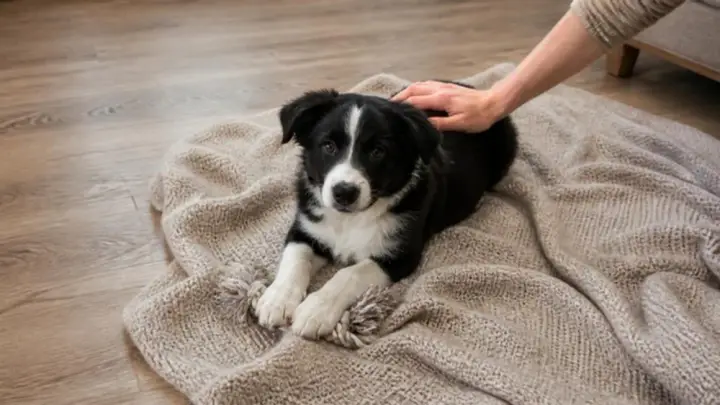
| First step | A vet visit in the first few days, even if the puppy seems healthy |
|---|---|
| Core vaccines | Start at six to eight weeks, then every two to four weeks until at least 16 weeks old |
| Deworming | Every two weeks from two weeks of age until two weeks after weaning, then monthly to six months if at risk, with a vet-chosen product |
| Meals | Usually four small meals a day at six to twelve weeks, three from about three months and two from six months |
| Socialization | The first three months of life are the main window |
| Avoid | Dog parks and places used by many dogs of unknown health until the vaccine series is complete |
| Teething | Adult teeth start coming in at about three to four months, usually all in place by about seven months |
| Training | Short, fun and reward-based, with treats, praise and play |
| Adult food | Most dogs are ready at 9 to 12 months; large and giant breeds can take close to two years to mature |
| Spay or neuter | Talk with your vet; many dogs have the surgery at around six months |
| Emergency if | Vomiting more than once, diarrhea, wobbling or a seizure, trouble breathing, pale gums, or swallowing an object or something toxic |
A puppy changes more in its first year than at any other time in its life. It grows its adult teeth, gets the vaccines that will protect it for years, and learns how to live with people and other animals.
This guide follows the year from about two months of age, when many puppies move to a new home. Schedules differ between clinics and countries, so use it as a general outline and follow your vet's plan for your puppy.
Settling in at two months
Book a vet visit in the first few days, even if the puppy seems healthy. Bring any records you received, such as a pet passport or vaccination card with the dates of vaccines and deworming. The vet will examine the puppy and plan the next steps. Young puppies usually see the vet every few weeks until they are about four months old.
The core vaccines protect against distemper, parvovirus and canine adenovirus, which causes infectious hepatitis. International guidelines from the World Small Animal Veterinary Association (WSAVA) recommend starting them at six to eight weeks of age and repeating them every two to four weeks until the puppy is at least 16 weeks old. Several doses are needed because antibodies passed on by the mother can block a vaccine in the first weeks, and they fade at a different age in each puppy.
Roundworms are very common in young puppies, and many are infected before birth. European parasite guidelines (ESCCAP) advise deworming puppies from two weeks of age, every two weeks until two weeks after weaning, and then monthly up to six months of age where the risk of infection continues. Your vet will choose a product and schedule that fit your puppy's age and weight.
Between six and twelve weeks of age, a puppy usually eats four small meals of puppy food a day. Measure each meal. Slow, steady growth is healthier than fast growth, especially in large breeds.
Choose a quiet corner for the puppy's bed, somewhere warm and dry. Puppies explore with their mouths, so keep cleaning products, medicines, electrical cords and small objects out of reach. Use both hands to lift a puppy, with one under the chest and one under the rump, so its whole weight is supported. Housetraining can start on the first day. Take the puppy outside often, especially after sleeping, eating and play, and praise it when it goes in the right place. With patience, most puppies learn within a few weeks.
Socialization at three months
The first three months of life are the main window for socialization, when puppies accept new things more easily than they will later. According to the American Veterinary Society of Animal Behavior (AVSAB), behavior problems are the most common reason dogs are given up to shelters, and good early socialization helps prevent them.
Short, calm and positive experiences work best. Let the puppy watch and approach at its own pace, and stop before it gets tired or scared. Useful experiences at this age include the following.
- Gentle handling of the paws, ears, mouth and tail
- New people of different ages, including calm children
- Everyday sounds such as traffic, doorbells and household appliances
- Different surfaces such as grass, tiles, gravel and steps
- Short car trips
- Healthy puppies and calm, fully vaccinated adult dogs
Puppy classes are a good way to do this safely. AVSAB says puppies can start as early as seven to eight weeks, once they have had a first deworming and at least one set of vaccines seven days or more before the first class. Until the vaccine series is complete, it is safest to avoid dog parks and other places used by many dogs of unknown health, since infections such as parvovirus can spread there.
From about three months, most puppies do well on three meals a day. Teach the puppy to spend short periods alone with a chew toy or napping in a crate or pen. This can make time alone easier later.
Teething from four to six months
Puppies have 28 baby teeth, which start to come in at three to five weeks of age. From about three to four months, the 42 adult teeth start to replace them, and all of them are usually in place by about seven months. Puppies chew a lot at this stage. Offer safe chew toys, and swap one in whenever the puppy chews something it should not. If a baby tooth is still in place next to an adult tooth, mention it to your vet. For brushing and getting a puppy used to having its mouth handled, see our guide to dental care for dogs and cats.
WSAVA considers the dose given at 16 weeks or older the most important of the puppy series, so the last core puppy vaccine usually falls in this period. Rabies vaccination often happens around this age too. In the EU, the rabies vaccine needed for travel can be given from 12 weeks of age, and national laws have their own rules. Depending on where you live, your vet may also suggest vaccines against leptospirosis or kennel cough.
Monthly deworming may continue up to six months, depending on the risk, and your vet can suggest flea and tick protection suited to your puppy's age and weight. Keep training short and fun. Reward-based training with treats, praise and play is linked to fewer behavior problems than punishment. Basic cues such as sit, stay and come are a good place to start.
The teenage months
By six months many puppies look grown, but their bodies and behavior are still developing. WSAVA now recommends one more core vaccine dose at or shortly after 26 weeks of age, or a blood test that shows the puppy is protected. Some clinics still follow the older plan of a booster at about one year. A full health check around the first birthday, with a rabies booster where needed, is a good time to review everything.
From six months, two meals a day suit most puppies. Most dogs are ready for adult food at 9 to 12 months, while large and giant breeds can take close to two years to mature. These breeds are more prone to bone and joint problems when they grow too fast or get too much calcium, so ask your vet about a food made for large-breed puppies. Vets usually advise keeping treats to no more than about 10 percent of daily calories.
This is also the usual time to talk with your vet about spaying or neutering. Many dogs have the surgery at around six months. For dogs that will be large, some vets suggest waiting until growth is complete, often between 9 and 15 months. Females can come into heat for the first time from about six months of age, and in large and giant breeds it may not happen until 18 months to two years.
After six months, how often to deworm depends on your dog's lifestyle and household. ESCCAP suggests at least four times a year when the risk is unknown, and monthly deworming or stool tests in some situations, such as homes with small children. Ask your vet how much running and jumping suits your growing dog, especially a large breed. Keep up training and new experiences through the whole first year, since this can help prevent problems such as distress when left alone.
When it is an emergency
Young puppies can become very sick within hours. It is safest to call a vet right away if you notice any of these signs.
- Vomiting more than once, or diarrhea, especially if it is bloody
- No interest in food, together with low energy or weakness
- Trembling, wobbling or a seizure
- Trouble breathing, or pale gums
- Swallowing a toy, sock or other object
- Eating something toxic, such as medicines, chocolate, grapes or raisins, onions, or gum and sweets that contain xylitol
In a puppy that has not finished its vaccines, vomiting or diarrhea with low energy can be a sign of parvovirus, which needs fast treatment. Outside clinic hours, an emergency clinic can help.
Puppies adopted from a rescue
Under EU rules, a dog must be at least 12 weeks old to get the rabies vaccine needed for travel, and the vaccine becomes valid 21 days later. So a puppy that travels to a new country for adoption is usually at least 15 weeks old when it arrives, and past its first three months. Socialization still matters a lot at this age. Go slowly, keep new experiences positive, and ask your vet for advice if the puppy seems fearful.
Every animal Paw Squadron rescues starts with a vet visit and a bath. It gets a checkup, deworming and treatment against fleas and other parasites, and before adoption it is vaccinated and microchipped. Take the pet passport and records to your own vet in the first days, so they can plan the next boosters and parasite treatments, and update the microchip registration with your contact details.
Some puppy parasites, including roundworms, can pass to people, and young children are most at risk. Washing hands after handling the puppy and picking up its poop right away help protect the whole family.
If you are thinking about giving a rescued puppy a home, visit our Adoptions page. You can find more health and care guides in PawPedia.
See also
From our rescues
This article is general information, not veterinary advice. Always consult a veterinarian about your animal’s health. Some pictures in PawPedia may be AI-generated.
This page was last updated on October 4, 2026.