Cataracts in Dogs: Signs, Causes, and Treatment
From PawPedia, an encyclopedia of life with animals
Fact-checked against veterinary sources
Contents
In short
A cataract is a cloudy area in the lens of the eye that blocks light and blurs vision, and most cases in dogs are inherited. Surgery is the only treatment that removes one. Not every cloudy eye is a cataract, so get it examined, and call a vet the same day for a red, squinting eye or sudden blindness.
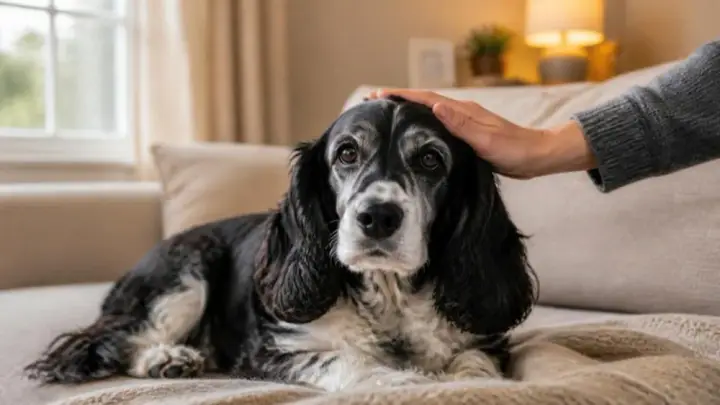
| Cause | Most cataracts in dogs are inherited |
|---|---|
| Affects | The lens of the eye |
| Most at risk | Diabetic dogs, and breeds such as the American Cocker Spaniel, Labrador Retriever, Poodle, Boston Terrier and Shih Tzu |
| How it spreads | Not contagious to pets or people; inherited cataracts can pass from parents to puppies |
| First signs | A white, gray or blue-gray cloudiness in the pupil; early cataracts rarely cause obvious problems |
| Common signs | Bumping into furniture, doors, or walls, especially in dim light or a new place |
| Diagnosis | A vet's eye exam with a bright light and an ophthalmoscope, often after drops that widen the pupil |
| Treatment | Surgery is the only way to remove a cataract; no eye drops, supplements or diets are proven to dissolve or slow one |
| Outlook | When surgery goes well, many dogs can see again soon after; reported success is about 80 to 95 percent |
| Prevention | No proven way to prevent cataracts in an individual dog |
| Emergency if | A red or squinting eye, blue haze over the whole front of the eye, one eye larger, a pupil that stays wide, or sudden blindness |
A cataract is a cloudy area in the lens of the eye. The lens sits behind the pupil and focuses light onto the retina at the back of the eye. When part of the lens turns opaque, less light gets through and vision blurs. A small cataract may barely affect the dog. A cataract that covers the whole lens takes away useful sight in that eye.
Many owners first notice a white or gray haze in an older dog's eyes. Not every cloudy eye is a cataract, though. Some haze is a normal part of aging, and a few causes of cloudiness need urgent care. Your veterinarian can tell these apart.
What causes cataracts
Most cataracts in dogs are inherited. They can appear in young dogs or later in life. Breeds with a higher reported risk include the American Cocker Spaniel, Labrador Retriever, Poodle, Boston Terrier, Shih Tzu, Welsh Springer Spaniel, and schnauzers. Any dog can be affected, including mixed breeds.
Diabetes is the most common illness linked to cataracts in dogs. High blood sugar changes the chemistry inside the lens. The lens draws in water, swells, and turns cloudy. Most diabetic dogs develop cataracts, often within the first year after diagnosis, even when their diabetes is well managed. These cataracts can form quickly.
Other causes include an injury to the eye and long-lasting inflammation inside the eye. In rare cases, orphaned puppies raised on a milk replacer that lacks certain nutrients develop cataracts. Some cataracts simply appear with age.
Cataract or normal aging
Many dogs develop a bluish-gray haze in the center of the lens as they reach middle and old age. This is called nuclear sclerosis, or lenticular sclerosis. The lens hardens and packs more tightly over the years, so its center looks cloudy in certain light. It is a normal aging change. Dogs with nuclear sclerosis usually keep useful vision. They may judge close distances less well, miss a toy tossed to them, or seem unsure on stairs.
A cataract is a true opacity that blocks light. It often looks whiter or more chalky, and it can sit in one spot or spread across the whole lens. The two can look alike to an owner, and both can be present in the same eye. Your veterinarian can tell them apart during an eye exam.
Signs to watch for
Early cataracts rarely cause obvious problems. Dogs rely heavily on smell and hearing, so many adapt to slow vision loss. Owners may only notice once both eyes are affected. Signs include the following.
- A white, gray, or blue-gray cloudiness in the pupil
- Bumping into furniture, doors, or walls, especially in dim light or a new place
- Hesitating on stairs and curbs, or before jumping on or off the sofa
- Missing a thrown toy or treat
- Staying closer to you than usual or moving more cautiously on walks
- Seeing better in bright light than in dim light, or the other way around
Some of these changes also come with normal aging, so an eye exam is the way to find the cause.
If your dog suddenly drinks and urinates much more, eats more, and loses weight, ask your veterinarian to check for diabetes. Cloudy eyes that appear together with those signs need a prompt visit.
How cataracts progress
Vets often describe cataracts by how much of the lens they cover. An incipient cataract covers a small part of the lens and does not noticeably affect vision. An immature cataract covers more and may blur sight. A mature cataract covers the whole lens and blocks useful sight in that eye. A hypermature cataract has started to break down and shrink, which can inflame the eye.
Some cataracts stay small for a long time. Others grow quickly, especially in diabetic dogs.
When it is an emergency
A cataract on its own is usually not painful. Trouble starts when proteins leak from the lens into the eye. The body treats them as foreign, and the eye becomes inflamed. This is called lens-induced uveitis. Left untreated, it can raise the pressure inside the eye and lead to glaucoma, which can be very painful and can cost the dog the eye. It is best to contact a veterinarian the same day if you notice any of these signs.
- A red eye, squinting, tearing, or pawing at the eye
- A hazy blue cloudiness over the whole front of the eye
- One eye that looks larger than the other, or a pupil that stays wide
- Sudden blindness in one or both eyes
- A diabetic dog that loses sight quickly or seems unwell
Sudden blindness can also come from problems in the retina, so it always needs a prompt exam.
How vets diagnose cataracts
Your veterinarian will examine both eyes with a bright light and an ophthalmoscope, often after drops that widen the pupil. They will usually check the pressure inside the eye and look for inflammation. Blood and urine tests can show whether diabetes or another illness is behind the change. Your vet may refer you to a veterinary ophthalmologist, a vet who specializes in eyes.
Treatment options
No eye drops, supplements, or diets have been proven to dissolve a cataract or slow it down. Some products promoted for this can even make cataracts worse. Surgery is the only treatment that removes a cataract. Before surgery, the specialist usually runs blood tests, an ultrasound of the eye, and an electrical test of the retina called an electroretinogram. These tests matter because removing a cataract only restores sight if the retina behind it still works.
The standard operation is called phacoemulsification. Under general anesthesia, the surgeon makes a tiny cut in the cornea, breaks up the cloudy lens with ultrasound, and removes it. In most dogs, an artificial lens is placed where the old one was. When surgery goes well, many dogs can see again soon after they wake up. Reported success rates range from about 80 to 95 percent. Results tend to be best when surgery happens before the cataract is fully mature and before inflammation sets in.
Aftercare takes commitment. Dogs often stay in the hospital overnight, then wear a cone at home so they cannot rub the eye. Owners give eye drops on a schedule set by the ophthalmologist, and there are several follow-up visits. Possible complications include lasting inflammation, glaucoma, corneal ulcers, infection, new clouding around the artificial lens, and retinal detachment.
Surgery is not right for every dog. The retina may not work, the dog may have other health problems, or the cost and aftercare may not be possible for the family. A dog whose cataracts are not removed still needs regular eye checks, including pressure checks every few months, because inflammation and glaucoma can develop over time. Your veterinarian may recommend anti-inflammatory eye drops to protect the eye. In a few young dogs, a cataract clears partly on its own as the lens material is reabsorbed, but this cannot be counted on.
Living with a dog who cannot see well
Many dogs cope with vision loss well. They learn their home by smell, sound, and memory. It helps to keep furniture, food bowls, and beds in the same places and to block stairs and pools with gates. Speak to your dog before you touch them, and ask visitors to do the same. A leash is safest in unfamiliar places, and a short word such as "step" before curbs and stairs can help. Rugs with different textures and a small bell on other pets can also help a dog find their way. Most dogs with poor sight still enjoy walks, scent games, and time with their people.
Inheritance and prevention
Cataracts are not contagious. They cannot pass to other pets or to people. Inherited cataracts can pass from parents to puppies, so responsible breeders have their dogs' eyes examined by a certified veterinary eye examiner before breeding. In Europe, these exams are done through eye-screening schemes linked to national kennel and breed clubs. Specialists advise against breeding dogs with inherited cataracts.
There is no proven way to prevent cataracts in an individual dog. Regular checkups help your veterinarian spot early lens changes and diabetes. Mention any change in how your dog's eyes look, even a small one. Eye injuries and red, sore eyes are best checked promptly, because inflammation inside the eye can lead to cataracts and other damage.
Rescued and newly adopted dogs
Rescued dogs often come with an unknown history. An older dog may already have cloudy eyes, and it may not be clear whether this is normal aging, a cataract, or the result of an old injury or inflammation. At Paw Squadron, the first stops after every rescue are the vet and a bath, with a checkup, deworming, and treatment against fleas and other parasites. Every animal gets a checkup, treatment, vaccinations, and a microchip before adoption.
If you adopt a dog with cloudy eyes, it is a good idea to book a visit with your own veterinarian in the first weeks. Ask them to note how the eyes look now so later changes are easier to track. A dog with limited vision may need more time to learn a new home, so a simple, steady layout helps at first. You can find more guides in PawPedia, or meet the dogs waiting for a home on our Adoptions page.
See also
From our rescues
Sources
Online sources
- Disorders of the Lens in Dogs · Merck Veterinary Manual (Pet Owner Version)
- Cataracts in Dogs · VCA Animal Hospitals
- Canine cataracts · Cornell Richard P. Riney Canine Health Center
- Cataracts in dogs · PDSA
- Cataracts in Dogs: What to Know · American Kennel Club
Encyclopedias
- Cataract · Wikipedia
- Cataract · Encyclopædia Britannica
- М. В. Рябина. Катаракта [Cataract] · Большая российская энциклопедия, т. 13, Москва, 2009, с. 328 (archived copy)
- 白内障 [Cataract] · 日本大百科全書(ニッポニカ), 小学館, via Kotobank
Books
- Gelatt KN. Essentials of Veterinary Ophthalmology. 3rd ed. Hoboken, NJ: Wiley-Blackwell, 2014. ISBN 9781118771877
- Ettinger SJ, Feldman EC, Côté E (eds.). Textbook of Veterinary Internal Medicine: Diseases of the Dog and the Cat. 8th ed. St. Louis: Elsevier, 2016. ISBN 9780323312110
- Щербаков Г. Г. и др.; под общ. ред. Г. Г. Щербакова. Внутренние болезни животных: учебник [Internal Diseases of Animals: A Textbook]. Санкт-Петербург: Лань, 2014. ISBN 9785811416820
- Nelson RW, Couto CG. Small Animal Internal Medicine. 6th ed. St. Louis: Elsevier, 2019. ISBN 9780323570145
This article is general information, not veterinary advice. Always consult a veterinarian about your animal’s health. Some pictures in PawPedia may be AI-generated.
This page was last updated on October 13, 2026.