Ringworm in Cats: Signs, Treatment, and Cleaning the Home
From PawPedia, an encyclopedia of life with animals
Contents
In short
Ringworm in cats is a fungal skin infection, not a worm, and usually causes patches of hair loss. It is treatable, but takes at least six weeks of treatment plus regular home cleaning, because the spores spread to other pets and people. Book a vet visit when you notice a suspicious patch, and promptly if a kitten has many.
| Cause | Fungi called dermatophytes; in cats almost all cases come from one species, Microsporum canis |
|---|---|
| Affects | The skin, hair and claws |
| Most at risk | Kittens under a year old and long-haired cats |
| How it spreads | Direct contact with an infected animal and objects that carry spores |
| Common signs | Round or irregular patches of hair loss, broken hairs, dandruff-like scaling, red or crusty skin; some cats show almost nothing |
| Diagnosis | A fungal culture is the most reliable test; results can take up to three weeks |
| Treatment | Usually an oral antifungal prescribed by the vet, medicated rinses, dips or shampoos for the coat, and cleaning the home |
| Outlook | Treatable and rarely dangerous for the cat, but it takes patience |
| Preventing spread | Gloves and long sleeves to handle an infected cat, washing hands after, and keeping it from other pets until the vet says so |
| Risk to people | Yes; cats can pass it to people, usually as a red, scaly, itchy ring on the skin |
| See a vet if | A suspicious patch appears; call promptly if a kitten has many patches, the skin is swollen, wet or painful, or the cat stops eating |
Ringworm is a fungal infection of the skin, hair, and claws. It has nothing to do with worms. The name comes from the round, red rash it often causes in people. In cats it usually shows up as patches of hair loss. It is especially common in kittens and in cats from crowded places, such as shelters and groups of strays.
Ringworm is treatable and rarely dangerous for the cat. It does take patience. Treatment usually lasts at least six weeks, and the home needs cleaning at the same time, because the spores pass easily to other pets and to people.
What causes ringworm
Ringworm is caused by a group of fungi called dermatophytes. They feed on keratin, the protein in the outer layer of skin, hair, and claws. In cats, almost all cases come from one species, Microsporum canis. A small number come from related fungi that live in soil or on other animals.
The fungus spreads through tiny spores. They cling to hairs, and infected hairs break off and fall around the home. The spores do not grow on household surfaces. They can, however, stay infectious for many months, and sometimes for more than a year, on bedding, carpets, furniture, and grooming tools.
Contact with spores does not always lead to infection. A cat's age, general health, and the condition of its skin all play a part. Kittens under a year old and long-haired cats are more likely to become infected, and their infections tend to be more widespread and harder to clear. Persian cats seem especially prone.
Signs to watch for
Ringworm can look different from cat to cat. Some cats have obvious bald patches, while others show almost nothing. These are the most common signs.
- Round or irregular patches of hair loss, often on the face, ear tips, head, front legs, feet, or tail
- Short, broken, or stubbly hairs at the edges of a patch
- Gray or white scaling that looks like dandruff or fine ash deep in the coat
- Red, crusty, or darker skin in the affected area
- Mild itching or extra grooming, although many cats barely scratch
- Rough or misshapen claws, or infected nail beds
Some cats carry the fungus with mild signs or none at all, and a long coat can hide a small patch. These cats can still pass ringworm to other animals and to people.
Ringworm is also easy to confuse with other skin problems, such as allergies, mites, or bacterial infections. A bald patch alone does not confirm it, so a vet check is the best way to find out.
How it spreads to pets and people
Ringworm spreads by direct contact with an infected animal and through objects that carry spores. Bedding, brushes, combs, carriers, furniture, carpets, and clothing can all play a role. Small scratches or irritated skin make infection more likely.
Cats can pass ringworm to other cats, to dogs, and to people. In people it usually appears as a red, scaly, itchy ring on the skin. Children, older adults, and people with weakened immune systems are more likely to catch it. In healthy people it is usually easy to treat, but anyone with a new rash should see their own doctor.
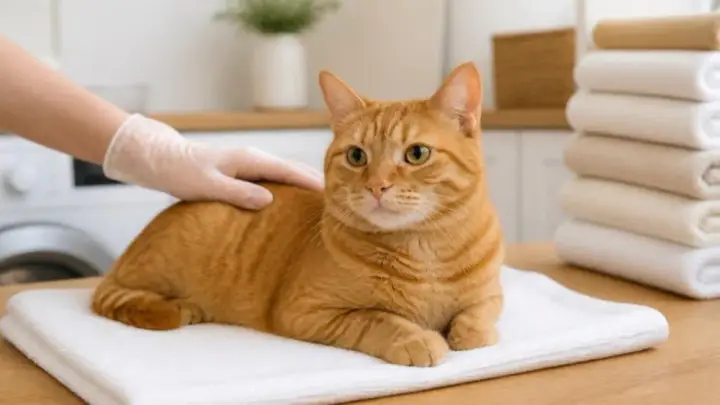
To lower the risk, wear gloves and long sleeves when you handle an infected cat or apply its treatment, and wash your hands afterward. Keep the cat away from other pets until your vet says it is safe. Other animals in the home may need a check too, since some carry spores without showing signs. It is safest to keep young children, older adults, and anyone with a weakened immune system away from the cat until treatment is finished.
When to call the vet
Ringworm is rarely an emergency, and it does not usually make a cat feel ill. It is still worth booking a vet visit soon after you notice a suspicious patch. Treatment is simpler before spores spread around the home.
It is best to call the vet promptly if a kitten has many patches, if the skin looks swollen, wet, or painful, or if your cat stops eating or seems unwell. These signs can point to a second infection or to another illness. Tell the vet if anyone in the household has a weakened immune system, so you can plan precautions together.
How vets diagnose and treat it
Vets often start by checking the coat under a special ultraviolet light called a Wood's lamp. Hairs infected with the most common species often glow apple green. Not every case glows, so a lamp check alone cannot rule ringworm out. The vet may also look at plucked hairs under a microscope. A fungal culture is the most reliable test, and results can take up to three weeks. Some clinics use a PCR test, which is faster. It detects fungal DNA, so it cannot always tell live spores from dead ones.
Treatment usually combines three parts. In most cases the cat takes an oral antifungal medicine prescribed by the vet. The coat is treated with medicated rinses, dips, or shampoos, which kill spores on the hair and help stop their spread. The home is cleaned at the same time. For long-haired cats or widespread infections, the vet may suggest clipping the coat so topical treatment can reach the skin.
Treatment normally lasts at least six weeks and often longer. Vets usually continue until the skin has healed and follow-up tests come back negative, sometimes twice in a row. If treatment stops as soon as the coat looks better, spores can remain and the infection can come back. Healthy cats can sometimes clear ringworm on their own, but this often takes many months, sometimes up to a year. The cat keeps shedding infected hair during that time, so treatment is usually recommended.
Please ask your vet before using any cream or shampoo made for people. Cats lick their fur, and some products are not safe for them.
Cleaning the home
Cleaning the home is part of the treatment. The most important step is physically removing hair and dust, because disinfectants work best on surfaces that are already clean. During treatment it helps to keep the cat in one room that is easy to clean, such as a bathroom or a spare room without carpet. Spend time with the cat there and give it toys, so it does not feel shut away. Kittens in particular need daily play and gentle handling to stay social.
- Vacuum or wipe up loose hair often, especially in the cat's room
- Give the home a thorough cleaning once or twice a week, or as often as your vet suggests
- Wash hard surfaces with detergent and water first, then apply a disinfectant your vet recommends and follow the label
- Wash bedding, blankets, towels, and washable toys thoroughly in the washing machine
- Shampoo or steam clean carpets and upholstery the cat has used
- Clean brushes, combs, bowls, carriers, and litter boxes regularly, and keep them for the infected cat only
- Throw away cheap items that are hard to clean, such as cardboard boxes and scratchers
Keep up the routine until the vet confirms the cat is cured. It takes steady work for several weeks, and simple, regular cleaning removes spores well.
Rescued and newly adopted cats
Ringworm is more common in animals that have lived in crowded places or with poor hygiene. Many strays and shelter animals have lived this way, and kittens are at higher risk too. Ringworm is treatable, and a few simple steps help protect the rest of the household.
At Paw Squadron, the first stops after every rescue are the vet and a bath. Each animal has a checkup, deworming, and treatment against fleas and other parasites. Before adoption, every animal gets a checkup, treatment, vaccinations, and a microchip.
It still makes sense to watch a new cat or kitten closely during the first weeks at home. Look for bald or scaly patches, especially on the face, ears, and legs. If you have other pets, keep the newcomer separate for a short time and book a visit with your own vet. If you notice anything unusual, contact your vet and let us know. You can read more about adopting on our Adoptions page or find other health topics in PawPedia.
See also
From our rescues


This article is general information, not veterinary advice. Always consult a veterinarian about your animal’s health. Some pictures in PawPedia may be AI-generated.
This page was last updated on October 1, 2026.