How to Take Your Cat to the Vet With Less Stress
From PawPedia, an encyclopedia of life with animals
Contents
| How often | Usually at least once a year for adult cats, and more often for senior cats |
|---|---|
| Best carrier | Sturdy, hard-sided, opening from both the top and the front |
| Carrier size | Roomy enough for the cat to turn around and lie down in comfort |
| Best start | Leave the carrier out all the time in a room where your cat likes to rest |
| Training | Reward-based, as recommended by veterinary guidelines on cat friendly care |
| Training time | A few days for some cats, several weeks for others |
| On the day | Cover the carrier with a towel or light blanket; many cats settle better that way |
| In the car | For most carriers, the floor behind one of the front seats, where it cannot slide or fall |
| At the clinic | Set the carrier on a chair or shelf next to you and keep away from dogs |
| Avoid | Grabbing or lifting the cat by the loose skin at the back of the neck |
| Emergency if | Struggling to breathe, straining without passing urine, collapse, injury or possible poisoning |
Many cats hide the moment the carrier comes out, and some owners put off checkups for that reason alone. The trip does not have to be a fight. With a good carrier, some patience at home and a few changes on the day, many cats learn to travel more calmly.
Regular checkups are worth the effort. Adult cats are usually advised to see the vet at least once a year, and senior cats more often. Your vet can tell you what schedule suits your cat.
Why the trip is hard for cats
Cats are most at ease on home ground. Their senses of smell and hearing are sharp, so a car ride and a clinic full of strange odors, noises and animals can be a lot to take in at once. Barking dogs add to the fear, and a cat shut in a carrier has nowhere to run.
The carrier itself often becomes part of the problem. If it lives in a closet and only appears before a vet visit, the cat soon learns what it means. After that, the sight of it is enough to send the cat under the bed.
Choosing a carrier
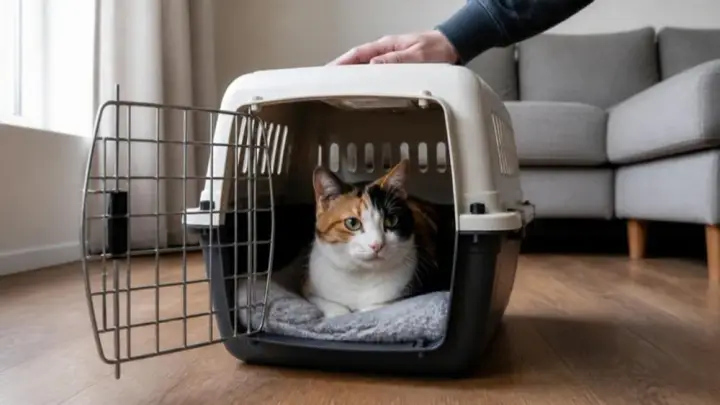
A sturdy, hard-sided carrier that opens from both the top and the front is the most practical choice. The best ones let you lift off the whole top half. The vet can then examine many cats while they stay in the bottom of the carrier, which feels much safer to them than being pulled out through a small door.
Pick one that is roomy enough for your cat to turn around and lie down in comfort. Line it with soft bedding that smells of home, such as a blanket from your cat's favorite sleeping spot.
Teaching your cat to accept the carrier
The goal is a cat that walks into the carrier on its own. Veterinary guidelines on cat friendly care recommend reward-based training for this. It helps to start well before the next visit.
Leave the carrier out all the time in a room where your cat likes to rest, so it becomes an ordinary part of the home. Then build up in small steps. Move on only when your cat is relaxed with the current step.
- Take off the door or the top at first, so the carrier is just a cozy bed.
- Place treats or a favorite toy near the carrier, then just inside, then at the back.
- Serve some meals next to the carrier, and later inside it.
- Once your cat goes in easily, put the top back on and close the door for a few seconds. Open it again and give a reward.
- Practice lifting the carrier a little, then carrying it around the house.
- Try short car rides around the block that end back at home.
Go at your cat's pace. Some cats need a few days, others several weeks. Leave the carrier out after each visit too, so it stops being a sign of bad news.
On the day of the visit
If there has been no time for training, plan ahead so you are not chasing your cat. Bring the carrier out early and close the doors of the room your cat is in before it notices anything. Move slowly and keep your voice low. Rushing tends to make cats more wary.
A top-opening carrier makes the next part much easier. Set it on the floor, lift your cat gently and lower it in from above. If your cat struggles, wrap it loosely in a large towel and place it in the carrier, towel and all. Do not grab or lift your cat by the loose skin at the back of the neck. Veterinary guidelines advise against it because it frightens cats, and a bad experience can make the next visit harder too.
A few other details help the trip go smoothly.
- About 15 minutes before your cat goes in, you can spray the bedding with a synthetic feline pheromone product. Follow the label.
- Cover the carrier with a towel or light blanket. It hides the view and softens noise, and many cats settle better that way. If your cat seems calmer when it can see you, leave the front open.
- Ask the clinic about food. For cats that get car sick, a few hours without food before the trip often helps. The right timing depends on your cat's age and health, so check first.
- Pack a few favorite treats and a spare blanket in case of accidents.
Carry the carrier in both arms with one hand underneath, and keep it level. Swinging it by the handle tips your cat from side to side. In the car, the safest place for most carriers is the floor behind one of the front seats, where it cannot slide or fall. Take corners and stops gently and talk to your cat in a quiet voice. Leave early, since rushing makes everyone more tense.
At the clinic
Keep the carrier covered while you wait. Most cats feel safer off the floor, so set the carrier on a chair or shelf next to you and keep away from dogs. Some clinics have a separate waiting area for cats or cat-only appointment times, and some will let you wait in the car until the vet is ready. It is worth asking when you book.
Tell the team if your cat is nervous. Some clinics hold Cat Friendly accreditation from the International Society of Feline Medicine, or from the American Association of Feline Practitioners in the Americas. Staff there are trained to handle cats gently, to let them stay in the base of the carrier or under a towel during the exam, and to offer treats along the way.
If your cat stays very frightened despite your efforts, talk to your vet. The vet can prescribe calming medication for you to give at home before the trip, at the time the vet recommends. There are also medicines for cats that get sick in the car. Some calming medicines can leave a cat wobbly for several hours. Keep your cat indoors and away from high shelves and stairs until it is steady again.
Coming home to other cats
A cat that returns from the clinic smells different. The other cats in the house may hiss at it or even attack it, as if it were a stranger. This can also happen after a hospital stay.
Before you open the carrier, set it down and watch how the other cats react. If they seem relaxed, let your cat out. If there is hissing or swatting, give the returning cat its own room for a while with food, water, a litter box and a bed. Let the cats get used to each other's scent again before they share space, for example by swapping the rooms they rest in. If the tension lasts more than a few days, ask your vet for advice. Some cats need a slow reintroduction that takes weeks or longer.
When it is an emergency
Training takes time, and an emergency cannot wait for it. If your cat is struggling to breathe, strains in the litter box without passing urine, has collapsed, has been injured, or may have eaten something poisonous, call your vet or an emergency clinic and go straight away. Phone ahead if you can, so the team is ready when you arrive. Use a towel to get your cat into the carrier if you need to. A calm trip matters much less than getting help fast.
Rescued and newly adopted cats
At Paw Squadron, the first stops after every rescue are the vet and a bath. Each animal gets a checkup, deworming and treatment against fleas and other parasites. Before adoption, every animal is also vaccinated and microchipped. A newly adopted cat still needs a first visit with your own vet, who will take over its ongoing care.
Your new cat may already link the carrier with change and unfamiliar places. Start carrier training in the first weeks at home, well before the next checkup is due. Leaving the carrier open in your cat's room as a quiet place to hide can help it become a familiar object.
If you have questions about caring for a cat adopted through Paw Squadron, see our FAQ or find more guides in PawPedia.
See also
From our rescues



This article is general information, not veterinary advice. Always consult a veterinarian about your animal’s health. Some pictures in PawPedia may be AI-generated.
This page was last updated on October 11, 2026.