Tortoise Hibernation: How to Prepare Safely
From PawPedia, an encyclopedia of life with animals
Fact-checked against expert sources
Contents
In short
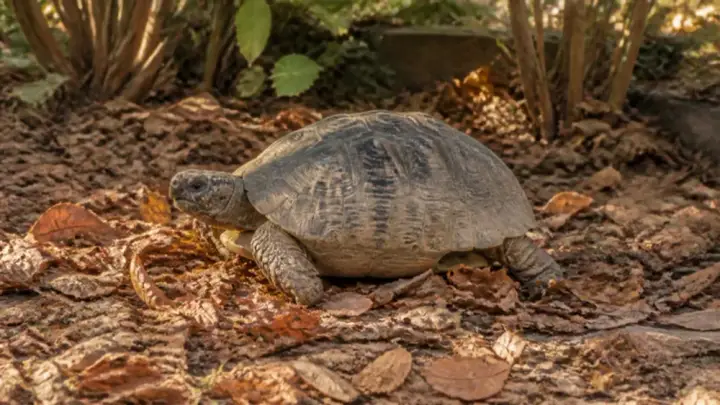
Hibernate a tortoise only if its species hibernates and it is healthy and has gained enough weight. Book an autumn vet check, stop food and wind down heat and light over several weeks, and hold a steady temperature of about 5°C (41°F). See a reptile vet if it has not eaten or passed urine within a week of waking.
| Species that hibernate | Hermann's, spur-thighed (Greek) apart from the southern and North African forms, Horsfield's, marginated and desert tortoises |
|---|---|
| Never hibernate | Leopard, sulcata, red-footed, yellow-footed and Egyptian tortoises, North African spur-thighs and southern Turkish spur-thighs |
| Keep awake if | Ill in the past year, underweight or very small; hatchlings under about 35 grams are best kept awake |
| Vet check | A pre-hibernation check in autumn with a reptile vet, who weighs the tortoise, checks its body condition and tests a stool sample |
| Length | Most adults need no more than about three months, and juveniles less |
| Wind-down | About three weeks for juveniles and at least four for adults: stop food, shorten heat and light step by step and bathe regularly |
| Temperature | A steady 5°C (41°F), acceptable from 3°C to 7°C; near freezing can cause blindness or death, and from about 8°C to 10°C tortoises start to stir and burn reserves |
| Methods | A dedicated fridge with no ice compartment, or a boxed tortoise in a dry, frost-free place secured against rats |
| Checks | Read the thermometer daily and weigh the tortoise weekly or at least every two weeks; a healthy adult loses about 1 percent of its weight per month |
| Wake at once if | It passes urine, reaches the wake-up weight agreed with your vet, or its weight keeps dropping quickly |
| See a vet if | No eating or urine within a week of waking, discharge, swollen eyes, a cheesy coating in the mouth, weakness, large weight loss, exposure to freezing |
Many tortoises from the Mediterranean region and Central Asia spend the winter in hibernation. Hibernation is natural and has benefits, but it is also the time of year when tortoises are most likely to become ill. Dehydration, freezing, rat attacks and long hibernations without enough reserves all cause problems. Careful preparation makes a safe winter far more likely.
Which tortoises hibernate
Only species that face cold winters in the wild should hibernate. Species commonly hibernated include the following.
- Hermann's tortoise
- Spur-thighed or Greek tortoises, apart from the southern and North African forms
- Horsfield's tortoise, also called the Russian tortoise
- Marginated tortoise
- Desert tortoise
Many popular species must never be hibernated. They include the leopard tortoise, the African spurred tortoise, also called the sulcata, red-footed and yellow-footed tortoises, Egyptian tortoises, the North African forms of the spur-thighed tortoise, such as Libyan and Tunisian types, and southern Turkish spur-thighs. Putting a tropical species into the cold without food can kill it. If you are not sure which species you have, ask an experienced reptile vet before winter.
Who should not hibernate
Even a hibernating species should only go to sleep if it is fully healthy and has gained enough weight over the summer. A tortoise that has been ill in the past year, is underweight, or is very small should be kept awake through winter instead. Hatchlings under about 35 grams are best kept awake. Vets also suggest that young tortoises have their first hibernation in their second, third or fourth winter, and then for only about six weeks.
If you have any doubt about your tortoise's health, keep it awake this winter instead.
The autumn health check
Book a pre-hibernation check with a vet who sees reptiles. Your vet will weigh your tortoise, check its body condition and look for signs of illness. A stool sample can be tested to make sure your tortoise is not going into hibernation with a heavy load of parasites.
At home, look over your tortoise as well. The eyes and nose should be clear and dry, with no discharge. The inside of the mouth should be clean and pink, with no yellowish or white cheesy coating. Check the ear membranes on the sides of the head for swellings. Look for lumps, cuts or swelling on the body and around the tail. Weigh your tortoise on accurate kitchen scales and keep a written record every year.
Timing and the wind-down
Hibernating too long is the biggest risk factor for problems afterward. UK vet associations advise keeping tortoises warm with their normal heat lamps until about November or December, so that hibernation is not too long. Most adults need no more than about three months. Juveniles need less.
Before hibernation, a tortoise needs an empty gut and a full bladder. Food left in the gut can rot during the winter. Water stored in the bladder is an important reserve. The usual preparation, called a wind-down, takes about three weeks for juveniles and at least four weeks for adults.
- Stop all food at the start of the wind-down.
- Keep normal heat and light for the first week or so, so the tortoise can digest the food already eaten.
- Then shorten the hours of heat and light step by step over the following weeks.
- Bathe your tortoise in shallow, lukewarm water daily or every other day, so it can drink and empty its gut.
- If it is still passing feces regularly, extend the wind-down.
- For the last couple of days, keep it in a cool, frost-free room at no more than 50°F (10°C), then move it to the hibernation fridge or box.
Safe temperatures
The aim is a steady temperature of about 41°F (5°C). Tortoise groups give an acceptable range of roughly 37°F to 45°F (3°C to 7°C). Near freezing, tortoises can suffer eye damage and blindness, and freezing can kill them. As temperatures rise toward 46°F to 50°F (8°C to 10°C), tortoises start to stir and burn the reserves they will need in spring. A tortoise that warms up and wakes fully should not be put back into hibernation.
Whatever method you choose, use a digital maximum and minimum thermometer with a probe inside the tortoise's box. Two thermometers, ideally with alarms, are safer than one. Check the reading every day.
The fridge method
A dedicated fridge holds a steady temperature in mild or changeable winters, but it needs careful planning.
- Choose a fridge with no ice compartment. Ice can still form on the back wall of some fridges, so a wine cooler or a fridge that never ices up is safer.
- Set it up at least several weeks, ideally a month, before your tortoise goes in, and record the temperature until it is stable.
- Bottles of water on the shelves help steady the temperature.
- Put the tortoise in a ventilated box with shredded paper or a soil and sand mix. Do not use straw or hay.
- Keep the box away from the back wall and the light.
- Open the door at least once a day for fresh air, and keep a bowl of water in the fridge if the air is very dry.
- Keep the fridge in a room that stays above about 50°F (10°C), away from heaters and direct sun.
Do not use this method if you will be away from home during the winter. Horsfield's tortoises are strong diggers and can claw through cardboard, so use a wooden or plastic box for them.
The box method
The traditional method uses two boxes, one inside the other. The tortoise sits in a smaller box with air holes and soft bedding such as shredded paper. That box goes inside a larger insulated box, ideally polystyrene, with a gap of 2 to 3 inches all around, filled with shredded paper or packing. The outer box must be secure against rats, which can attack and eat a hibernating tortoise. Covering air holes with fine wire mesh helps.
Place the box in a dry, frost-free place with a steady temperature, such as a cool garage or outbuilding. Attics are a poor choice, because their temperature swings a lot. Do not set the box on a high shelf, since a tortoise that wakes could climb out and fall. If you need to control rats nearby, use traps or mesh rather than poison bait. Poison can harm the tortoise and any dogs or cats in the home, as explained in our guide to household poisons. Keep curious pets away from the hibernation area too. Our guide to raising a dog and a cat together has tips for managing several animals in one home.
Checks during hibernation
Check the temperature every day. Once a week, or at least every two weeks, take your tortoise out briefly in a cool room. A quick check and weighing will not disrupt hibernation.
- Weigh it and write the result down.
- Check that the nose is dry and there is no discharge.
- Touch a leg gently. It should move slightly.
- Look for any swelling or puffiness.
- Check the box for urine and feces.
A healthy adult usually loses only about 1 percent of its starting weight per month. Guidance on the limit differs. UK vet associations advise that loss should not go beyond 5 percent of the starting weight, while some keeper groups use 10 percent as the absolute maximum. Agree a wake-up weight with your vet before you start, and write it on the box. Wake your tortoise if it reaches that weight, or if weight keeps dropping quickly.
If your tortoise passes urine during hibernation, wake it straight away. It has lost its water reserve and is at risk of dehydration. Passing a little feces early in hibernation is less of a concern.
Waking up
At the end of hibernation, move your tortoise to room temperature for a few hours, then back to its usual warm enclosure with heat and light. Check the eyes, nose and mouth. Give a shallow, warm bath for about half an hour once or twice a day, so it can drink and pass the urine that built up over winter. They do not need food on the first day. From the second day, offer soft, moist greens, then return to the normal diet.
When to see a vet
Loss of appetite after hibernation is one of the most common problems vets see in tortoises. Take your tortoise to a reptile vet without delay if you notice any of these signs.
- It has not eaten within a week of waking
- It has not passed urine within a week of waking
- Discharge from the nose, eyes or mouth
- Swollen or inflamed eyes, or it seems unable to see
- A cheesy coating in the mouth
- Weakness, or it seems unwell in any other way
- Large weight loss during hibernation
- It was exposed to freezing temperatures
Keeping a tortoise awake instead
A tortoise that is too young, unwell or underweight can be overwintered indoors. Keep its usual heat and lighting on through the winter, so there are no seasonal triggers to slow down. Bathe it more often, offer food little and often, and watch the room temperature closely.
A careful start for every animal
Paw Squadron rescues dogs and cats, and every animal we rescue sees a vet and is dewormed before anything else. Tortoises deserve the same careful start. Tortoises can live for 50 to 100 years, so some outlive their owners and need new homes. If you take on a tortoise from a rescue or a previous owner, find out its species and ask for any weight records before its first winter with you, then book a check with a reptile vet. For another small pet with very specific needs, see our guide to rabbit care basics.
Browse more practical guides in PawPedia, or write to us from the Contact page if you have a question.
See also
From our rescues



Sources
Online sources
- Tortoise Hibernation (care factsheet, reviewed December 2024) · Royal Veterinary College, Beaumont Sainsbury Animal Hospital
- Vet Organisations Give Advice on Tortoise Hibernation (BVA, BSAVA and BVZS) · British Small Animal Veterinary Association
- Preparation Guide for Tortoise Hibernation (Wind-Down Procedure) · Tortoise Protection Group
- The Fridge Method of Hibernation · Tortoise Protection Group
- Box Hibernation Method · Tortoise Protection Group
- Tortoise Hibernation: Larder Fridge Alert · British Chelonia Group
- Spur-thighed, Hermann's, Marginated and Horsfield's Tortoises (care sheet) · RSPCA
- African Spurred or Sulcata Tortoise (care sheet) · RSPCA
Encyclopedias
- Dormancy § Brumation · Wikipedia
- Hermann's tortoise · Wikipedia
- Dormancy · Encyclopædia Britannica
- 休眠 [Dormancy] · 日本大百科全書(ニッポニカ), 小学館, via Kotobank
Books
- McArthur S, Wilkinson R, Meyer J (eds.). Medicine and Surgery of Tortoises and Turtles. Oxford: Blackwell Publishing, 2004. ISBN 9781405108898
- Mader DR (ed.). Reptile Medicine and Surgery. 2nd ed. St. Louis: Saunders Elsevier, 2006. ISBN 9780721693279
This article is general information, not veterinary advice. Always consult a veterinarian about your animal’s health. Some pictures in PawPedia may be AI-generated.
This page was last updated on November 2, 2026.