How to Prepare Your Home for a Rescue Dog
From PawPedia, an encyclopedia of life with animals
Contents
In short
Prepare for a rescue dog by securing the fence, gates and balcony, then putting medicines, chocolate, grapes, xylitol, poisons and small swallowable objects out of reach. Set up a quiet resting place and choose a vet. If your dog swallows something harmful, call a vet straight away and do not induce vomiting unless told.
| When to dog-proof | Before the dog arrives; a weekend of preparation buys a much calmer first week |
|---|---|
| Yard | Check the fence at ground level for gaps, loose boards and soft soil a dog could dig under |
| Front door | Keep the dog behind a closed door or a baby gate whenever the front door opens |
| Unsafe foods | Keep chocolate, grapes, raisins, onions, garlic, macadamia nuts and anything with xylitol out of reach |
| Swallowed something unsafe | Call a vet straight away rather than waiting for symptoms; do not make the dog vomit unless a vet tells you to |
| Resting place | Choose it in advance, away from the front door and the main walkway |
| Food to buy | The food the dog is eating now, enough for at least two weeks |
| Changing food | Slowly, with a little more new food each day over about a week to ten days |
| House rules | Agree on them with everyone in the household before the dog arrives |
| First vet visit | Choose a vet before the dog arrives and book a visit for the first week or two |
| Homecoming day | A day when someone can be at home for at least a few days afterward |
The best time to dog-proof a home is before the dog arrives. Once a nervous rescue dog is in the house, every hour spent drilling, moving furniture or hunting for a gap in the fence is an hour of noise in its first days. A weekend of preparation beforehand buys a much calmer first week.
Secure the yard, the balcony and the doors
Walk the whole boundary of the yard before the dog comes home. Look at the fence at ground level for gaps, loose boards and soft soil a dog could dig under. Check that every gate latches on its own when it swings shut, because a gate that needs a push will eventually be left open. Move anything stacked against the fence that a dog could use as a step, such as trash cans, woodpiles or patio furniture.
Height matters too. Many dogs never try to jump a fence, but a frightened dog in a new place may clear something it would ignore once it feels at home. Until you know your dog, stay with it in the yard, and use a long line if you are unsure.
In an apartment, check the balcony. Railings with wide gaps are a real risk for small dogs, and mesh fixed along the bottom closes them off. Rescue dogs are most likely to slip out in the first weeks, so agree now that the dog is behind a closed door or a baby gate whenever the front door opens.
Dog-proof the inside
Get down on your knees and look at each room from the height of a dog. A stressed dog may chew more than usual, and a former street dog may try to eat almost anything that smells like food. Put these out of reach before it arrives.
- Human medicines, vitamins and supplements, including anything in handbags and on bedside tables
- Chocolate, grapes, raisins, onions, garlic, macadamia nuts, and anything sweetened with xylitol, which is found in sugar-free gum and some peanut butters
- Cleaning products, dishwasher tablets and laundry pods
- Rat and mouse poison, slug and snail bait, and antifreeze in the garage or shed
- Small objects a dog can swallow, such as socks, hair ties, bottle caps and children's toys
- Electrical cables, especially near the places where the dog will rest
- Kitchen and bathroom trash cans without a lid
Houseplants need a check as well. Some common ones are harmful to dogs, so ask your vet or look each plant up, and move anything you are unsure about. If your dog does swallow something it should not, call a vet straight away rather than waiting for symptoms, and do not try to make it vomit unless a vet tells you to. For the full list of household dangers, see common household poisons for dogs and cats.
Put down rugs or runners on slippery floors. Many dogs from the street have never walked on tiles or laminate, and a dog that slides every time it turns may refuse to cross the kitchen at all.
Set up a resting place
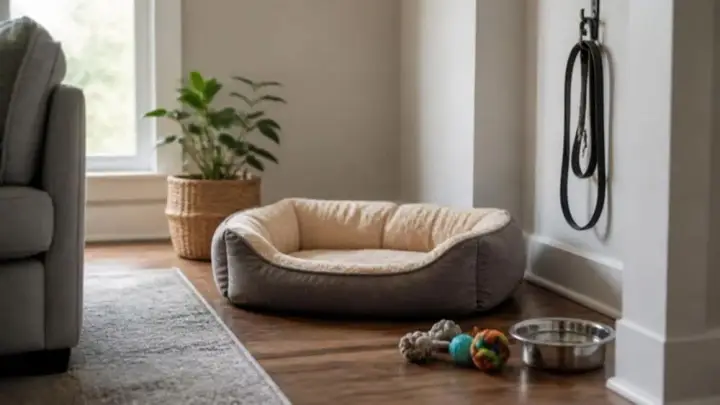
Choose the dog's main resting place in advance, away from the front door and the main walkway through the house. A dog that is stepped over, bumped or startled every time someone passes cannot rest properly, and a dog that cannot rest takes longer to settle in.
The best spot lets the dog see and hear the household without being in the middle of it, such as a corner of the living room or a bed behind a chair. A crate with the door left open suits many dogs, as long as it is never used for punishment. Keep water nearby.
Nights are a separate decision. Some dogs settle best near their people at first, in a crate or a bed on the bedroom floor, while others prefer a quiet living room. Decide what you will try first, and be ready to adjust.
What to buy before the first day
Keep the shopping list short. You will find out what your dog actually likes within a couple of weeks, and it is easy to spend money on things it will never use.
- The food your dog is eating now, enough for at least two weeks (ask the rescue what it is)
- Two bowls, one for food and one for water
- A well-fitted harness, a flat collar and an ID tag with your phone number
- A fixed-length leash, rather than a retractable one
- A bed or a crate, plus a blanket or towel that can go in the wash
- One or two baby gates
- Poop bags and an enzyme cleaner for accidents
- A few safe chews, one or two toys and a food puzzle
If you want to change the food, do it slowly. The usual advice is to mix in a little more of the new food each day over about a week to ten days. An abrupt switch on top of a house move can easily upset the dog's stomach, and you will not know whether the cause was the food, the stress or something else.
Agree on the house rules
Sit down with everyone in the household before the dog arrives and agree on the rules. Dogs learn quickly from consistency and slowly from mixed messages, and a new dog will test every rule in its first weeks.
Decide who feeds and walks the dog, whether it may use the sofa and the beds, and which rooms are off limits. Choose shared words, so that "off," "down" and "come" each mean one thing to everyone. Agree on what everyone does when the dog is overwhelmed: step back, give it space and let it go to its resting place.
Children need a few rules of their own. No hugging, no picking the dog up, and no disturbing it while it eats or sleeps. Let the dog approach them rather than the other way around. If there is a cat in the house, plan the introduction now instead of improvising on the first day, and read our guide on raising a dog and a cat together.
Sort out the vet and the paperwork
Choose a vet before the dog arrives and book a first visit for the first week or two. Keep the pet passport and any medical records together in one folder and take them along, so the vet can see what has been done and plan the next vaccinations and parasite treatments.
Update the microchip registration with your name, address and phone number on the day the dog becomes yours. A chip is only as useful as the details linked to it, as our article on why you should microchip your pet explains.
If you are adopting from Paw Squadron, your dog will already have had a vet checkup, treatment, its vaccinations and a microchip, and a pet passport is issued before adoption day. Like every animal we rescue, it is neutered once it is strong enough for surgery. A home check is one of the steps before adoption day, so it makes sense to start this preparation as soon as you send your inquiry. The Adoptions page shows the whole process. Our guide on how to adopt a rescue dog explains each step.
The week before your dog comes home
Pick a homecoming day when someone can be at home for at least a few days afterward. A Friday before a quiet weekend works well for many households. Then work through a short checklist.
- Walk the fence line and test every gate one last time.
- Set up the bed, the water bowl and the baby gates.
- Put the leash, harness, poop bags and a towel by the door.
- Save your vet's number and the nearest emergency clinic's number in your phone.
- If you are collecting the dog yourself, plan how it will travel: in a secured crate, or in a harness clipped to a car seat belt, with a towel in case of car sickness.
- Postpone visitors until the dog has had at least a week to settle.
On the day itself, keep the plan simple and the house quiet. Let the dog explore at its own speed, and leave it alone whenever it chooses to rest. What comes next, from the quiet first days to the first real routine, is covered in Life With a Small Rescue Dog: The First 30 Days.
See also
From our rescues



This article is general information, not veterinary advice. Always consult a veterinarian about your animal’s health. Some pictures in PawPedia may be AI-generated.
This page was last updated on September 30, 2026.