Teaching Your Dog Basic Commands: Sit, Stay, Come, and Leash Walking
From PawPedia, an encyclopedia of life with animals
Contents
| Method | Reward-based training, which the American Veterinary Society of Animal Behavior recommends |
|---|---|
| Who can learn | Dogs of any age, including adult dogs adopted from a shelter or rescue |
| Rewards | Tiny, soft treats about the size of a pea, or part of your dog's daily food |
| Best start | Indoors, away from other pets, noise, and food bowls |
| Session length | A few minutes, a few times a day, works better than one long session |
| Cues | Say each cue once, in a friendly voice |
| Recall | Often takes months to become reliable around distractions |
| Leash walking | One of the harder skills to teach; many dogs need several months of regular practice |
| Avoid | Tools that work through pain, such as choke, prong, and shock collars |
| Adopted dogs | Keep early sessions very short and easy; teaching the new name is a good first step |
| See a vet if | Your dog growls, snaps, or bites, lunges at people or dogs, shows strong fear, changes behavior suddenly, or moves stiffly or in pain |
A few basic cues make daily life with a dog easier and safer. A dog who sits at the door, comes when called, and walks without pulling can join you in more places. Dogs of any age can learn these skills, including adult dogs adopted from a shelter or rescue.
This guide covers sit, down, stay, come, and loose-leash walking. It uses the reward-based approach that veterinary behavior experts recommend.
How dogs learn
Dogs repeat what works for them. If sitting leads to a treat, a toy, or a walk, your dog will sit more often. Trainers call this positive reinforcement.
The American Veterinary Society of Animal Behavior recommends reward-based methods for all dog training. Research links harsh methods, such as leash jerks, yelling, and choke, prong, or shock collars, with more stress, fear, and aggression. Dogs trained with rewards tend to learn well and stay more relaxed around their people.
Older advice about dominance and being the "pack leader" is now considered outdated by veterinary behaviorists. A dog who jumps up or pulls on the leash is usually repeating something that got results in the past.
Many trainers now say "cue" instead of "command." A cue is a word or hand signal that tells your dog which behavior can earn a reward.
Getting set up
- Rewards your dog loves. Tiny, soft treats about the size of a pea work well. You can also use part of your dog's daily food, which helps keep calories in check.
- A quiet place. Start indoors, away from other pets, noise, and food bowls.
- Short sessions. A few minutes, a few times a day, works better than one long session.
- A marker word. A short word such as "yes," said the instant your dog gets it right, tells your dog a reward is coming. A clicker does the same job.
- A good ending. Finish each session with something your dog already knows, so it ends on a success.
Say each cue once, in a friendly voice. Repeating it over and over teaches your dog that the first word does not count. If your dog does not respond, go back a step and help with a treat. Everyone in the home should use the same words for the same behaviors.
Sit and down
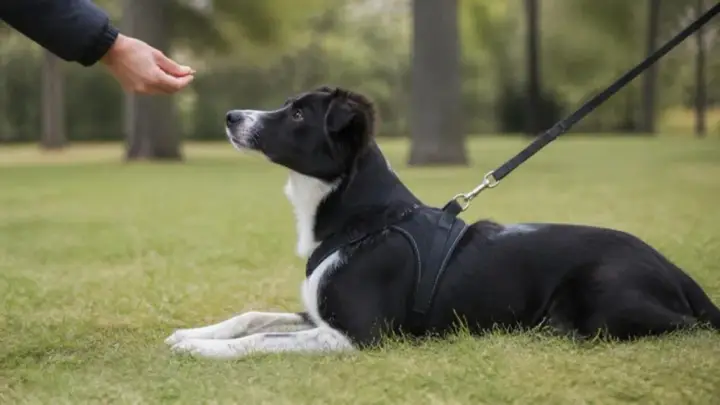
Most dogs learn sit quickly. Hold a treat at your dog's nose. Slowly move it up and a little back over the head. As the nose rises, the rear usually lowers into a sit. Say "yes" and give the treat.
Repeat until your dog sits as soon as your hand starts to move. Then say "sit" just before you move your hand. Over the next few sessions, lure with an empty hand and give the treat from your other hand.
For down, start with your dog sitting. Lower a treat from the nose to the floor between the front paws. Hold it there and wait. Many dogs fold into a down after a moment. Reward the instant the elbows touch the floor. If your dog stands up, your hand probably moved too fast, so try again more slowly.
Try not to push your dog into position. Pressing on the back or hips is unpleasant and can hurt a dog with sore joints. If a dog who used to sit easily starts to avoid it, pain may be the reason, so mention it to your veterinarian.
Teaching stay
Stay tells your dog to hold a position until you say it is over. It helps at the front door, in the car, and during vet exams.
First choose a release word, such as "okay" or "free." Then ask for a sit, wait one second, and reward while your dog is still sitting. Next time wait two seconds, then three. Give the treat in position, then say the release word. When your dog can hold a sit for 10 to 15 seconds, take one step back and return to reward. Add distance slowly, then mild distractions. Change only one thing at a time.
If your dog gets up, the step was too hard. Go back to an easier one without scolding.
Come when called
A reliable recall is one of the most useful safety skills a dog can have. It can bring your dog back from a busy road, a loose dog, or a stranger's picnic.
Start at home. Say your dog's name and the cue once in a happy voice, then back away a few steps. When your dog reaches you, mark and give a generous reward. Games help. With two people in a hallway, take turns calling the dog back and forth and rewarding each arrival.
Make coming to you worth it. Avoid calling your dog for anything he dislikes, such as a scolding, a bath, or the end of play at the park. Go and get your dog for those moments instead. If your dog has learned to ignore the old word, you can pick a new one and start fresh.
Outside, use a long line clipped to a well-fitted harness until your dog comes back reliably in that setting. Avoid reeling your dog in with the line. Call, move away, and reward. Many trainers also teach a separate emergency word that is always followed by a big handful of treats and used only when it matters.
Recall often takes months to become reliable around distractions. Until then, keep your dog on a leash in unfenced areas and follow local leash rules.
Walking on a loose leash
Dogs pull because pulling gets them where they want to go, and people walk slowly by dog standards. Loose-leash walking is one of the harder skills to teach, and many dogs need several months of regular practice.
Start somewhere boring, like a hallway or yard. Stand still with the leash on. The moment there is any slack, mark and drop a treat by your leg. Take a step or two, and reward again while the leash stays loose. Add a cue such as "let's go" once your dog can walk nicely for a few steps.
If the leash goes tight, stop and wait. Move forward again when it loosens. Pulling stops paying off, and walking near you starts to. Give your dog time to sniff on a cue such as "go sniff," since exploring is part of a good walk.
A well-fitted harness is a comfortable choice for many dogs. It keeps pressure off the throat when a dog pulls. A dog who coughs on walks is worth a check by your veterinarian. Veterinary behavior experts advise against tools that work through pain, such as choke, prong, and shock collars. They can cause injury, and a dog may link the pain with the people or dogs he sees when it happens.
Training a newly adopted dog
Adult dogs learn new skills well. A rescued dog may not know any cues yet, may not know his new name, or may have learned words in another language. Start from zero and be patient.
Give your dog time to settle first. The first days in a new home can be tiring and confusing. Keep early sessions very short and easy, and let your dog choose to take part. Teaching the new name is a good first step. Say it once, and reward the moment your dog looks at you. For more on building trust in the first weeks, see bonding with a rescue animal.
Hand signals are worth teaching alongside words. A clear gesture means the same thing in any language, and it helps dogs who do not hear well. For more on how dogs read our gestures and tone of voice, see the intelligence of dogs and canine cognition.
Every Paw Squadron dog has a checkup, treatment, vaccinations, and a microchip before adoption. Your own veterinarian can tell you whether any health issue could affect training and when a group class is a good fit.
If your new dog is a puppy, ask your vet about a puppy class. Many puppies can start at seven to eight weeks of age, once they have had a first set of vaccines at least a week earlier and a first deworming.
When to ask for help
Dogs often find it hard to use a skill in a new place at first. Go back a step, lower the distractions, and use better rewards.
Talk to your veterinarian if you notice any of the signs below. Pain, illness, or fear can be part of the picture, and your vet can refer you to a qualified behavior professional.
- Growling, snapping, or biting, especially when handled or near food
- Lunging and barking at people, dogs, or traffic on walks
- Strong fear, such as hiding, trembling, or refusing treats outdoors
- A sudden change in behavior, or a dog who stops responding to skills he knew well
- Stiffness or signs of pain when sitting, lying down, or walking
If your dog has bitten someone or you feel unsafe, keep people and pets apart and contact your veterinarian soon. Choose a trainer who uses reward-based methods and can explain how they work. Avoid anyone who relies on pain, force, or intimidation.
If you are thinking about adopting, our Adoptions page shows the dogs waiting for homes, and PawPedia has more guides on dog care and behavior.
See also
From our rescues


This article is general information, not veterinary advice. Always consult a veterinarian about your animal’s health. Some pictures in PawPedia may be AI-generated.
This page was last updated on October 16, 2026.