Köpek ve Kedilerde Diş Bakımı
Hayvanlarla yaşam ansiklopedisi PawPedia’dan
İçindekiler
Kısaca
Evcil hayvanlara özel diş macunuyla her gün diş fırçalamak evde yapılabilecek en etkili diş bakımıdır, çünkü plak birkaç gün içinde sertleşerek diş taşına dönüşür. Diş taşını yalnızca veteriner, genel anestezi altında temizleyebilir. Ağız kokusu, kırmızı bir diş eti çizgisi ya da tek taraflı çiğneme için randevu alın; yüzde şişlik ya da kırık bir diş varsa aynı gün gidin.
| Çoğu zaman ilk fark edilen | Ağız kokusu; yaşlı bir köpekte bile normal değildir |
|---|---|
| Nelere bakmalı | Diş etlerinin yakınında sarı-kahverengi bir kabuk ya da diş eti kenarı boyunca kırmızı bir çizgi; ikisinden birini görürseniz veteriner randevusu alın |
| Neden önemli | Diş eti çizgisinin altındaki bakteriler, her dişi yerinde tutan dokuyu ve kemiği yavaş yavaş tahrip eder |
| Ne sıklıkla | Her gün fırçalayın; gün aşırı fırçalamak da yardımcı olur, ancak haftada bir yeterli değildir |
| Diş macunu | Asla insan diş macunu kullanmayın; bazı markalar köpekler için zehirli olan ksilitol içerir |
| Nereleri fırçalamalı | Çoğunlukla diş taşının en hızlı biriktiği üst arka dişlerin ve köpek dişlerinin dış yüzeyleri |
| Çiğneme ürünleri ve diyetler | Diş bakımı için çiğneme ürünleri, diş sağlığı mamaları ve suya katılan ürünler yardımcı olabilir, ancak hiçbiri fırçalamanın yerini tutmaz |
| Dikkatli olun | Çok sert çiğneme ürünleri; kemikler, boynuzlar, toynaklar ve sert naylon oyuncaklar köpeklerin dişlerini sıklıkla kırar |
| Veteriner diş temizliği | Veteriner hekimin diş eti çizgisinin altını temizleyebilmesi ve her dişi kontrol edebilmesi için genel anestezi altında yapılır |
| Kediler | Birçok yetişkin kedide, dişin dokusunun yıkıma uğradığı ağrılı bir durum olan diş rezorpsiyonu gelişir |
| Aynı gün veterinere gidilmesi gereken durumlar | Yüzde ya da çenede şişlik, pembe ya da koyu bir nokta görülen kırık diş, durmayan ağız kanaması, yemeği tamamen reddetme, aşırı salya akıtma |
Köpeğinizin ya da kedinizin dudağını kaldırın ve arka dişlerine bakın. Diş etlerinin yakınındaki sarı-kahverengi bir kabuk ve diş eti kenarı boyunca uzanan kırmızı bir çizgi, diş hastalığının çoktan başladığı anlamına gelir. Bu, veteriner hekimlerin yetişkin köpek ve kedilerde en sık karşılaştığı sağlık sorunlarından biridir ve hasarın çoğu sizin göremeyeceğiniz yerlerde oluşur.
Diş hastalıkları neden kolayca gözden kaçar
Plak, her gün dişlerin üzerinde oluşan yumuşak bir bakteri tabakasıdır. Birkaç gün içinde sertleşerek diş taşına dönüşmeye başlar ve diş taşı artık diş fırçasıyla temizlenemez. Ardından bakteriler diş eti çizgisinin altına yayılır; burada diş etlerinde iltihaba yol açar ve her dişi yerinde tutan dokuyu ve kemiği yavaş yavaş tahrip eder.
Bu, periodontal hastalıktır ve acı verir. Hayvanlar bunu nadiren belli eder, çünkü ağzı ağrıyan bir köpek ya da kedi genellikle yemeye devam eder.
Ağır diş hastalığı kalp, böbrek ve karaciğer sorunlarıyla da ilişkilendirilmiştir, çünkü enfekte diş etlerindeki bakteriler kan dolaşımına karışabilir. Bu bağlantının ne kadar güçlü olduğu hâlâ araştırılmaktadır. Her durumda temiz bir ağız, sürekli bir enfeksiyon kaynağını ortadan kaldırır.
Ağız kokusu çoğu kişinin ilk fark ettiği belirtidir ve yaşlı bir köpekte bile normal değildir. Daha sessiz belirtiler çoğu zaman daha çok şey anlatır; bu yüzden şunlara dikkat edin:
- Diş etleri boyunca kırmızı bir çizgi ya da evcil hayvanınız çiğnerken kanayan diş etleri
- Özellikle üst arka dişlerde ve köpek dişlerinde kahverengi ya da sarı diş taşı
- Ağzın tek tarafıyla çiğneme ya da yemek yerken yiyecekleri düşürme
- Birdenbire yumuşak mamayı tercih etme ya da sert ödül mamalarına hiç dokunmama
- Patisiyle yüzünü kaşıma, ağız ve burun bölgesini yere sürtme ya da her zamankinden fazla salya akıtma
- Yüzde, gözün hemen altında şişlik; bu, enfekte bir diş kökü anlamına gelebilir
- Sallanan ya da kırık dişler veya rengi griye ya da pembeye dönmüş bir diş
Kedilere ayrıca dikkat etmek gerekir. Birçok yetişkin kedide, dişin kendisinin yıkıma uğradığı ağrılı bir durum olan diş rezorpsiyonu gelişir; bu durum çoğu zaman gözden kaçması kolay olan diş eti çizgisinde başlar. Kediler ağrılarını da çok iyi saklar; bu nedenle daha yavaş yiyen, başını yana eğerek çiğneyen ya da tüy bakımını düzgün yapmayı bırakan bir kedinin veteriner hekime görünmesi gerekir.
Yavru köpek ve kedilerde dişler
Yavru köpeklerin 28 süt dişi, yetişkin köpeklerin ise 42 dişi vardır; yavru kedilerin 26, yetişkin kedilerin ise 30 dişi vardır. Süt dişleri yaklaşık üç ila dört aylıkken dökülmeye başlar ve kalıcı dişlerin tamamı genellikle yaklaşık yedi aylıkken yerini almış olur. Bu dönemde genç hayvanlar ulaşabildikleri her şeyi çiğner.
Diş çıkaran bir yavru köpeğe, yavru köpekler için üretilmiş kauçuk oyuncaklar gibi çiğneyebileceği güvenli şeyler verin. Özellikle küçük ırklarda bir süt dişi bazen yerine geçmesi gereken kalıcı dişin yanında kalır; yiyeceklerin ikisinin arasına sıkışmaması için veteriner hekimin bu dişi çekmesi gerekebilir. Bu aynı zamanda genç bir hayvanı dudaklarının kaldırılmasına ve dişlerine dokunulmasına alıştırmak için en iyi yaştır; bu da ileride bakımı çok daha kolaylaştırır.
Evde diş fırçalama
Her gün diş fırçalamak, evde yapabileceğiniz en etkili şeydir. Gün aşırı fırçalamak da yardımcı olur, ancak haftada bir yeterli değildir, çünkü plak birkaç gün içinde sertleşmeye başlar.
Asla insan diş macunu kullanmayın. Bazı markalar köpekler için zehirli olan ksilitol içerir ve hiçbiri yutulmak için üretilmemiştir. Evcil hayvan diş macunları, kümes hayvanı eti gibi hayvanların sevdiği tatlarda üretilir ve yutulabilecek şekilde tasarlanmıştır.
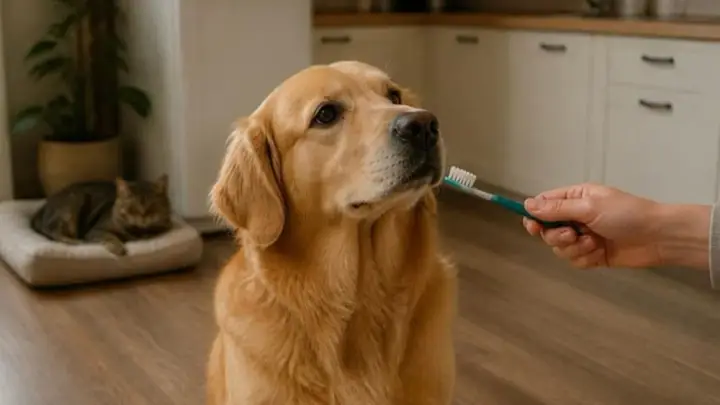
Diş fırçalamaya bir iki hafta içinde adım adım alıştırın ve her seansı evcil hayvanınız hâlâ rahatken bitirin. Hemen ardından verilen bir ödül ya da öğün, bu rutini sabırsızlıkla beklemesine yardımcı olur:
- 1–3. günler: evcil hayvanınızın parmağınızdaki biraz evcil hayvan diş macununu yalamasına izin verin
- 4–7. günler: dudağı kaldırın ve macunu parmağınızla birkaç saniye boyunca diş etleri ve dişler üzerine sürün
- İkinci hafta: yumuşak bir evcil hayvan diş fırçasına ya da parmak fırçasına geçin ve bir seferde birkaç dişi temizleyin
- Sonrasında: ağzın her bir tarafı için süreyi yavaş yavaş yaklaşık otuz saniyeye çıkarın
Kılları diş eti çizgisine doğru açılı tutun ve küçük daireler çizin. Zamanın çoğunu, diş taşının en hızlı biriktiği üst arka dişlerin ve köpek dişlerinin dış yüzeylerine ayırın. Çoğu hayvan bunu ağzı kapalıyken ve dudağı kaldırılmışken daha kolay kabul eder.
Kediler genellikle daha fazla sabır ister. Çok küçük bir fırça ya da parmak fırçası kullanın ve başlangıçta günde birkaç dişle yetinin. Kediniz diş fırçalamayı hiç kabul etmiyorsa zorlamak yerine veteriner hekiminize başka seçenekleri sorun.
Çiğneme ürünleri, diyetler ve kaçınılması gerekenler
Diş bakımı için çiğneme ürünleri, diş sağlığı mamaları ve suya katılan ürünler yardımcı olabilir, ancak hiçbiri fırçalamanın yerini tutmaz. Veteriner Ağız Sağlığı Konseyi (Veterinary Oral Health Council, VOHC) bu tür ürünleri test eder ve plak ya da diş taşını azalttığı gösterilenlere onay mührünü verir; bu nedenle alışveriş yaparken bu mühür faydalı bir rehberdir.
Çok sert çiğneme ürünlerine dikkat edin. Kemikler, boynuzlar, toynaklar ve sert naylon oyuncaklar, özellikle çiğneme için kullanılan büyük üst arka diş olmak üzere köpeklerin dişlerini sıklıkla kırar. Birçok veteriner hekime göre bir çiğneme ürününe başparmak tırnağınızı bastıramıyorsanız o ürün fazla serttir. Pişmiş kemikler ise başka bir açıdan tehlikelidir, çünkü kıymık gibi parçalanıp ağza ya da sindirim kanalına zarar verebilir.
Tenis topları, onları saatlerce çiğneyen köpeklerin dişlerini aşındırabilir. Sıradan kuru mama dişleri temizlemeye pek katkı sağlamaz; bu yüzden yaş mamadan kuru mamaya geçmek tek başına diş hastalığını önlemez. Yaş mamayı değerlendiriyorsanız konserve köpek maması rehberimiz artılarını ve eksilerini ele alıyor.
Veteriner kliniğinde diş temizliği
Diş taşı bir kez biriktikten sonra onu ancak bir veteriner hekim düzgün şekilde temizleyebilir. Profesyonel diş temizliği genel anestezi altında yapılır, çünkü veteriner hekimin diş eti çizgisinin altını temizlemesi, her dişi kontrol etmesi ve ideal olarak diş röntgeni çekmesi gerekir. Periodontal hastalıktaki hasarın büyük kısmı diş etlerinin altında, gözden uzakta bulunur.
Bazı pet kuaförleri ve evcil hayvan dükkânları anestezisiz diş temizliği sunar. Veteriner diş hekimliği uzmanları genellikle bunun yapılmamasını tavsiye eder, çünkü görünen diş taşını kazımak dişleri temiz gösterir, ancak diş etlerinin altındaki hastalık ilerlemeye devam eder.
Anestezi, özellikle yaşlı evcil hayvanlarda birçok sahibi endişelendirir. Veteriner hekim genellikle önce evcil hayvanınızı muayene eder, çoğu zaman kan tahlilleri de yapılır ve hayvan işlem boyunca izlenir. Evcil hayvanınız için riskleri sorun ve bunları ağrılı bir ağzı tedavisiz bırakmakla karşılaştırarak değerlendirin.
Bir evcil hayvanın ne sıklıkla profesyonel diş temizliğine ihtiyaç duyduğu değişir; bazı küçük köpekler için her yıl, diğerleri için birkaç yılda bir. Veteriner hekiminiz her rutin ziyarette dişleri kontrol eder ve zamanı geldiğinde size söyler.
Kurtarmanın ardından diş bakımı
Sokaktan kurtarılan hayvanlar genellikle hiç diş bakımı görmemiştir. Yavrularda süt dişleri genellikle sağlıklıdır, ancak yetişkin bir köpek ya da kedi diş taşı, kırık dişler ya da ağrılı diş etleriyle gelebilir. Kurtardığımız her hayvan veteriner kontrolünden geçer ve tedavi edilir; Hairy Styles kontrol edildiğinde veteriner hekim, aşıları yapılmadan önce kulaklarını, gözlerini ve dişlerini muayene etti.
Sahiplenirseniz, ilk veteriner ziyaretinizde dişlerin durumuna ilişkin bir not isteyin; böylece sonraki değişiklikleri fark etmek daha kolay olur. Ağzını ellemeye, yeni evcil hayvanınız size güvendikten sonra başlayın; yüzüne yaklaşan bir elin tehdit gibi hissettirebileceği ilk günlerde değil. Gergin bir köpekte önce bu güveni nasıl oluşturacağınızı ürkek bir köpeğe yardım etme rehberimizde bulabilirsiniz.
Veterineri ne zaman aramalısınız
Yukarıdaki belirtilerden herhangi birini fark ederseniz, evcil hayvanınızın yemeyi bırakmasını beklemeden randevu alın. Şunlardan herhangi birini görürseniz aynı gün gidin:
- Yüzde ya da çenede şişlik veya gözün altında akıntılı bir yara
- Ortasında pembe ya da koyu bir nokta bulunan kırık bir diş
- Durmayan ağız kanaması
- Yemeği tamamen reddetme ya da yemek yerken veya yüzüne dokunulduğunda acıyla ses çıkarma
- Aşırı salya akıtma, özellikle kedilerde
Bunların dışındaki her şey için, haftada bir dişlere kısaca göz atmak ve her yıllık ziyarette diş kontrolü yaptırmak sorunların çoğunu erkenden yakalamanızı sağlar. Periodontal hastalık nedeniyle kaybedilen kemik yeniden oluşmaz, ancak erken yakalanan diş eti iltihabı genellikle profesyonel bir diş temizliği ve her gün diş fırçalamayla geri döndürülebilir.
Ayrıca bakınız
Kurtarmalarımızdan
Bu makale genel bilgi amaçlıdır, veteriner tavsiyesi değildir. Hayvanınızın sağlığıyla ilgili her zaman bir veteriner hekime danışın. PawPedia’daki bazı görseller yapay zekâ ile oluşturulmuş olabilir.
Bu sayfa en son 30 Eylül 2026 tarihinde güncellendi.