German Shepherd: Temperament, Care, and Common Health Problems
From PawPedia, an encyclopedia of life with animals
Fact-checked against expert sources
Contents
In short
The German Shepherd is a medium to large, intelligent working breed that suits active people who can train it and give it more than two hours of exercise a day. Common health problems include hip and elbow dysplasia, bloat, degenerative myelopathy and skin allergies. Go to a vet at once for retching with nothing coming up and a swollen belly.
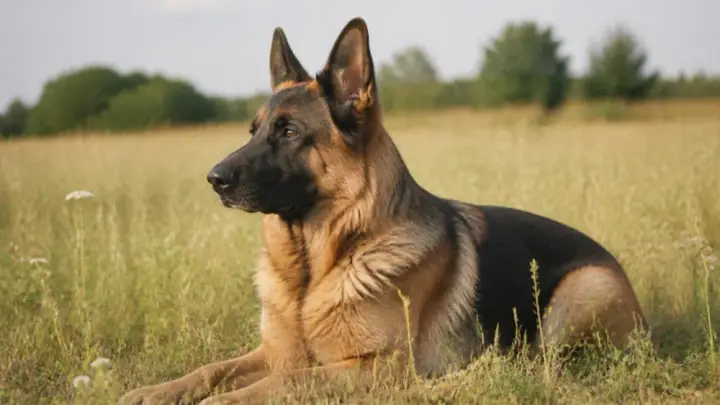
| Origin | Germany, developed from local herding dogs; the breed club was founded in September 1899 |
|---|---|
| Size | Medium to large; males 60 to 65 cm at the shoulder, females 55 to 60 cm |
| Weight | Males 30 to 40 kg, females 22 to 32 kg |
| Lifespan | 12 to 14 years according to the American Kennel Club; about 10 years in a large UK practice study |
| Coat | Double coat, either short, dense and harsh or long and softer; sheds |
| Grooming | Brush more than once a week; long coats need extra care behind the ears, on the legs and under the tail |
| Temperament | Intelligent, loyal, confident, courageous and steady; some dogs are intense, watchful or wary of strangers |
| Exercise | More than two hours a day for an adult, plus training, scent games and other work for the mind |
| Common health problems | Hip and elbow dysplasia, bloat, degenerative myelopathy, allergies and ear infections, exocrine pancreatic insufficiency |
| Best suited to | Active people who want to train their dog and can spend time with it every day |
| See a vet at once if | Retching with nothing coming up, drooling, restlessness or a swollen belly, which can mean bloat |
The German Shepherd is one of the best-known dog breeds in the world. It works as a police dog, a guide dog and a tracking dog, and it is also a much-loved family companion. This guide covers where the breed comes from, what it needs every day, and the health problems that are more common in it, so you can decide whether a shepherd suits your home.
Origin and purpose
The breed was developed in Germany from local herding dogs. Its breed club, the Verein für Deutsche Schäferhunde, was founded in September 1899, at the suggestion of Max von Stephanitz and A. Meyer. The goal was a dog able to work hard and well, and the breed standard was written to cover character as well as body.
Herding was only the start. German Shepherds went on to work with the police and armed forces, as guide dogs, and in tracking and obedience. The international breed standard still describes the German Shepherd as a versatile working, herding and service dog.
It is a medium to large dog. Under the international standard, males stand 60 to 65 cm at the shoulder and weigh 30 to 40 kg, and females stand 55 to 60 cm and weigh 22 to 32 kg. The American Kennel Club gives a life expectancy of 12 to 14 years. A large study of dogs seen in general veterinary practices in the UK found a lower median lifespan of about 10 years, so plan for a dog that may need extra care from middle age.
Temperament
The breed standard asks for a dog with strong nerves: self-assured, natural, good-natured and attentive, and willing to please. The American Kennel Club describes the breed as highly intelligent, loyal, confident, courageous and steady.
Breed descriptions describe tendencies, and individual dogs vary. Some shepherds are calm and gentle, and others are intense, watchful or wary of strangers. In UK veterinary records, aggression was among the five most common problems noted for the breed, and it was recorded more often in males. Early socialization and reward-based training matter a great deal for this reason. A well-raised shepherd that feels safe is far more likely to stay relaxed with visitors and other dogs.
Over the last fifty years, the breed's appearance has changed, and there is now a marked division between types within the breed. The Royal Kennel Club in the UK lists the breed in category 2 of its Breed Watch scheme, which flags points of concern, such as features that could cause problems if exaggerated.
Exercise and mental needs
German Shepherds were bred to work all day. The Royal Kennel Club suggests more than two hours of exercise a day for an adult dog. Walks alone are rarely enough. A shepherd also needs work for its mind.
- Daily training sessions, even short ones, using food or toy rewards
- Scent games, such as hiding treats or toys for your dog to find
- Fetch and tug games with clear rules
- Tracking, obedience, agility or other dog sports
- Puzzle feeders and chews for quiet time at home
Without enough to do, many shepherds become restless and find their own jobs, such as barking at passers-by, chewing or pacing. Clear routines and steady training help a great deal. Our guide to teaching your dog basic commands is a good place to start.
Coat and shedding
The breed comes in two coat types: a double coat with short, dense, harsh outer hair, and a long double coat with softer, longer hair. Both have an undercoat. Common colors include black with reddish-brown, brown, yellow or light gray markings, solid black, and gray with darker shading, known as sable.
German Shepherds shed, and loose hair will be part of daily life. Brushing more than once a week keeps the coat in good order and the hair on the brush rather than the floor. Long-coated dogs need extra attention behind the ears, on the legs and under the tail.
Is a German Shepherd right for your family?
A shepherd can be an excellent family dog in the right home. The breed suits people who enjoy being active outdoors, want to train their dog and can spend time with it every day. The Royal Kennel Club suggests a large house with a large garden, in town or country.
It may be a harder fit if you are away for long hours, live in a small space with little access to outdoor areas, or want a dog that needs little exercise. Its size and strength also matter. A young shepherd can easily knock over a small child or an older adult, so training and supervision are important.
Common health problems
German Shepherds are prone to several inherited and breed-related conditions. Knowing the signs helps you act early.
Hip and elbow dysplasia are inherited joint problems that develop as a dog grows. Both are inherited, and many genes are involved. How fast a puppy gains weight and how much it exercises can influence when signs appear. Signs include stiffness, lameness, difficulty rising and reluctance to jump or climb stairs. In UK vet records, osteoarthritis was one of the most common problems in the breed, and joint and muscle disorders were the most common cause of death. Keeping your dog lean is one of the best things you can do for its joints. Read more in our guide to hip dysplasia in dogs.
Bloat, or gastric dilatation and volvulus, is an emergency in which the stomach fills with gas and can twist. German Shepherds are among the breeds at higher risk. Other risk factors include having a close relative with bloat, eating one meal a day and eating very fast. Signs include retching without bringing anything up, drooling, restlessness and a swollen belly. Go to a vet at once if you see them. For at-risk breeds, vets may suggest a preventive surgery called gastropexy, which can be done at the same time as spaying or neutering. See bloat (GDV) in dogs for more.
Degenerative myelopathy is a slowly progressive disease of the spinal cord. It is most common in German Shepherds and usually begins in middle-aged to older dogs. It starts with weakness and poor coordination in the back legs. The hind paws may knuckle over or scrape, and the back end may sway. It is not usually painful. There is no cure, but physical therapy, walking, swimming and a healthy weight can help a dog stay mobile for longer. A DNA test looks for a gene variant linked to the disease. Dogs with two copies are at risk, though not all of them become ill.
Other spinal problems can look similar. Degenerative lumbosacral stenosis, a narrowing at the base of the spine, is most common in large breeds, especially German Shepherds. Signs often begin between 3 and 7 years of age and include trouble with the back legs, a weak tail and incontinence. Your vet may need imaging, such as an MRI scan, to tell these conditions apart.
Allergies and skin problems are also common. German Shepherds are a high-risk breed for atopic dermatitis, an allergic skin disease that causes itchy skin and can lead to skin and ear infections. Ear infections were the most common problem recorded for the breed in a large UK study. See allergies in dogs and cats and ear infections in dogs.
Exocrine pancreatic insufficiency means the pancreas does not make enough digestive enzymes. It is seen most often in German Shepherds, where it is thought to be inherited. Typical signs in a young adult dog are soft, bulky, pale or fatty stools, a big appetite and gradual weight loss. A blood test confirms it. Treatment with enzyme supplements is lifelong, and most dogs do well once treated.
When choosing a puppy from a breeder, ask about health testing. The Royal Kennel Club recommends hip and elbow scoring for breeding dogs, and as best practice also a DNA test for degenerative myelopathy and an eye test.
Adopting a German Shepherd
Adult German Shepherds and shepherd mixes are sometimes available from rescues. An adult dog has one big advantage: its size, energy and temperament are already known. Ask the rescue how the dog behaves with people, children and other animals, how much exercise it is used to, and about any health checks or treatment it has had.
Give a new shepherd time to settle. A calm routine, short training sessions and clear rules from the first day help a great deal. Book a checkup with your own vet early, and mention any stiffness, digestive upsets or itching you notice.
Paw Squadron mostly rescues mixed-breed dogs. Whatever a dog's looks or ancestry, it deserves a home that fits its needs. Adopting is a good way to find a loyal companion, and our guide on how to adopt a rescue dog explains the steps.
For more practical guides on dog care and health, browse PawPedia. Questions about adopting from us are answered in our FAQ, or you can write to us from the Contact page.
See also
From our rescues



Sources
- FCI-Standard No. 166: Deutscher Schäferhund (German Shepherd Dog) · Fédération Cynologique Internationale (FCI)
- German Shepherd Dog: Dog Breed Information · American Kennel Club
- German Shepherd Dog: Breed information and health tests · The Royal Kennel Club
- Demography and disorders of German Shepherd Dogs under primary veterinary care in the UK (O'Neill et al., 2017) · Canine Genetics and Epidemiology, via PubMed Central
- Elbow Dysplasia · Orthopedic Foundation for Animals (OFA)
- Gastric Dilation and Volvulus in Small Animals · Merck Veterinary Manual
- Degenerative Diseases of the Spinal Column and Cord in Animals · Merck Veterinary Manual
- Degenerative Myelopathy in Dogs · VCA Animal Hospitals
- Exocrine Pancreatic Insufficiency in Dogs · VCA Animal Hospitals
- Genome-wide analysis in German shepherd dogs reveals association of a locus on CFA 27 with atopic dermatitis (Tengvall et al., 2013) · PLOS Genetics, via PubMed Central
This article is general information, not veterinary advice. Always consult a veterinarian about your animal’s health. Some pictures in PawPedia may be AI-generated.
This page was last updated on October 29, 2026.