Broken Bones in Dogs: First Aid and Recovery
From PawPedia, an encyclopedia of life with animals
Contents
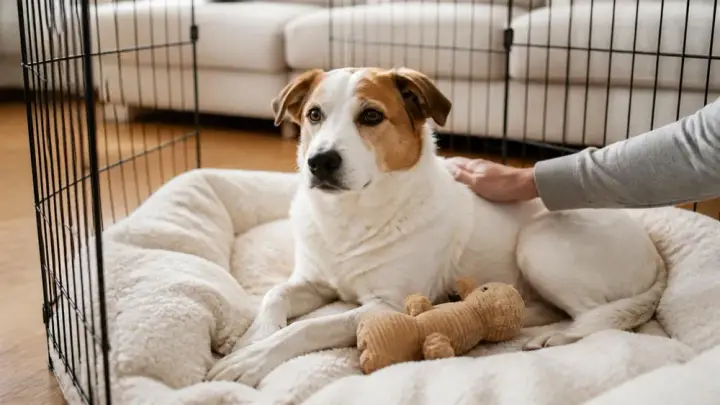
| Cause | Mostly trauma: road accidents, falls, fights with other animals and some sports injuries |
|---|---|
| Puppies | Soft growth plates can break after a small fall or rough play; in the shin bone this mostly happens at about 4 to 8 months old |
| Common signs | Sudden, severe limping; many dogs hold the hurt leg off the ground |
| Diagnosis | X-rays show which bone is broken and how |
| Treatment | The vet chooses a splint or cast, or surgery with plates, screws or pins, depending on the bone, the break and the dog |
| Outlook | Most heal well with prompt treatment and proper rest; many dogs return to full activity |
| Prevention | A leash near roads, fences and gates that close properly, a crate or harness restraint in the car |
| Risk to people | A dog in pain may bite, even one that is usually gentle |
| Emergency if | Hit by a car, fell from a height, bone through the skin, heavy bleeding, cannot stand, trouble breathing, pale gums or collapse |
Most broken bones in dogs heal well when they are treated promptly and the dog rests properly while the bone mends. Many dogs return to full activity afterward.
This guide covers how to spot a break, how to get your dog to the vet safely, how vets choose between a splint and surgery, and how to care for your dog at home.
How dogs break bones
Most fractures come from trauma. Road accidents, falls, fights with other animals, and some sports injuries all cause them. A break can be closed, with the skin intact, or open, where a wound reaches the bone. Open fractures carry a high risk of infection and need a vet within hours.
Puppies have soft growth plates near the ends of their long bones. These areas are weaker than mature bone and can break after a small fall, a leg caught in something, or rough play with another dog. In the shin bone, these fractures mostly affect puppies between about 4 and 8 months old, often active dogs of medium or large breeds.
Sometimes a bone breaks after only a minor bump. This can happen when disease has already weakened the bone, such as a bone tumor in an older dog or an unbalanced diet in a growing puppy. Vets call this a pathologic fracture, and treatment depends on the cause.
Signs of a broken bone
The most common sign is sudden, severe limping. Many dogs hold the hurt leg off the ground and will not put weight on it. You may also see swelling at one spot, pain when the area is touched, or a leg that looks bent, looks shorter than the other, or moves where it should not. An open fracture shows a wound on the leg, and sometimes bone is visible. A dog in pain may also pant, hide, or growl when touched.
Sprains, torn ligaments, and dislocated joints can look very similar. An exam and x-rays are usually needed to tell them apart.
When it is an emergency
Any suspected broken bone should be seen by a vet. Go to a clinic right away if your dog was hit by a car or fell from a height, if bone shows through the skin, if there is heavy bleeding, or if your dog cannot stand. Trouble breathing, pale gums, weakness, or collapse can be signs of shock or internal bleeding and need urgent care.
A dog hit by a car can have hidden injuries along with a broken leg. Bleeding inside the chest or belly, a torn bladder, bruised lungs, and air leaking around the lungs are all possible. Signs of some of these injuries can take up to two days to appear. For this reason, vets often keep a dog in the hospital for observation after a serious accident. A dog that gets up and walks after an accident still needs an exam.
First aid on the way to the vet
The aim is to keep your dog still and reach a vet quickly without causing more harm. Call the clinic before you leave, so the team can get ready and tell you how best to move your dog. For other emergencies, see our guide to first aid for dogs and cats.
- Protect yourself first. A dog in pain may bite, even one that is usually gentle. A soft muzzle or a strip of cloth can help, unless the dog is vomiting, has trouble breathing, has a chest injury, or is a short-nosed breed. Stay with a muzzled dog the whole time.
- Leave the leg as it is. Trying to straighten it or push a bone back in can cause more damage.
- Cover an open wound with clean gauze or a clean cloth. If it bleeds, press firmly over the cloth with your hand. If blood soaks through, add more layers on top and leave the first one in place.
- Keep the head, neck, and back as still as you can. A larger dog can be slid onto a flat board, thick cardboard, or a folded blanket and carried like a stretcher. A small dog can travel in a carrier or a box.
- A home splint is best left out unless the vet talks you through one. Breaks below the elbow or knee can sometimes be supported for the trip, but a badly placed splint can do harm. Breaks higher up the leg are hard to splint, so keeping the dog in a small space is usually safer.
- Avoid human pain medicine. Common pain relievers for people can cause stomach bleeding, kidney damage, or liver damage in dogs. The vet can give pain relief that is safe for dogs.
How vets diagnose and treat it
The vet first checks breathing, circulation, and bleeding, and gives pain relief. The bone is repaired once the dog is stable. X-rays show which bone is broken and how. Dogs hit by a car often also need chest x-rays, an ultrasound, or blood tests, and a CT scan can help plan the repair of a complex break.
No single treatment suits every fracture. The choice depends on which bone is broken, the type of break, whether the skin is open, the dog's age, size, and activity level, and whether the dog can be kept quiet at home.
Splints and casts suit some simple breaks below the elbow or knee, especially in young dogs whose bones heal quickly. To work, they have to keep the joints above and below the break still. That is hard to do for the upper arm and thigh, because a bandage cannot hold the shoulder or hip well, so breaks there usually need surgery. A splint or cast also needs regular checks and changes, since it can rub and cause pressure sores or other skin problems.
Surgery holds the pieces in place with metal plates, screws, pins, or wires inside the leg. Another option is an external fixator, where pins pass through the skin into the bone and connect to bars outside the leg. An open fracture is usually cleaned within hours and treated with antibiotics. A closed fracture is usually repaired within a few days, once the dog is stable.
Pain relief continues after the repair. Physical therapy is often part of the plan, since it helps the leg regain strength and movement.
Recovery at home
Bones heal slowly. A young puppy needs at least 4 weeks and an adult dog at least 8 weeks before activity can start to build back toward normal, and many need longer. Follow-up x-rays show the vet when the bone has healed enough for more.
- Keep your dog in a crate or a small room with a non-slip floor, with no running, jumping, stairs, or rough play.
- Take your dog out on a short leash for toilet breaks only. A towel under the belly or a harness with a handle can help a larger dog walk.
- Keep a splint or bandage clean and dry. A plastic bag over it helps outdoors, as long as it comes off as soon as you are back inside.
- Check the toes every day. Swelling, toes spreading apart, a bad smell, wetness, or a bandage that slips all call for a vet check within a few hours.
- A cone collar helps if your dog licks or chews the bandage or the wound.
- Look at a surgical wound daily. Mild redness in the first few days can be normal. Increasing redness or swelling, discharge, a bad smell, or a wound that opens are reasons to call.
- Give medicines exactly as prescribed and keep every recheck appointment.
Also call the vet if your dog stops eating, seems in more pain, cannot pass urine, or suddenly acts differently. The vet or a rehabilitation team may suggest cold packs in the first few days after surgery and gentle exercises, such as slowly bending and straightening the joints. Activity is best increased step by step, and only when the vet agrees. Doing too much too early can loosen or break implants and slow healing.
Preventing broken bones
Many accidents can be avoided with good control and safe spaces. Walk your dog on a leash near roads, and check that fences and gates close properly. Secure your dog in the car with a crate or a harness restraint. Close off balconies, open windows, and steep stairs for puppies and small dogs. Watch rough play between puppies and much larger dogs.
Feed a complete and balanced food made for your dog's life stage, since an unbalanced diet can weaken growing bones. Ask your vet before starting a homemade diet for a puppy.
Rescued and newly adopted dogs
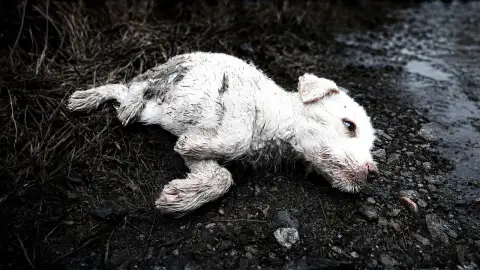
Dogs that lived on the street face traffic every day, so a rescued dog may have been hurt on the road before it was found. At Paw Squadron, the first stops after every rescue are the vet and a bath. Every animal gets a checkup, treatment, vaccinations, and a microchip before adoption.
A newly adopted dog does not know your street yet. In the first weeks, a well-fitting harness, a leash, and closed gates help keep a scared dog away from traffic.
Some dogs carry signs of an old injury, such as a slightly bent leg or an uneven walk. An injury to a growth plate can leave a leg bent or shorter as the puppy grows. If you notice this, ask your vet whether the old injury causes pain or needs care. If you have questions about a dog you would like to adopt, see our FAQ or send an adoption inquiry.
See also
From our rescues


This article is general information, not veterinary advice. Always consult a veterinarian about your animal’s health. Some pictures in PawPedia may be AI-generated.
This page was last updated on September 30, 2026.