The Problem with Puppy Mills
From PawPedia, an encyclopedia of life with animals
Contents
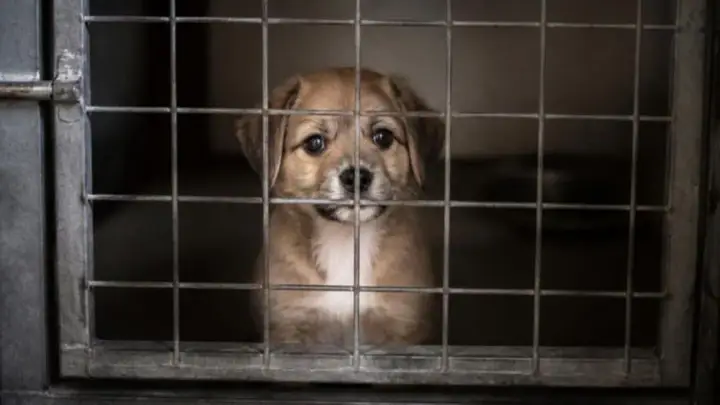
| Puppy mill | A commercial breeding operation that puts volume ahead of the dogs' welfare |
|---|---|
| Also called | Puppy farm |
| How they sell | Through pet stores, online classified ads, social media pages and middlemen |
| EU travel age | In most cases a puppy cannot legally travel between EU countries until about 15 weeks old |
| Warning signs | No visit to where the puppy was raised, no mother to see, several breeds for sale, no vet records, pressure to decide quickly |
| Walk away if | You notice two or three of the warning signs together |
| Health risks | Crowded, poorly cleaned conditions make parasites and infections such as parvovirus more likely |
| Behavior risks | A mill puppy can grow up afraid of ordinary sights and sounds, bite too hard in play or take much longer to house-train |
| Good breeder | Lets you visit and meet the mother, shows health tests for both parents and keeps puppies with her until at least eight weeks old |
| Why adopt | Every family that adopts meets part of the demand for puppies without funding another litter |
| Already bought | Take the puppy to a vet within the first few days for a full checkup, even if it seems well |
The ad usually looks harmless. There is a photo of a small, round puppy, a friendly message, a price a little below what breeders charge, and an offer to meet somewhere convenient so you do not have to make the drive. Many puppy mill sales start exactly like this, and many buyers only understand what they paid for much later.
What a puppy mill is
A puppy mill, often called a puppy farm in the UK and parts of Europe, is a commercial breeding operation that puts volume ahead of the dogs' welfare. The adult dogs are kept to produce litters, usually in cages or pens, with little exercise, little human contact and minimal veterinary care. Breeding females are often bred at every heat cycle, and when they stop producing enough puppies they are often sold on, given away or abandoned.
Mills rarely sell from their own premises, because few buyers would go ahead after seeing them. The puppies reach families through pet stores, online classified ads, social media pages and middlemen who resell them. Some are moved long distances, including across borders, while they are still very young.
Cross-border trade in young puppies is a well-known problem in Europe. In most cases a puppy cannot legally travel between EU countries until it is about 15 weeks old, because the rabies vaccination can be given from 12 weeks of age and then needs 21 days before the animal may travel. A seller offering a much younger imported puppy should make you suspicious, and a vet in your own country can tell you exactly which rules apply.
The warning signs
No single sign proves that a seller runs a mill, but these come up again and again. If you notice two or three of them together, walk away, however sweet the puppy is.
- The seller will not let you visit where the puppy was raised, and offers to deliver it or meet in a parking lot.
- Several breeds, or several litters, are available at the same time.
- You cannot see the mother, or the dog presented as the mother shows no sign of having a litter.
- The puppy is offered to you before it is eight weeks old.
- There are no vet records, or the records and passport look rushed and incomplete.
- The seller pushes for a quick decision, or a deposit before you have seen the puppy.
- The same photos appear in several ads under different names.
- The seller asks you almost nothing about your home, your schedule or your experience with dogs.
That last point matters more than it seems. A responsible breeder, like a responsible rescue, wants to know where the dog is going and will turn people down. A seller whose only question is how you will pay sees the puppies as stock, and has probably raised them that way.
Why the problems show up later
The trouble with a mill puppy often does not appear on the day you bring it home. It shows up weeks, months or years later, when the costs land on the family and the seller is long gone.
Health is the first part. Puppies from crowded, poorly cleaned conditions are more likely to carry parasites and infections such as kennel cough and parvovirus. Parvovirus spreads easily wherever many dogs are kept together, and it can kill young puppies, especially without prompt treatment. Inherited problems come later: mills rarely health-test their breeding dogs, so conditions like hip dysplasia, eye disease or breathing trouble in flat-faced breeds are passed on without anyone checking.
Behavior is the second part. Puppies learn a great deal from their mother and littermates in the first weeks, including how hard they can bite in play before it hurts. They also go through a sensitive period, roughly from three weeks to about three months of age, when meeting people, sounds and new places shapes how they react to the world for the rest of their lives. A puppy that spends that time in a cage with little human contact, and is then taken from its litter too early, can grow into a dog that is afraid of ordinary sights and sounds, bites too hard in play or takes much longer to house-train.
None of this is certain, and many mill puppies grow into lovely dogs with a lot of work from their owners. The odds are worse, though, and the work falls on the family who paid for a healthy puppy and brought home a long-term project.
What a responsible breeder does differently
Adoption is not the only ethical way to get a dog. A responsible breeder who health-tests, raises puppies in a home and takes dogs back for life is doing something very different from a mill. Our comparison of adopting and buying a dog covers the trade-offs in more detail. If you do buy, look for a breeder who does all of the following:
- Invites you to visit, lets you meet the mother and shows you where the puppies live.
- Works with one or two breeds and has only a few litters a year.
- Shows you the health tests recommended for the breed, for both parents.
- Keeps puppies with their mother and littermates until they are at least eight weeks old.
- Asks you detailed questions and is willing to say no.
- Offers a written contract and will take the dog back at any point in its life.
How adoption breaks the cycle
Buyers meet the puppy. They almost never meet the parents, and the parents are the dogs that suffer longest. A breeding female in a mill can spend years producing litter after litter in a small space, with little care between pregnancies, and some never live inside a home unless a rescue takes them in.
Mills exist because there is steady demand for young puppies, especially of popular breeds, and because buyers never see the conditions behind the sale. Every family that adopts meets part of that demand without funding another litter. Across many families, that difference adds up.
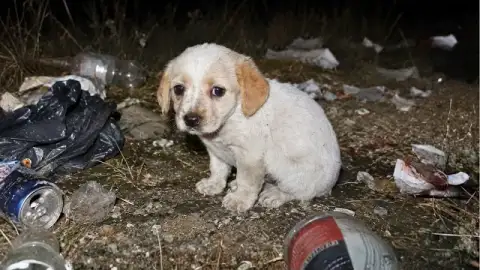
Unplanned litters create a surplus of puppies too, with no breeder involved. In the Balkan region, many puppies are thrown away or abandoned, often because dogs that are not spayed or neutered keep having litters, and that is why every animal Paw Squadron rescues is neutered once it is strong enough for surgery. Because local clinics and shelters usually will not take in or treat a puppy under seven months old, many of these puppies die of disease unless someone steps in. Puppies are the animals most at risk here, and the ones we are called about most often.
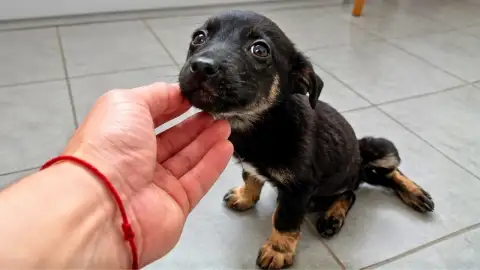
A puppy from a rescue usually arrives with the basic vet work already done. A puppy adopted from us has seen a vet, been treated and vaccinated and received a microchip, and it gets a pet passport before it goes home. Milky Cyrus is one of them: she was found late at night, stuck in a milk carton while searching for food, trembling and covered in fleas. The next day the vet found her dirty but healthy, and she has since been adopted.
What to do next
If you already bought a puppy and only now recognize the signs, there is no point in blaming yourself. Many people only see them once the puppy is home, and the puppy needs the same thing either way: a good home and a careful start.
- Take the puppy to a vet within the first few days for a full checkup, even if it seems well.
- Keep it away from places where many unknown dogs gather until your vet says its vaccinations are complete.
- Start gentle socialization right away, with short, positive experiences of people, sounds and places.
- Keep every document, message and ad from the sale.
- Report the seller to your local animal welfare authority, especially if the puppy falls ill soon after you bought it.
If fear or rough biting becomes a problem, see your vet first to rule out pain or illness, then look for a trainer who works with rewards rather than punishment. Many dogs with a bad start become calm, affectionate companions with patience and the right support.
If you are ready to look for a dog, start with our adoptions page. When one catches your eye, send us an adoption inquiry and tell us your country, since we adopt within Europe.
See also
From our rescues

This article is general information, not veterinary advice. Always consult a veterinarian about your animal’s health. Some pictures in PawPedia may be AI-generated.
This page was last updated on September 30, 2026.