Bone Cancer in Dogs: Signs, Diagnosis, and Care
From PawPedia, an encyclopedia of life with animals
Contents
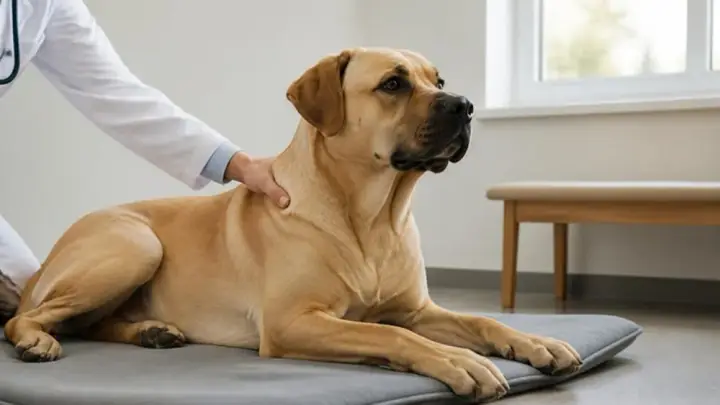
| Most common type | Osteosarcoma, which makes up more than 80 percent of bone tumors in dogs |
|---|---|
| Cause | Exact cause not known; the strong link to certain breeds suggests genes play a role |
| Most at risk | Osteosarcoma mainly affects large and giant breeds |
| Usual age | Most dogs are diagnosed in middle or older age, often around seven years old |
| First signs | In many dogs, a limp that looks like a pulled muscle |
| Diagnosis | X-rays can strongly suggest cancer, but a tissue sample is needed to confirm it |
| Treatment | For a tumor in a limb, amputation of the leg is the standard treatment; chemotherapy is usually recommended after surgery |
| Outlook | In most dogs osteosarcoma cannot be cured; treatment can relieve pain and give many dogs good months |
| Prevention | No proven way to prevent it; have any lasting limp in a large dog checked early |
| Risk to people | None; bone cancer is not contagious and does not pass to other dogs, cats or people |
| Emergency if | The dog suddenly puts no weight on a leg, cries out or trembles in pain, breathes fast or hard at rest, collapses or seems very weak |
Bone cancer is a hard diagnosis for any dog owner, and it often starts quietly. In many dogs the first sign is a limp that looks like a pulled muscle. This guide covers which dogs are most at risk, the signs worth a vet visit, how vets confirm the diagnosis, and what treatment and daily care usually involve.
The most common bone cancer in dogs is osteosarcoma. It makes up more than 80 percent of bone tumors in dogs. It grows inside the bone, destroys healthy bone tissue, and tends to spread early, most often to the lungs. Other bone cancers exist, such as chondrosarcoma, which starts in cartilage and generally has a better outlook. Cancers from other organs can also spread to bone. Benign bone tumors are uncommon in dogs.
Which dogs are most at risk
Osteosarcoma mainly affects large and giant breeds. Breeds with a known higher risk include Rottweilers, Great Danes, Irish Wolfhounds, Scottish Deerhounds, Greyhounds, Saint Bernards, Leonbergers, Golden Retrievers, German Shepherds, Doberman Pinschers, and Boxers. Large mixed-breed dogs can develop it as well.
Most dogs are diagnosed in middle or older age, often around seven years old. A small number of young dogs, even adolescents, are affected. Small dogs can get bone cancer too. In smaller dogs it is more often found outside the legs, in places such as the jaw, ribs, spine, or pelvis.
The exact cause is not known. The strong link to certain breeds suggests that genes play a role. In a small number of dogs the cancer develops at the site of an old fracture, a past bone infection, a metal implant, or earlier radiation treatment.
In the legs, the tumor usually starts near the ends of the long bones. The most common spots are near the shoulder and the wrist in the front legs, and just above or below the knee in the hind legs.
Signs to watch for
Early signs are easy to mistake for a sprain or for arthritis. A bone tumor keeps growing, so the limp tends to return or get worse over the following weeks. Signs owners often notice include:
- A limp in one leg that comes and goes at first, then becomes constant
- A firm swelling on a leg, often near a joint, that may hurt when touched
- Less interest in walks, stairs, jumping, or play
- Loss of muscle on the affected leg
- Tiredness and a smaller appetite
- With a tumor in the jaw, swelling of the face, trouble opening the mouth, drooling, or trouble eating
If the cancer has spread, a dog may later show weakness, breathing changes, or swelling of the legs.
A limp in a large or giant dog that lasts more than a few days, or keeps coming back, is worth a vet visit. The same goes for any hard lump that seems attached to a bone.
When it is an emergency
Bone cancer weakens the bone from the inside. A weakened bone can break during normal activity, with no fall or accident. This is called a pathologic fracture, and it is very painful. Contact your vet or an emergency clinic right away if your dog:
- Suddenly stops putting any weight on a leg
- Cries out, trembles, or cannot settle because of pain
- Breathes fast or with effort while resting
- Collapses or seems very weak
How vets diagnose it
Your vet usually starts with a full exam and feels the bones and joints of the sore leg. X-rays are often the next step. Bone cancer often has a typical look on X-rays, with areas of missing, moth-eaten bone and irregular new bone around them.
X-rays can strongly suggest cancer, but a tissue sample is needed to confirm it. The vet may collect cells with a fine needle or take a small piece of bone for a biopsy while the dog is sedated or under anesthesia.
Because this cancer spreads early, the vet will also check for spread. This usually means blood tests and chest X-rays or a CT scan. Some dogs also have a bone scan. About 90 to 95 percent of dogs already have tiny amounts of cancer elsewhere in the body at diagnosis, too small to show on scans. This is why treating the leg alone rarely cures the disease.
Treatment options
In most dogs, osteosarcoma cannot be cured. Treatment can still relieve pain and give many dogs good months with their families. Your vet, often together with a veterinary oncologist, will talk through the options based on where the tumor is, whether it has spread, and your dog's general health.
Amputation of the affected leg is the standard treatment for a tumor in a limb. It removes the source of the pain. It sounds drastic, but most dogs adapt to three legs very well, including large dogs and many dogs with arthritis. Many walk on their own within a day of surgery, and most adjust over about four weeks.
For some dogs, specialist centers may offer limb-sparing surgery or a focused form of radiation therapy instead of amputation. Limb-sparing surgery carries a higher risk of complications, such as infection.
Chemotherapy is usually recommended after surgery to slow the spread of the cancer. Most dogs handle chemotherapy well and keep a good quality of life during treatment.
When a treatment plan aimed at longer survival is not possible or not chosen, care focuses on comfort. This can include pain medicines, radiation to ease pain, and medicines that slow bone breakdown. Your vet will choose the medicines and doses that suit your dog.
As a general guide, dogs treated with amputation alone live a median of about four to six months. With amputation and chemotherapy, the median is about nine months to one year, and some dogs live two years or longer. A median means half of dogs live longer and half live shorter. Tumors in some other sites, such as the lower jaw, can have a different outlook, so ask your vet what applies to your dog.
Living with a dog after diagnosis
Pain control matters at every stage. Bone pain can be severe, and dogs often hide it. Panting at rest, restlessness at night, licking the leg, hiding, and eating less can all point to pain. Tell your vet about these changes, since the pain plan can often be adjusted.
Small changes at home help a lot. Nonslip rugs on smooth floors, a harness with a handle for stairs and cars, and short, frequent walks make life easier for a dog on three legs or a dog with a sore leg. Keeping your dog at a lean weight takes pressure off the remaining limbs.
Some owners keep a simple diary of good days and bad days. It helps you and your vet judge quality of life over time and makes hard decisions a little clearer when they come.
Prevention and other pets
There is no proven way to prevent bone cancer in dogs. The most useful step is to have any lasting limp in a large dog checked early, while more treatment choices are open.
Bone cancer is not contagious. It does not pass from one dog to another, to cats, or to people. Other pets in the home are not at risk from living with a dog who has it.
Rescued and adopted dogs
At Paw Squadron, the first stops after every rescue are the vet and a bath. Every dog gets a checkup, treatment against parasites, vaccinations, and a microchip before adoption. A checkup finds the problems present at that moment. Bone cancer can develop later, often in middle or older age, so the signs above stay useful for years.
If you adopt an older, large dog, any new limp deserves a closer look. A limp in a newly adopted dog has many possible causes, such as a sore paw after travel, an old injury, or arthritis, and your vet can sort them out. If you know about an old fracture, a pin or plate, or a past bone infection in your dog's history, tell your vet, since bone cancer occasionally starts at those sites.
If you have questions about a dog you adopted from us, or you want to learn more before you adopt, see our FAQ or browse more health guides in PawPedia.
See also
From our rescues
 11:00Abandoned Puppy was Thrown in the Dumpster and Struggling to Survive Until This HappenedBruce Springclean · June 18, 2022
 12:49Abandoned Puppy was Desperately Pleading for Help Until This HappenedShania Drain · March 9, 2022
 9:33Abandoned Puppy was in Tears and Struggling to Survive Until This HappenedDustin Timberlake · March 5, 2022
This article is general information, not veterinary advice. Always consult a veterinarian about your animal’s health. Some pictures in PawPedia may be AI-generated.
This page was last updated on October 16, 2026.