Luxating Patella in Dogs: Signs, Treatment, and Recovery
From PawPedia, an encyclopedia of life with animals
Contents
In short
A luxating patella is a kneecap that slips out of its groove, most often in small breeds, and it shows up as a sudden skip in a back leg. Mild cases often need no surgery. Call a vet the same day if your dog will not put weight on the leg or the knee is swollen.
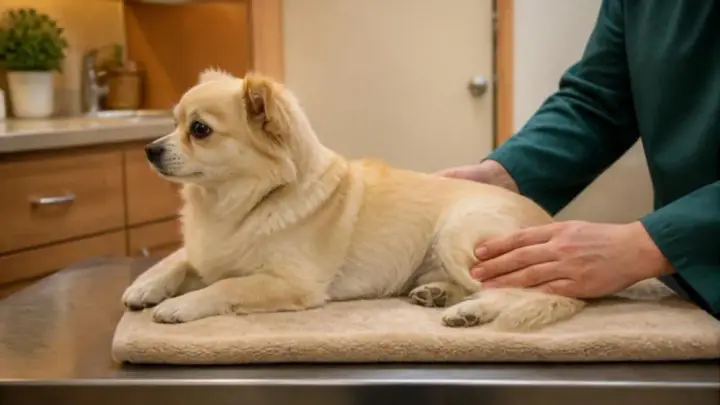
| Cause | In most cases the way the leg developed, for example a shallow groove for the kneecap or a slightly bowed bone |
|---|---|
| Affects | Both knees in about half of affected dogs |
| Most at risk | Small breeds such as Toy Poodles, Yorkshire Terriers, Chihuahuas and Pomeranians |
| Usual age | Signs usually start before a dog's first birthday, but can appear at any age |
| Common signs | A sudden skip in a back leg, held up for a few steps before the dog walks normally again |
| Diagnosis | Mainly a hands-on exam in which the vet bends the knee and gently pushes the kneecap |
| Treatment | Depends on the grade; mild cases are often managed without surgery, while surgery is considered for lame dogs or worsening cases |
| Outlook | Many dogs live well with a mild case; after surgery, good for most dogs with mild or moderate disease |
| Prevention | Cannot be fully prevented; it comes mostly from how the leg develops and is at least partly inherited |
| Risk to people | None; it is not contagious and does not spread to other pets or people |
| See a vet same day if | No weight on a back leg, crying out when touched, a swollen knee, or a limp that follows a fall or is sudden, severe or getting worse |
A luxating patella is a kneecap that slips out of its normal place. It is one of the most common orthopedic problems in dogs, and it is seen most often in small breeds such as Toy Poodles, Yorkshire Terriers, Chihuahuas, and Pomeranians. Many dogs live well with a mild case and never need surgery. Others need an operation to keep the knee stable and comfortable.
What happens in the knee
The kneecap, or patella, is a small bone at the front of the knee. It normally glides up and down in a groove at the lower end of the thigh bone, held in line by the thigh muscles and a ligament that attaches to the shin bone.
In dogs with patellar luxation, the kneecap moves out of that groove, often when the knee bends. In most cases this comes from the way the leg developed. The groove may be too shallow, the thigh or shin bone may be slightly bowed or twisted, and the pull of the thigh muscles may be off center. For this reason the problem usually starts young, and about half of affected dogs have it in both knees. Less often, an injury knocks the kneecap out of place in a dog whose knees were normal before.
The kneecap can slip toward the inside of the leg, called medial luxation, or toward the outside, called lateral luxation. Medial luxation is far more common and is the usual form in small dogs. Lateral luxation is seen more often in large breeds.
Signs to watch for
Signs usually start before a dog's first birthday, although they can appear at any age. Some dogs with a mild case show no signs at all, and the loose kneecap is found only during a routine exam. When there are signs, owners often notice these.
- A sudden skip in a back leg, where the dog holds the leg up for a few steps and then walks normally again
- Kicking, stretching, or shaking the back leg before putting weight on it again
- Skipping episodes that happen more often as the months go by
- A limp that is present most of the time in more advanced cases
- A bow-legged or crouched stance in the back legs, mainly in puppies with severe cases
- Stiffness or discomfort that grows over time as arthritis develops
The skip lasts while the kneecap is out of its groove. Once it slides back, the dog walks normally again. Over time, a kneecap that keeps moving out of place wears down the cartilage in the knee, which leads to arthritis and pain. Dogs with patellar luxation also have a higher risk of tearing the cranial cruciate ligament, one of the main ligaments that keeps the knee stable.
When it is an emergency
A brief skip that clears up within a few steps is not an emergency. It is still worth booking a regular visit so the vet can examine both knees. A short video of the skip at home helps, since the problem comes and goes and may not show at the clinic.
It is best to call your veterinarian the same day if your dog will not put any weight on a back leg, cries out when the leg is touched, or has a swollen knee. The same applies to a limp that starts after a fall or an accident, and to a limp that is severe, sudden, or getting worse. A sudden change in a dog that used to skip only now and then can mean a torn knee ligament. Any limp that lasts more than a day or two is worth a vet visit.
How vets diagnose and grade it
The main test is a hands-on exam. The vet bends and straightens the knee and gently pushes the kneecap to see whether it moves out of the groove and how easily it goes back. The vet will also watch the dog walk and check the hips and other joints. Sometimes light sedation is used for a fuller exam of the knee ligaments. Patellar luxation is graded from 1 to 4.
- Grade 1. The kneecap can be pushed out by hand but slides back on its own. Most dogs show no signs or only rare ones.
- Grade 2. The kneecap slips out on its own at times and stays out until the leg is straightened or the kneecap is pushed back. This is the dog with the classic on-and-off skip.
- Grade 3. The kneecap sits out of place most of the time. It can be pushed back by hand but slips out again easily. The limp is more constant.
- Grade 4. The kneecap is out of place all the time and cannot be pushed back. Dogs often walk crouched with bent knees, and the leg bones are often visibly misshapen.
X-rays are often recommended to look at the shape of the leg bones, the depth of the groove, the hips, and any arthritis. Many dogs need sedation to lie still for them. In complex cases, a CT scan may help the surgeon plan an operation.
Treatment options
Treatment depends on the grade, the dog's signs, age, size, and general health. Dogs with grade 1 and some grade 2 cases that have little or no lameness are often managed without surgery. The same approach may suit older dogs or dogs that cannot safely have an operation.
Management without surgery usually combines keeping the dog lean, controlled exercise such as steady leash walks, and physical rehabilitation to build strength in the back legs. Your vet may prescribe anti-inflammatory pain relief for flare-ups and may discuss joint supplements. This can keep a dog comfortable. It does not change the shape of the leg, though, so the luxation can still get worse over time, and regular rechecks help catch that.
Surgery is most often considered for grade 2 and higher when the dog is lame, or when the problem is getting worse. The goal is to keep the kneecap in its groove and bring the muscles that straighten the knee back into line. The surgeon may deepen the groove in the thigh bone, move the bony point where the kneecap ligament attaches to the shin, and tighten or loosen the tissues around the knee. Dogs with badly bowed bones may need the bone itself straightened.
Surgery tends to give the best results when it is done before arthritis sets in. In puppies with severe grade 3 or 4 luxation, surgeons may advise operating early, because a kneecap that stays out of place during growth can make the leg deformities worse. The outlook after surgery is good for most dogs with mild or moderate disease. It is less favorable in large dogs that also have other joint problems. Complications such as the kneecap slipping again can happen, but they are uncommon.
Recovery after surgery
Recovery depends a lot on rest at home, and plans differ between surgeons, so follow the written instructions you are given. Most dogs need about six to eight weeks of restricted activity. At first that means a small room or pen indoors and short leash walks for toilet breaks only. Walks then get longer step by step as the vet allows.
Running, jumping on and off furniture, stairs, rough play, and off-leash time are avoided until the vet gives the all-clear. Your vet will prescribe pain relief for the first part of recovery, and follow-up X-rays are often taken to confirm that any cut bone has healed. Many surgeons also recommend physical rehabilitation, which often begins in the first weeks after surgery and helps rebuild muscle. Call the clinic if the wound becomes red, swollen, or starts to leak, or if your dog stops using the leg after it had been improving.
Prevention and daily care
Because the problem comes mostly from the way the leg develops and is at least partly inherited, owners cannot fully prevent it. Veterinary surgeons advise against breeding dogs that have been diagnosed with it.
What owners can do is protect the knees. Keep your dog at a lean, healthy weight. Choose steady walks over repeated jumping and sharp turns. Many vets suggest nonslip rugs on smooth floors and ramps or steps for sofas, beds, and cars, especially for small dogs. Regular checkups let the vet track the grade and spot arthritis early.
Patellar luxation is not contagious. It does not spread to other pets or to people.
Rescued and newly adopted dogs
Rescued dogs often arrive with little known history. At Paw Squadron, every animal has a veterinary checkup, treatment, vaccinations, and a microchip before adoption. Even so, a mild case may cause no signs at first, and some luxations only become clear later in life.
If your new dog starts to skip on a back leg in the weeks or months after arriving, film it and book a visit with your own vet. Many dogs with a loose kneecap live active, comfortable lives with the right care plan. If you have questions about a dog you are thinking of adopting, see our FAQ or send an adoption inquiry.
See also
From our rescues
This article is general information, not veterinary advice. Always consult a veterinarian about your animal’s health. Some pictures in PawPedia may be AI-generated.
This page was last updated on October 8, 2026.