Urinary Incontinence in Dogs: Causes and Treatment
From PawPedia, an encyclopedia of life with animals
Contents
| Cause | Most often in adult dogs, a weak urethral sphincter, the muscle that keeps the bladder closed |
|---|---|
| Affects | Mostly spayed females in middle age or later, but also males, puppies and dogs of any size |
| Most at risk | In a large UK study of female dogs: those spayed, aged 9 to 12, or at or above the average adult weight for their breed |
| First signs | A wet spot on the dog bed after a nap, or a damp patch where the dog was lying |
| Common signs | Dribbling urine when walking or getting up, damp fur or a urine smell on the hind legs, more licking of the genital area |
| Diagnosis | Urine test and culture, sometimes blood tests, ultrasound or x-rays |
| Treatment | Depends on the cause; for a weak sphincter, vets usually prescribe a medicine that helps tighten the bladder outlet muscle |
| Outlook | Most dogs improve with the right treatment |
| Prevention | No sure way; keeping the dog at a healthy weight is one practical step |
| Risk to people | None from incontinence itself; if a bladder infection is involved, the bacteria can sometimes pass between pets and people |
| Emergency if | Straining with little or no urine; leaking with back pain, weak hind legs, blood in urine, vomiting, refusing food or a painful belly |
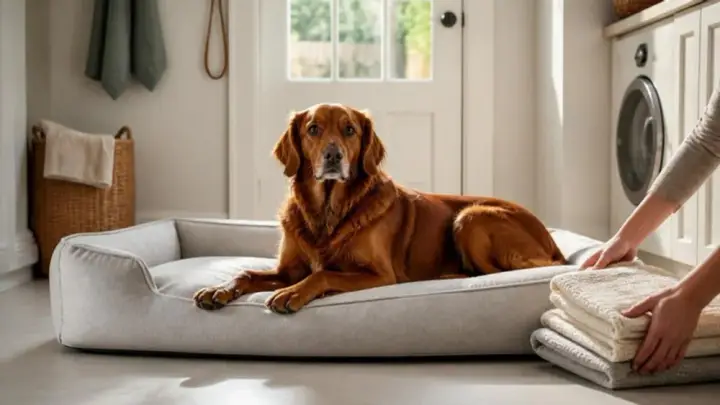
Urinary incontinence means a dog leaks urine without meaning to. The dog is usually not aware of it. Many owners first notice a wet spot on the dog bed after a nap, or a damp patch on the sofa where their dog was lying. It is most common in spayed females in middle age or later, but it can also affect males, puppies and dogs of any size.
Leaking is different from a housetraining problem. A dog with incontinence does not choose to urinate indoors and cannot stop it. A vet can usually find the cause, and most dogs improve with the right treatment.
Common causes
Several different problems can make a dog leak urine. These are the main ones.
- Weak urethral sphincter. The muscle that keeps the bladder closed loses some of its strength. This is the most common cause in adult dogs, and it mostly affects spayed females. Lower levels of sex hormones after spaying are thought to play a part. Vets may call it spay incontinence or urethral sphincter mechanism incompetence.
- Ectopic ureters. This is a birth defect. One or both tubes that carry urine from the kidneys open in the wrong place, beyond the muscle that keeps the bladder closed. It is usually found in young puppies and is diagnosed more often in females.
- Bladder infection or inflammation. An irritated bladder can cause sudden urges and small leaks.
- Nerve or spine problems. Injury or disease of the spine or the nerves in the pelvis can stop the bladder from filling and emptying normally.
- Overflow. When a bladder stone or a growth partly blocks the urethra, the bladder overfills and urine spills out in dribbles.
- Making more urine than usual. Conditions such as kidney disease or diabetes make a dog drink and urinate more, which can lead to accidents that look like leaking.
Older dogs can have another problem that is easy to confuse with incontinence. Some seniors lose their housetraining because of age-related changes in the brain, called cognitive dysfunction. These dogs usually pass urine in a normal way but in the wrong place, which is different from leaking while asleep.
Signs to watch for
Incontinence can be a steady drip or an occasional small leak. Owners often notice one or more of these signs.
- A wet spot where the dog has been sleeping or lying down
- Dribbling urine while walking or right after getting up
- Damp fur or a urine smell on the hind legs, belly or under the tail
- More licking of the genital area than usual
- Red, sore skin around the vulva or penis from constant contact with urine
- In a young puppy, dribbling that seems to have been there from the start
A dog with spay incontinence usually still urinates normally on walks. The leaking happens mostly when she is relaxed or asleep.
When it is an emergency
Most leaking can wait for a regular appointment. Some signs need a vet right away. Straining to urinate while little or no urine comes out can mean a blockage. A complete blockage lets waste build up in the blood and can make a dog very ill within one to two days. Owners sometimes mistake this straining for constipation.
Contact a vet right away if leaking comes with back pain, weak or wobbly hind legs, blood in the urine, vomiting, refusing food, or a swollen, painful belly. These signs can point to a spine problem, a blockage or another serious illness.
How vets find the cause
The vet will start with questions. It helps to note when the leaking happens, how much urine comes out, whether your dog drinks more than before, and whether she can still urinate normally on walks. A short phone video of your dog urinating can also be useful.
The exam usually includes feeling the bladder and checking the nerves and reflexes of the back legs and tail area. A urine test and a urine culture look for infection. Blood tests may be suggested to look for conditions that make a dog drink and urinate more. Ultrasound or x-rays can show stones, growths and the shape of the bladder. For suspected ectopic ureters, vets may use a CT scan or a small camera passed into the bladder, a procedure called cystoscopy.
There is no single test for spay incontinence. It is often diagnosed by ruling out other causes and then seeing how the dog responds to treatment.
Treatment options
Treatment depends on the cause, so it is worth finding the cause before starting anything. For a weak sphincter, vets usually prescribe a medicine that helps tighten the muscle at the bladder outlet. Hormone replacement medicines are another option. Most dogs improve. Many need to stay on medicine long term, and the vet may adjust the plan over time and suggest regular checkups to watch for side effects.
When medicine is not enough, specialist procedures can help. A bulking material can be injected into the wall of the urethra through a small camera to help it close. The effect can fade with time, and some dogs need a repeat treatment. Other dogs receive an artificial sphincter, an adjustable cuff placed around the urethra during surgery. Your vet may refer you to a specialist center for these.
Other causes need their own treatment. A bladder infection is treated with antibiotics, ideally chosen after a urine culture. Ectopic ureters are corrected with surgery or with a laser procedure done through a camera, and some dogs still leak a little afterward and need medicine as well. Stones or growths that block the urethra need to be removed or managed. Dogs with nerve damage may need help emptying the bladder, and the vet can show owners how to do this at home. Ask your vet before giving any human medicine or supplement for bladder control.
Care at home
Scolding or punishing a dog for leaking does not help. The dog does not know it is happening, and punishment only adds stress. A few simple habits make daily life easier for both of you.
Offer more chances to urinate, especially last thing at night and after long naps. Use washable, absorbent bedding or waterproof covers, and wash them often. Dog diapers or belly bands can protect furniture, but they need changing often so wet material does not sit against the skin. Gently clean and dry the area under the tail when it gets wet. A groomer can keep the hair short around the genital area, which makes cleaning easier. Keep fresh water available. Cutting back on water is not recommended unless your vet advises it.
Incontinence itself does not spread to other pets or to people. If a bladder infection is part of the problem, the bacteria can sometimes pass between pets and people in the same home. Washing your hands after cleaning up urine is a good habit.
Risk and prevention
A large UK study of more than 100,000 female dogs seen in general practice found that about 3 in 100 had been diagnosed with incontinence. The risk was higher in spayed females, dogs aged 9 to 12, and dogs at or above the average adult weight for their breed. Some breeds, including Irish Setters and Dobermanns, were affected much more often. Other research links the problem to large body size.
There is no sure way to prevent incontinence. Keeping your dog at a healthy weight is one practical step. Spaying has important health benefits, and the decision is best made with your vet. Some studies suggest that spaying very young puppies may raise the risk slightly, but the evidence is mixed. If you have a young female puppy, especially of a large breed, ask your vet about the best age for surgery.
Rescued and newly adopted dogs
A newly adopted dog who has accidents indoors is not always incontinent. Stress, a new routine and incomplete housetraining can all cause accidents in the first weeks. Some shy dogs release a little urine when greeted or approached, which is called submissive urination. Excited young dogs may do the same. These dogs are awake and aware, and the urine comes out at the moment of greeting. Calm, low-key greetings help, and punishment makes it worse.
True incontinence can also appear after adoption, especially in an adult female who was spayed before she came to you. It can start months or even years after spaying. If your dog has an old back or pelvic injury, mention it to your vet, since nerve damage can affect bladder control.
At Paw Squadron, the first stops after every rescue are the vet and a bath, and every animal gets a checkup, treatment, vaccinations and a microchip before adoption. Bring your dog's health records to your first visit with your own vet and mention any leaking you have seen. You can find more practical guides in PawPedia, and our FAQ answers common questions about adopting.
See also
From our rescues


This article is general information, not veterinary advice. Always consult a veterinarian about your animal’s health. Some pictures in PawPedia may be AI-generated.
This page was last updated on October 12, 2026.