Feline Calicivirus: Signs, Treatment, and Prevention
From PawPedia, an encyclopedia of life with animals
Contents
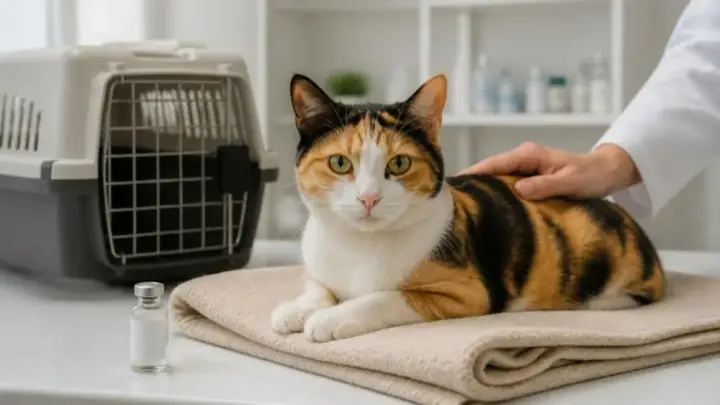
| Also called | FCV |
|---|---|
| Affects | The mouth, nose, and eyes, and sometimes the lungs and joints |
| Most at risk | Kittens and cats that live in groups get sick with it most often |
| How it spreads | Direct contact, mutual grooming, shared bowls and bedding, and sneeze droplets at close range |
| Common signs | Painful mouth ulcers, most often on the tongue, drooling, refusing food, sneezing, watery eyes, fever, and sudden limping |
| Diagnosis | Often suspected from the exam alone; a mouth or throat swab for a PCR test can confirm it |
| Treatment | No specific antiviral medicine; a vet may give fluids, pain relief, and fever control; human pain medicines are not safe for cats |
| Outlook | Most cats recover within one to three weeks with good care |
| Prevention | The core vaccine recommended for every cat; it makes illness milder in most cats but does not stop every infection |
| Risk to people | Not a risk to people, and not considered a health risk for dogs or other pets |
| Emergency if | An adult not eating for a day, a kitten not eating, labored or open-mouth breathing, high fever, swollen face or legs, or yellow gums |
Feline calicivirus, often shortened to FCV, is one of the most common causes of cat flu. It infects the mouth, nose, and eyes, and sometimes the lungs and joints. Most cats recover within one to three weeks with good care. Kittens and cats that live in groups get sick with it most often.
The virus spreads easily wherever many cats share space, so it is common in shelters, rescues, and catteries. A newly adopted kitten may start to drool, stop eating, or suddenly limp.
What causes it
FCV is a small virus. There are many strains, and they keep changing over time. Some strains cause mild sneezing. Others cause painful mouth ulcers, limping, or pneumonia. A rare and aggressive form, called virulent systemic calicivirus, can cause severe illness that affects the whole body.
The virus has no fatty outer coat, which makes it tougher than many other viruses. On dry surfaces at room temperature, it can stay infectious for up to about a month.
How it spreads
Sick cats shed the virus mainly in saliva and in discharge from the nose and eyes. Other cats catch it through direct contact, mutual grooming, shared bowls and bedding, and sneeze droplets at close range. People can carry it from one cat to another on their hands and clothes.
Signs usually appear two to ten days after exposure. Many cats keep shedding the virus for about a month after infection, often well after they look healthy again. A smaller number become long-term carriers. They can shed the virus for months or even years without showing any signs. Carriers are one reason the virus keeps circulating in shelters, catteries, and multi-cat homes.
Signs to watch for
Mouth ulcers are the sign most closely linked to calicivirus. They are shallow, painful sores, most often on the tongue. They can also appear on the roof of the mouth, the lips, the gums, or the tip of the nose. Because the sores hurt, many cats drool and refuse food even when they are hungry. Loss of appetite is often more obvious than the sneezing.
- Drooling, or a wet chin and chest
- Going to the food bowl and walking away without eating
- Red or raw sores on the tongue, gums, lips, or nose
- Sneezing and a clear or cloudy nasal discharge
- Watery, red, or squinting eyes
- Fever, tiredness, and hiding
- Sudden limping or sore joints, sometimes moving from one leg to another
The limping form is most common in young kittens. It usually comes with a fever and clears up within a day or two. A similar short-lived limp has occasionally followed vaccination with a live calicivirus vaccine. Tell your vet if you notice it.
Some cats recover from the first illness and later develop long-term inflammation of the gums and mouth, called chronic gingivostomatitis. Calicivirus is found more often in these cats than in healthy cats, though it is not the only cause.
When it is an emergency
Most calicivirus infections are mild to moderate. Contact your veterinarian the same day if you notice any of the following.
- An adult cat that has not eaten for a day, or a kitten that has stopped eating or nursing
- Signs of dehydration, such as sticky gums, sunken eyes, or weakness
- Fast, labored, or open-mouth breathing
- A high fever, or a cat that is very weak and hard to rouse
- Swelling of the face or legs
- Crusty sores, ulcers, or hair loss on the nose, lips, ears, around the eyes, or on the paws
- A yellow tint to the gums, skin, or whites of the eyes
Breathing problems can be a sign of pneumonia. The last three signs on the list can point to virulent systemic calicivirus. This form is rare, but it spreads quickly in shelters and clinics and can be fatal. Unlike ordinary calicivirus, it tends to hit adult cats harder than kittens. If you suspect it, call the clinic before you arrive so the staff can keep your cat away from other patients.
How vets diagnose it
Vets often suspect calicivirus from the exam alone, especially when a cat has mouth ulcers along with sneezing. To confirm it, they can swab the mouth or throat and send the sample for a PCR test. It is often run as a panel that also checks for feline herpesvirus and other causes of cat flu.
A negative result does not fully rule out the virus. A positive result in a healthy cat may only mean the cat is a carrier or was recently vaccinated.
In sicker cats, the vet may run blood tests to check hydration and organ function, and take chest X-rays if pneumonia is a concern. If a cat is very ill or keeps getting sick, your vet may also suggest testing for feline leukemia virus (FeLV) and feline immunodeficiency virus (FIV). These infections weaken the immune system, so other viruses can cause more serious illness.
Treatment and care at home
There is no specific antiviral medicine for calicivirus. Treatment supports the cat while its immune system clears the infection. Depending on how sick the cat is, the vet may recommend fluids for dehydration, pain relief, fever control, and care for sore eyes. Antibiotics do not act on the virus. Vets may prescribe them if they suspect a bacterial infection on top of the virus. Cats that cannot eat may need assisted feeding in the hospital, sometimes through a temporary feeding tube.
Your vet may also suggest some home care. Offer soft, warmed wet food, mashed with a little water so it is easier on a sore mouth. Keep fresh water close by, and give your cat a warm, quiet place to rest.
Human pain and fever medicines are not safe for cats, and some common ones are toxic even in small amounts. Ask your vet before giving any medicine or supplement. Call your vet again if your cat gets worse, stops eating, or is not improving as expected.
Vaccination and prevention
Calicivirus is part of the core vaccine recommended for every cat, together with feline panleukopenia and feline herpesvirus. Kittens get a series of doses starting at 6 to 8 weeks of age, and after that your vet will set a booster schedule based on your cat's lifestyle.
The vaccine does not stop every infection. There are many strains, and no vaccine covers them all. In most cats it makes the illness milder. A vaccinated cat can still catch the virus and pass it on, so hygiene still matters.
When a cat in your home is sick, give it its own bowls, litter box, and bedding. Wash your hands after handling it and before touching other cats. Calicivirus resists many cleaning products, and alcohol-based sanitizers work poorly against it. Diluted bleach and some veterinary disinfectants are effective on surfaces that have been cleaned first. Ask your vet which product to use and how to dilute it safely, and keep cats away until surfaces are dry.
People, other pets, and new cats
Calicivirus is a cat virus. It is not a risk to people, and it is not considered a health risk for dogs or other pets.
Calicivirus and feline herpesvirus are the most common respiratory viruses found in shelter cats. Because signs can take up to ten days to appear, a cat can look healthy at adoption and start sneezing, drooling, or eating less in its first days at home. That is worth a vet visit. At Paw Squadron, every cat gets a checkup, treatment, vaccinations, and a microchip before adoption, but vaccination cannot guarantee that a cat is free of the virus. If you already have cats, keep the newcomer in a separate room at first, with its own bowls and litter box, so you have time to watch for signs. If you have questions about a cat you would like to adopt, send us an adoption inquiry or read our FAQ.
See also
From our rescues



This article is general information, not veterinary advice. Always consult a veterinarian about your animal’s health. Some pictures in PawPedia may be AI-generated.
This page was last updated on October 9, 2026.