The Intelligence of Dogs: Understanding Canine Cognition
From PawPedia, an encyclopedia of life with animals
Contents
| Remarkable skill | Reading people: their gestures, faces, voices and habits |
|---|---|
| Three kinds | Instinctive, adaptive and working intelligence, as the psychologist Stanley Coren described them |
| Words | Most dogs learn the words that matter to them, such as their name and the cues they are taught |
| Tone of voice | Dogs in an MRI study processed the meaning of words and the tone separately, much as people do |
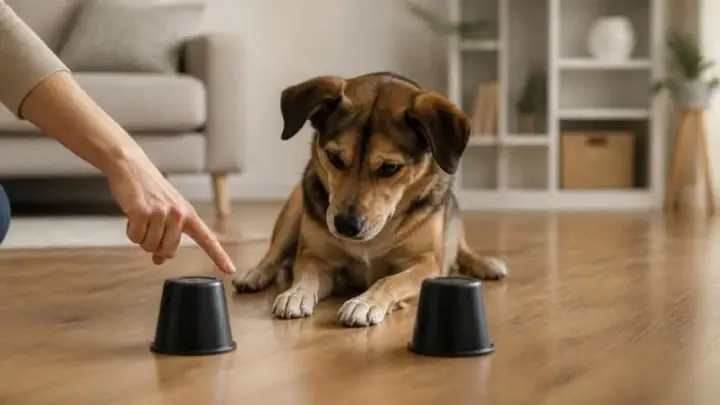
| Pointing | Dogs follow a pointing finger and a glance; young puppies do it with very little experience |
| Faces | Dogs can tell a smiling face from an angry one |
| Strongest tool | The nose; a dog's sense of smell is far more sensitive than ours |
| Memory | Dogs learn daily routines quickly and recognize people and places after long absences |
| Mental exercise | Tires a dog in a way a walk alone may not; a short session can settle a restless dog |
| Training | Consistency from everyone in the household is the most useful training tool you have |
| See a vet if | Thinking or behavior changes suddenly, or an older dog seems lost in familiar places, paces at night or starts having accidents |
Ask people how clever dogs are and most will talk about tricks, or how many words a dog knows. Vocabulary is the least interesting measure, though. What makes dogs remarkable is how well they read people: our gestures, our faces, our voices and our habits.
More than one kind of intelligence
The best-known ranking of dog breeds comes from the psychologist Stanley Coren. In his book The Intelligence of Dogs, he ranked breeds by how quickly they learned new commands and how reliably they obeyed, with the border collie and the poodle at the top. That measures one kind of intelligence and says little about the rest.
Coren described three kinds. Instinctive intelligence covers the skills a breed was developed for, such as herding, guarding or following a scent. Adaptive intelligence is how well a dog solves new problems on its own, and working intelligence is how well it learns from people.
Seen this way, a hound that ignores you while following a trail is doing exactly the job its ancestors were bred for. A mixed-breed dog that grew up on the street may show little interest in a formal "sit" at first and still be skilled at finding food and judging strangers.
Words and tone of voice
Most dogs learn the words that matter to them, such as their name, the cues they are taught and words like "walk" and "dinner" that predict something good. A few go much further. A border collie named Chaser, trained by the psychologist John Pilley in the United States, learned the names of more than a thousand toys and could fetch each one on request.
Chaser was the exception. Researchers at Eötvös Loránd University in Budapest have found that most dogs struggle to learn the names of objects, even with a lot of training, while a small number of gifted dogs learn new names remarkably fast.
The same Hungarian group trained dogs to lie still in an MRI scanner and played them familiar words in different tones of voice. The dogs processed the meaning of the words and the tone separately, much as people do, and the reward areas of their brains responded most strongly when praise words came in a praising tone.
For owners, the lesson is practical. Pick one cue for each action and stick to it, and let your tone match your words. A "good dog" said in an irritated voice sends a mixed message.
Reading people
Dogs follow a pointing finger, the direction of a glance and small shifts in posture, and young puppies do it with very little experience. Chimpanzees, for all their intelligence, are surprisingly poor at using a human point to find hidden food. Hand-raised wolves can learn it, but dogs tend to do it more readily and at a younger age.
In a well-known experiment from Budapest, dogs and hand-raised wolves were given a simple task that had secretly been made impossible. The wolves kept trying on their own. The dogs soon stopped, turned and looked at the person nearby, as if asking for help.
Dogs read faces as well. They can tell a smiling face from an angry one, and they check their person's reaction when they meet something new or strange. Researchers in Japan found that when dogs and their owners gaze at each other, levels of oxytocin, a hormone linked with bonding, rise in both.
For a dog living on the street, reading people is part of survival: working out who offers food and who might chase it away. In the video of Merrill Street's rescue, when we placed her on the ground for a moment, she did not try to run. She watched us, then took one careful step, and later, in a quiet park, she followed our legs every time we moved.
The nose and the memory
Dogs are capable problem solvers, but their most powerful tool is the nose. Their sense of smell is far more sensitive than ours, and a much larger share of the brain is given to processing scent. Sniffing is how a dog gathers information, so a walk where it is allowed to sniff is real mental work.
Dogs also remember more than they often get credit for. They learn daily routines quickly, anticipate walks and meals from small cues, and recognize people and places after long absences. A dog that runs to the door before you pick up the leash has usually learned a chain of signals you did not know you were giving.
Keeping a dog's mind busy
A dog with nothing to think about often invents its own projects, such as chewing, digging or barking at every sound. Mental exercise tires a dog in a way that a walk alone may not, and a short session can settle a restless dog. If barking is already a problem, our guide on how to stop a dog from barking goes through the causes.
You do not need special equipment. A few easy ways to add mental work to your dog's day:
- Feed some meals from a puzzle feeder or a snuffle mat, or scatter kibble on clean grass
- Take "sniff walks" where your dog chooses the pace and the route
- Hide a treat or a favorite toy and teach your dog to find it
- Teach a new trick in sessions of a few minutes, and stop while it is still fun
- Try teaching the names of two toys, and do not worry if your dog never gets it, since most dogs find this hard
- Rotate toys, so a few come out each week and the rest are put away
Match the difficulty to the dog. A puzzle that is too hard frustrates a dog that has not yet learned that puzzles pay off, so start easy and let it succeed.
What this means for adopters
Your dog is watching you all the time, and it learns more from what you do than from what you say. If it is sometimes allowed on the couch and sometimes scolded for it, it cannot work out the rule. Consistency from everyone in the household is the most useful training tool you have.
A newly adopted dog is studying a whole new set of people, sounds and routines at once. Keep your movements calm and predictable in the first weeks, use the same few words for the same things, and reward what you want to see. For more on those first weeks, read our guide to bonding with a rescue animal.
When to call a vet
A sudden change in how your dog thinks or behaves can have a medical cause, so see a vet before you start retraining. Pain, failing eyesight or hearing, and many illnesses can make a dog seem confused or irritable, or suddenly ignore cues it knew well.
In older dogs, watch for canine cognitive dysfunction, an age-related decline that in some ways resembles dementia in people. It develops slowly, so the early signs are easy to put down to old age:
- Getting stuck in corners or behind furniture, or seeming lost in familiar places
- Waking and pacing at night, or sleeping much more during the day
- Accidents in the house in a dog that was reliably house-trained
- Less interest in people, play or greeting you at the door
- New anxiety, restlessness or staring at walls
Tell your vet what you have noticed and when it started. Some of these signs have medical causes that can be treated. For dogs with cognitive decline, a vet can suggest changes to diet, routine and enrichment, and sometimes medication, that help many dogs.
See also
From our rescues
This article is general information, not veterinary advice. Always consult a veterinarian about your animal’s health. Some pictures in PawPedia may be AI-generated.
This page was last updated on September 26, 2026.