Intervertebral Disc Disease (IVDD) in Dogs: Signs and Treatment
From PawPedia, an encyclopedia of life with animals
Contents

| Also called | IVDD |
|---|---|
| Cause | A disc between the bones of the spine breaks down and presses on the spinal cord or its nerves |
| Most at risk | Dachshunds carry the highest risk; estimates suggest roughly one in five show signs in their lives |
| Usual age | As early as one or two years in Dachshunds and other breeds whose discs age early; the slow form usually shows after five years |
| Common signs | Crying out when touched, a hunched back, a stiff neck, not wanting to jump or climb stairs, wobbly, weak or dragging hind legs |
| Diagnosis | MRI or CT scans to find the exact disc, especially before surgery |
| Treatment | Vets often advise strict rest for dogs that still walk and mainly have pain; surgery is generally recommended if a dog cannot walk |
| Outlook | With surgery, about nine in ten dogs that cannot walk but feel their toes walk again; roughly half to six in ten if feeling is lost |
| Prevention | Cannot always be prevented, as genes play a large part; vets commonly advise keeping the dog lean and fit with regular daily exercise |
| Risk to people | None; IVDD does not spread to other pets or to people |
| Emergency if | The dog suddenly cannot stand or walk, drags its hind legs, cannot pass urine, does not feel its back toes or gets worse over hours |
Intervertebral disc disease, or IVDD, is one of the most common spinal problems in dogs. It happens when a disc between the bones of the spine breaks down and presses on the spinal cord or its nerves. Some dogs only show pain. Others lose the use of their back legs within hours. Spotting the early signs and getting to a vet quickly gives the best chance of recovery.
What happens in the spine
The spine is a chain of small bones called vertebrae. Between them sit soft discs that work as cushions. Each disc has a jelly-like center and a tougher outer ring. With age, or much earlier in some breeds, the center dries out and hardens. The disc then stops working as a shock absorber.
Vets describe two main patterns. In the first, the hardened center bursts through the outer ring and pushes into the spinal canal. This is usually sudden and can be severe. It is typical of Dachshunds and other breeds whose discs age early, such as French Bulldogs, Beagles, Shih Tzus, Lhasa Apsos, Pekingese and Cocker Spaniels. In these dogs it can happen as early as one or two years of age. In the second pattern, the outer ring slowly bulges and presses on the cord over months. This is more common in older, larger dogs such as German Shepherds and Dobermans. It usually shows up after five years of age as a gradual weakness.
Dachshunds carry the highest risk. Estimates suggest that roughly one in five Dachshunds show signs of IVDD at some point in their lives. Much of this risk comes from a gene variant linked to short legs, which makes the discs age early. The same variant is found in many other breeds and in mixed-breed dogs. Not every dog with it develops IVDD, and some dogs without it still do.
Signs to watch for
Signs depend on where the damaged disc sits and how hard it presses on the cord. A disc in the neck mostly causes pain, and sometimes weakness in all four legs. A disc in the middle or lower back more often affects the hind legs.
- Crying out when touched, petted or picked up
- A hunched back, a tense belly, or trembling
- A stiff neck, a low head, or not wanting to turn the head
- Not wanting to lower the head to food and water bowls
- Not wanting to jump, climb stairs or move around
- Wobbly or weak hind legs, or back feet that cross or scuff
- Dragging one or both back legs
- Accidents indoors, or straining without passing urine
Back pain can look like a stomach ache. A dog in pain may stand hunched, stay quiet and refuse food. If a dog of an at-risk breed seems sore and withdrawn, ask your vet to check the spine.
When it is an emergency
Some signs need care right away, at any hour. Call your vet or the nearest emergency clinic if your dog shows any of the signs below.
- Suddenly cannot stand or walk
- Drags its hind legs or knuckles over on its back feet
- Cannot pass urine, or has lost bladder control
- Does not seem to feel its back toes
- Gets worse over a few hours
The most serious sign is the loss of deep pain sensation. The vet tests for it by squeezing a toe firmly and watching whether the dog notices, for example by turning its head or crying out. A leg that only pulls back is a reflex and does not count. Dogs treated while they still have this feeling do much better. Once it is lost, the chances of recovery drop, and long delays can lower them further. Some dogs still recover after a delay, so it is worth getting care even if time has passed.
Until you reach the vet, keep your dog as still as possible. Carry it with one hand under the chest and one under the hips so the back stays level, or move it in a crate. Do not give pain medicine from your own cabinet, because some human medicines are toxic to dogs. Let the vet choose the pain relief.
How vets diagnose it
The vet starts with a physical and neurologic exam. This includes watching the dog walk, testing reflexes, checking how the paws respond when turned over, and feeling along the spine for pain. The results help the vet judge which part of the spine is involved and how severe the damage is.
X-rays can help rule out other causes, such as a fracture or a tumor, and sometimes show hardened discs. They cannot show the spinal cord itself. To find the exact disc, especially before surgery, vets use MRI or CT scans, and less often a myelogram, where dye is injected around the spinal cord. These tests need sedation or general anesthesia, and many dogs are referred to a veterinary neurologist or surgeon for them.
Treatment options
Treatment depends on how severe the signs are. For a dog that can still walk and mainly has pain, vets often recommend conservative care. The core of it is strict rest. Specialist guidelines recommend at least four weeks of restricted activity. In practice this usually means a crate or a small room without furniture, short leash walks only for toilet breaks, no stairs and no jumping. The vet may prescribe pain relief, anti-inflammatory medicine and sometimes a muscle relaxant. Rest gives the disc time to settle, so it still matters when the dog seems better after a few days.
Signs come back after conservative care in roughly a third of dogs, although study results vary widely. If pain returns or the dog gets weaker, the vet will usually talk with you about surgery.
Surgery is generally recommended for dogs that cannot walk, have lost feeling in their toes, or keep having pain or repeat episodes. The surgeon removes a small window of bone over the spinal canal and takes out the disc material pressing on the cord. Some surgeons also treat nearby discs to lower the chance of another episode.
Specialist reports show that about nine in ten dogs that cannot walk but still feel their toes walk again after surgery. When deep pain sensation is lost, roughly half to six in ten recover with surgery, and far fewer recover with rest alone. Recovery can be slow, and some dogs may keep a mild wobble. Your vet can explain what these figures mean for your own dog.
Recovery at home
Recovery takes weeks and sometimes months, with or without surgery. Most dogs need several weeks of crate rest, then a slow return to normal walks.
Some dogs cannot empty their bladder on their own at first. The vet team can show you how to express the bladder by hand and how often to do it. A dog that lies down most of the day needs soft, clean, dry bedding, and may need to be turned regularly to prevent pressure sores. Keep the skin around the back end clean so urine does not irritate it.
Guided exercise is part of recovery for most dogs. Basic work such as gentle leg stretches, massage, and assisted standing and walking needs no special equipment. Some clinics also offer hydrotherapy, such as an underwater treadmill. Ask your vet which exercises are safe at home and when to start them. Follow the plan step by step, even when your dog is eager to run.
Lowering the risk
IVDD cannot always be prevented, because genes play a large part. Evidence on everyday habits is limited, but vets commonly advise a few simple steps.
Keep your dog lean and fit, with regular daily exercise. One large survey of Dachshunds found that dogs exercised for more than an hour a day had lower odds of IVDD, while those exercised for less than 30 minutes a day had higher odds. Many vets suggest ramps or pet steps for sofas, beds and cars, and lifting small dogs in and out of the car, especially after a past episode. For a dog that has had neck pain, vets advise a harness instead of a neck collar. See a vet early when you notice back pain, before weakness sets in.
Rescued and newly adopted dogs
IVDD does not spread to other pets or to people. It is a problem of the dog's own spine.
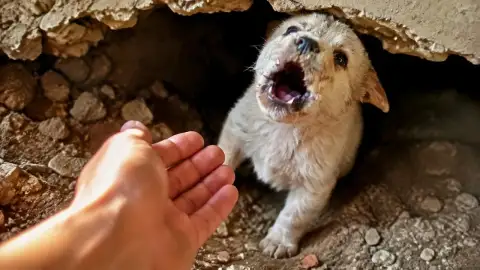
Rescued dogs often come with little known history. Many are mixed breeds, and a dog with short legs may carry the same gene variant as a Dachshund. At Paw Squadron, every animal gets a checkup, treatment, vaccinations and a microchip before adoption. A routine checkup cannot predict whether a disc will fail later, so it helps to know the signs from the first day.
The first weeks in a new home often bring new stairs, sofas and smooth floors. For an at-risk dog, rugs with good grip, a ramp and a well-fitted harness are simple, low-cost changes. At your first visit to your own vet, mention your dog's body shape and ask whether any spine checks make sense. If you are thinking about adopting a small, short-legged dog, our Adoptions page shows the dogs looking for homes, and PawPedia has more guides for new owners.
See also
From our rescues


This article is general information, not veterinary advice. Always consult a veterinarian about your animal’s health. Some pictures in PawPedia may be AI-generated.
This page was last updated on October 14, 2026.